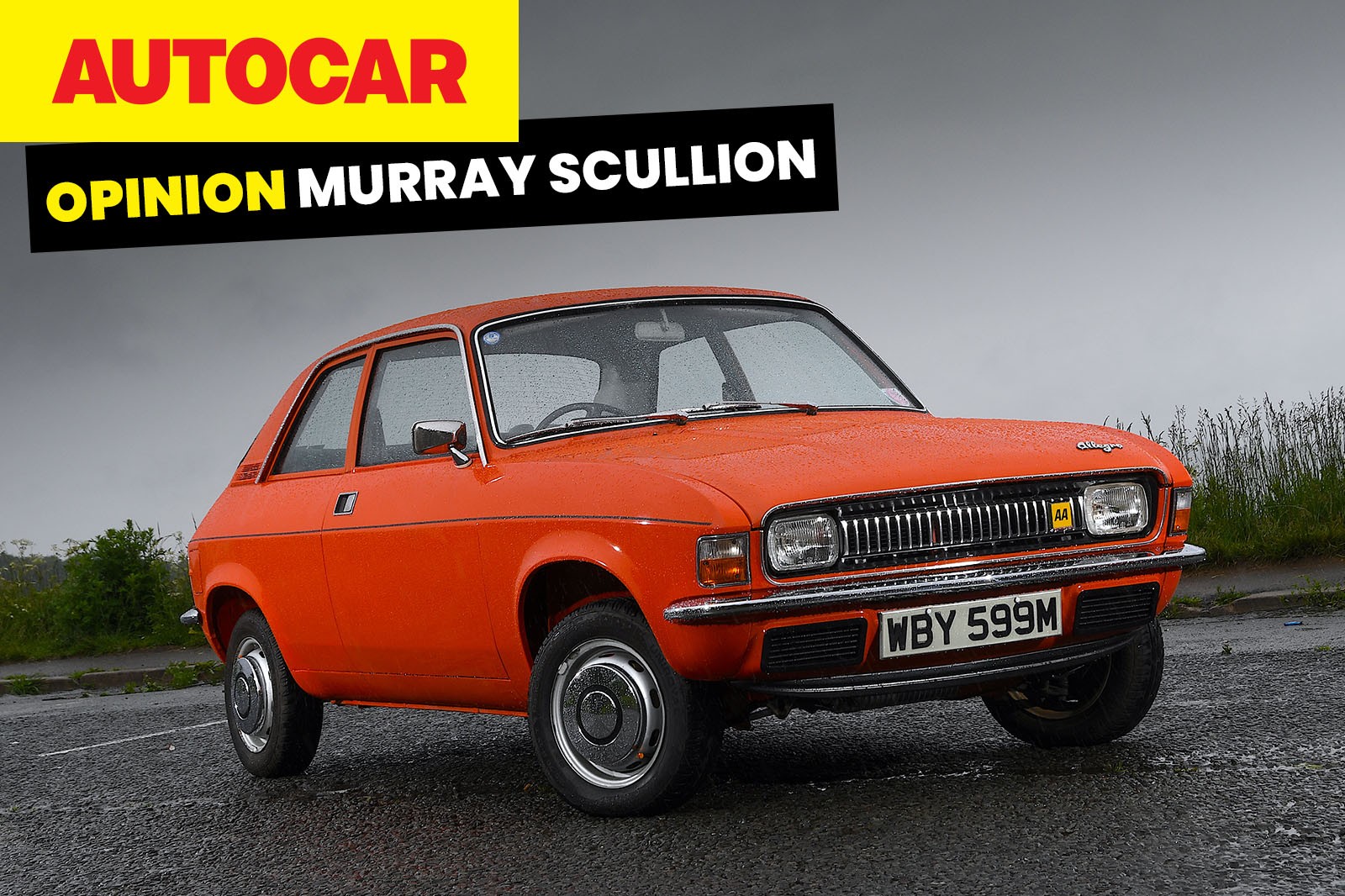
The Austin Allegro, often cited as a prime example of British automotive failure, deserves a second look. While its reputation for unreliability and poor design is deeply ingrained, a closer examination reveals a car that wasn’t as disastrous as commonly believed – and whose downfall was the result of factors beyond just its engineering.
The Allegro’s Reputation: Fair or Foul?
The Allegro has become shorthand for the decline of British Leyland, and even the wider British auto industry. The car is frequently listed among the “worst British cars ever made” due to well-documented issues. These included structural weaknesses (rear windows popping out when jacked up, wheels falling off) and generally poor performance in a competitive market.
However, this narrative overlooks the context of its production. British Leyland faced crippling labor disputes, including the infamous three-day workweek enforced by the government. Workers, in turn, blamed management for prioritizing cost-cutting over quality. The truth likely lies somewhere in between: a flawed design exacerbated by systemic industrial problems.
Initial Reception and Forgotten Positives
The Allegro wasn’t universally hated at launch in 1973. Contemporary reviews were surprisingly positive. Autocar described it as “a big step forward” compared to the older Austin 1300, praising its engineering, standard equipment, and value for money.
This original assessment is important because it demonstrates that the Allegro wasn’t inherently a terrible car from the start. Its issues developed over time, likely due to production compromises and the wider industrial chaos of the 1970s.
A Modern Perspective: Driving the Allegro Today
One writer recently drove an Allegro 3 over 600 miles, from England to Belgium (where some examples were assembled) and back. The experience revealed a car that, despite its age, was reasonably comfortable, practical (with a usable boot), easy to park, and even capable of maintaining highway speeds.
The trip involved only one breakdown, which is respectable for a vehicle of that era. This suggests that the Allegro, while not perfect, was not the catastrophic failure it’s often made out to be.
Why the Allegro Matters
The Allegro’s story is a cautionary tale about how historical narratives can become overly simplified. The car became a symbol of British industrial decline, but its shortcomings were partly a product of external factors.
Its enduring notoriety highlights the power of reputation – and the importance of revisiting supposedly ‘settled’ histories. The Austin Allegro wasn’t just a bad car; it was a casualty of a turbulent era. The fact that it’s still remembered decades later, even if only to be mocked, is proof that its story isn’t entirely forgotten.