Automakers have long used April Fools’ Day as an opportunity to showcase their creativity—and sometimes, their willingness to push the boundaries of believability. Over the years, car companies have unleashed a stream of outlandish pranks, from free tattoos with new Volkswagen purchases to Honda’s noise-canceling passenger mute system. These stunts often poke fun at industry trends while providing a good laugh for enthusiasts.
The Absurdity of Automotive Jokes
The automotive world’s April Fools’ jokes range from the ridiculous to the downright bizarre. While some pranks are clever nods to brand identity, others seem designed purely to test the limits of what people will believe. Whether it’s rethinking car functionality or inventing absurd products, these stunts keep us entertained and, let’s face it, relieved that they’re not actually happening.
Notable Pranks Through the Years
Volkswagen’s Free Tattoos: In a memorable stunt, Volkswagen offered free tattoos to customers who purchased a new car on April 1, encouraging designs like the VW logo or Beetle illustrations. It was a tongue-in-cheek nod to the brand’s dedicated fanbase.
Honda Catnip Car Seats: Honda introduced “Catnip Car Seats,” claiming they would transform cars into feline lounges, eliminating hissing and scratching. The joke played on the reality of pet owners struggling to keep their animals calm during drives.
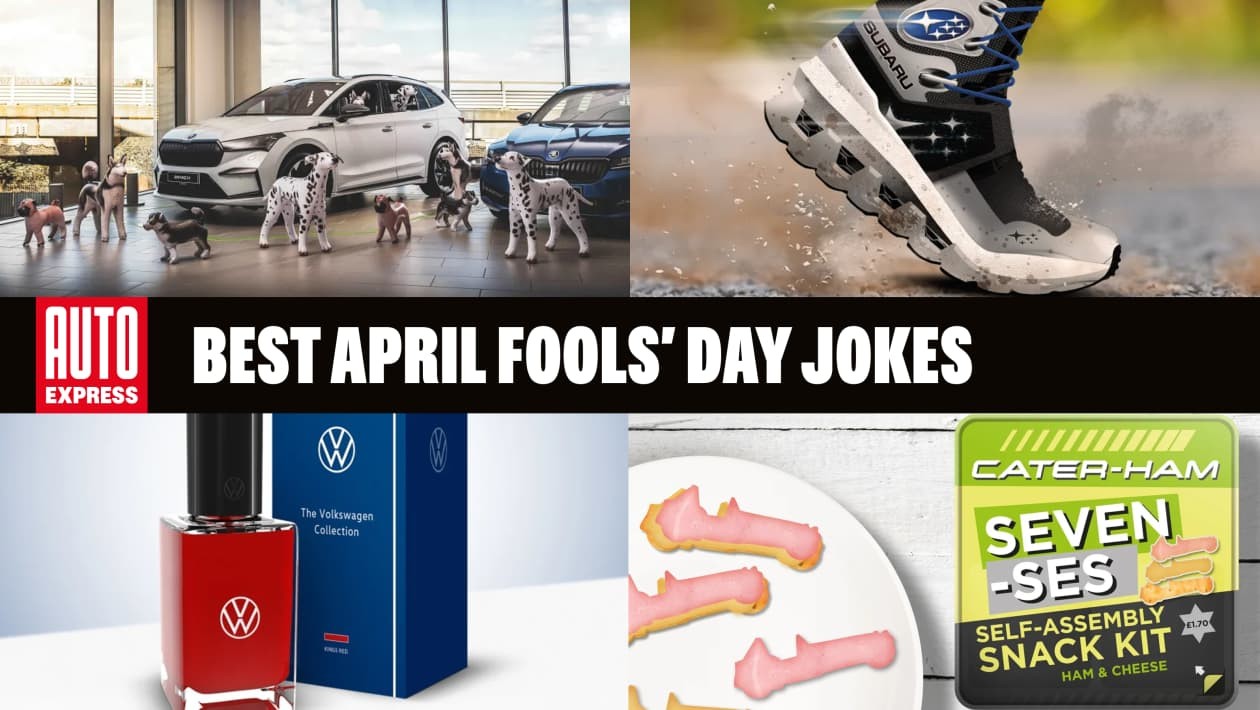
Subaru Suba-Shoes: Subaru launched “All-Heel-Drive” Suba-Shoes, off-road boots with shock-absorbing soles. While no one actually got a pair, the prank amused many.
Skoda’s Pumped-up Pooch Cabinet: Skoda introduced a cabinet stocked with inflatable dogs, allowing owners to test how their pets would fit in various car models. It was a humorous take on pet-friendly vehicle design.
Volkswagen’s Nail Polish Paint Match: Volkswagen announced nail varnishes matching car paint colors for touch-ups, including shades like Kings Red and Lapiz Blue. The prank got people talking about automotive aesthetics.
Caterham’s Edible Seven: Caterham introduced “Cater-ham Sevenses,” edible snack versions shaped like their cars, complete with ham, cheese, and crackers. The stunt was a playful nod to the brand’s barebones track car image.
Porsche’s Patina Paint to Sample: Porsche teased a patina option for its Paint to Sample service, allowing buyers to replicate rusty vehicles on new cars. The joke played on the allure of vintage aesthetics.
Dacia’s Space Program: Dacia announced an affordable space program, launching a Duster into orbit. The stunt highlighted the brand’s commitment to value without compromising quality.
Volkswagen’s American Name-Change: Volkswagen’s US branch briefly claimed it was rebranding to “Voltswagen” to signal its electric shift, causing confusion before retracting the announcement. The prank sparked debate about brand identity.
Audi Honey-Powered Car: Audi announced a honey-powered car, the b-tron, complete with a hexagonal fuel cap and an on-board toaster. The joke played on the market shift towards zero-emissions motoring.
These pranks demonstrate that automakers aren’t afraid to poke fun at themselves and their industry. The creativity and sheer absurdity of these stunts keep enthusiasts entertained while reminding us that sometimes, a good laugh is all you need.
In conclusion, automotive April Fools’ jokes are a tradition that blends creativity, absurdity, and a touch of corporate mischief. These pranks serve as a reminder not to take everything at face value, especially on the first day of April.