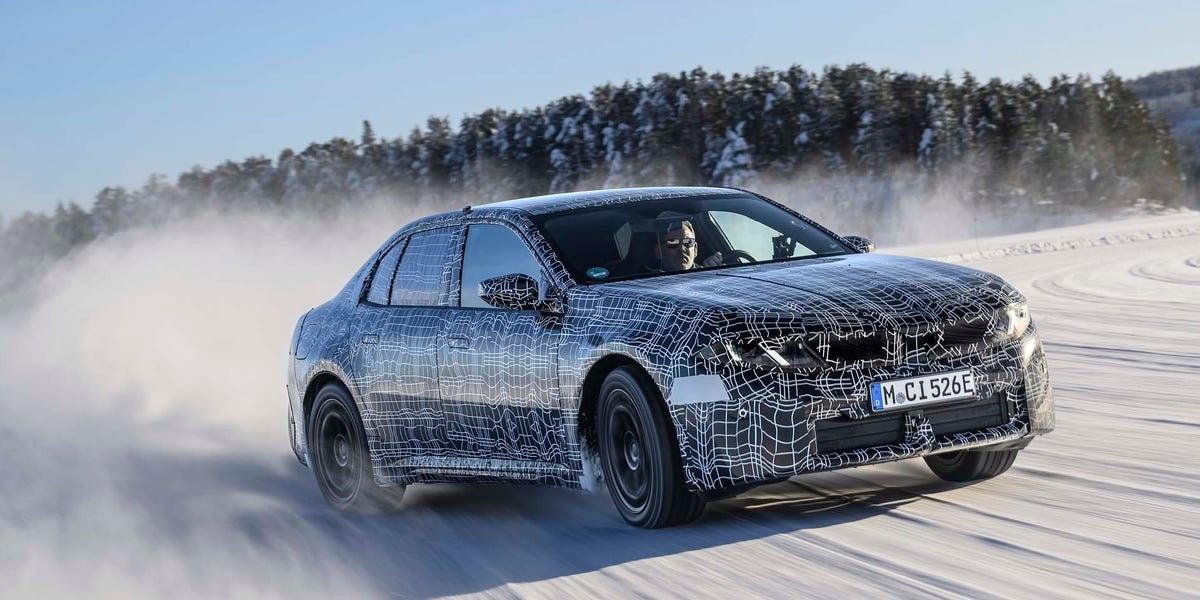
BMW is deep into final development of its all-electric i3 sports sedan, a model positioned as a sibling to the iX3 SUV but designed for more engaging handling. Recent testing took place in Arjeplog, Sweden—a cold-weather hub used by automakers like Mercedes-Benz and Bosch since the 1970s—where prototypes were pushed through snow-covered roads and ice tracks near BMW’s dedicated testing center opened in 2006.
Performance and Powertrain
The i3 50 xDrive prototypes tested featured a 463-horsepower dual-motor powertrain shared with the iX3, alongside an estimated 112-kWh battery pack targeting roughly 400 miles of EPA range.
Key point : while mechanically similar to the iX3, the i3 boasts a unique chassis setup tuned for more dynamic driving, aligning it with BMW’s 3-series legacy. The i3 is expected to be lighter than the iX3 (estimated around 5100–5300 pounds), improving agility.
Handling Dynamics and Software Control
Initial impressions suggest the i3 doesn’t quite capture the nimble spirit of the 3-series, despite improvements. To unlock its sporting potential, drivers must engage Sport mode and disable stability control, allowing for controlled drifts on icy surfaces.
This matters because : BMW’s new in-house software stack—first used in the iX3—prioritizes stability over outright performance. This system integrates steering, brakes, and powertrain controls via a central server, resulting in responses ten times faster than previous setups.
The software manages power delivery, regeneration, and even steering functions to minimize oversteer and reduce reliance on friction brakes. While smoother than traditional intervention systems, this approach can feel restrictive, suppressing aggressive driving styles. Engineers acknowledge ongoing software tuning as production nears in late 2026.
Test Results and Expectations
The i3 prototypes tested at Arjeplog performed well, but the car’s electronic controls still limited its full potential. The system slows the car mid-turn, preventing tail-out antics and reducing driver autonomy. Despite this, BMW engineers are actively addressing these issues before the i3 enters production.
The goal : to balance the i3’s all-electric powertrain with the agile driving experience expected from BMW’s 3-series line.
The upcoming BMW i3 represents a significant step towards a more electric future. However, the final product will depend on how effectively BMW refines its software stack to deliver both safety and thrilling performance.