Chery is preparing to launch its QQ3 electric hatchback in China this month, with a potential Australian release as early as 2027. This move signals a new wave of competition in the growing EV market, potentially sparking a price war as Chery aims to undercut established rivals like the BYD Dolphin and MG 4.
Testing and Confirmation
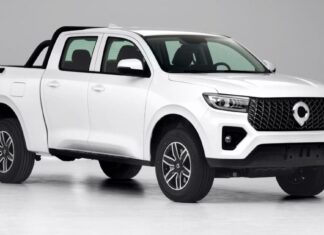
Camouflaged prototypes of the QQ3, along with the larger Fulwin A9L sedan, have recently undergone rigorous hot-weather testing in Australia. While neither model has been officially confirmed for local sales, Chery Australia has indicated a focus on three new vehicles: a dual-cab ute (the KP31), a mid-size sedan, and a small hatchback – the QQ3 being the likely candidate for the latter.
The QQ Brand and Market Positioning
The QQ sub-brand has a history of producing affordable vehicles, first gaining recognition with the 2003 Chery QQ, known for its resemblance to the Daewoo Matiz. The latest iteration, the QQ3, is positioned as a budget-friendly EV, with a projected starting price of ¥70,000 ($A14,317) in China. This undercuts the Dolphin’s ¥99,800 ($A20,414) entry price, setting the stage for aggressive pricing in international markets. In Australia, the Dolphin begins at $29,990, while the MG 4 starts at $37,990.
Specifications and Features
The QQ3 measures 4195mm in length and rides on a dedicated electric ‘T12’ platform with a single-motor, rear-wheel-drive layout. It offers two battery options: a 29.5kWh LFP battery paired with a 58kW motor, and a larger 41.3kWh battery with a 90kW motor. The claimed range under CLTC testing is 310–420km, slightly less than the Dolphin’s 427km (WLTP) but comparable to the Geely EX2’s 410km (CLTC).
Inside, the QQ3 boasts a 15.6-inch touchscreen powered by a Snapdragon 8155 chip and includes an AI voice assistant. The vehicle also features a digital instrument cluster and, crucially, physical buttons for essential functions – a response to new Chinese regulations mandating such controls in vehicles from July 2026.
Broader Strategy
Chery’s broader strategy includes a mix of powertrain options, with the KP31 ute offering diesel plug-in hybrid, range-extender, and battery-electric variants. The automaker acknowledges the continued relevance of internal combustion engines, emphasizing the importance of local tuning to optimize performance for the Australian market.
The arrival of the QQ3 could reshape the Australian EV landscape, forcing competitors to reassess their pricing strategies and pushing forward a new era of affordability in electric mobility.