In the automotive world, a “sleeper” is a vehicle that defies expectations. While most performance cars scream for attention with aggressive spoilers, wide body kits, and loud graphics, a true sleeper does the exact opposite. It hides its immense power behind a mask of suburban normalcy, catching rivals off guard at the starting line.
The Chevrolet SS, produced for only four years between 2014 and 2017, was perhaps the most defiant example of this formula in recent history. It was a muscle-bound powerhouse disguised as a sensible family sedan.
Understated Styling, Explosive Performance
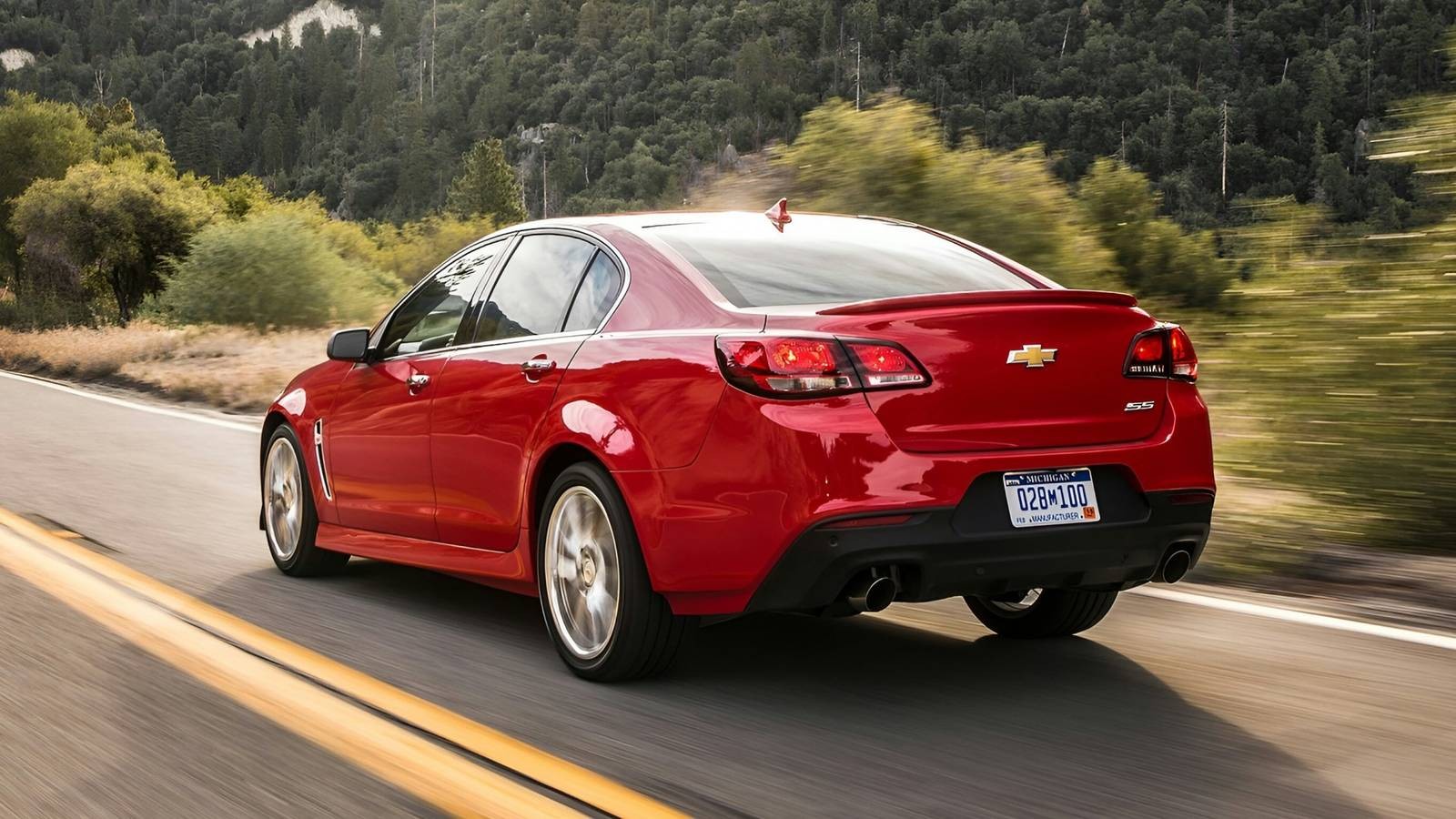
To the casual observer, the Chevy SS looks like any other four-door sedan tasked with grocery runs or school drop-offs. It lacks the gaudy aerodynamic treatments found on dedicated sports cars, opting instead for a clean, sedate silhouette.
However, beneath that unassuming exterior lies a heart built for speed. While its cousins, like the Chevrolet Impala, relied on much smaller four-cylinder or V6 engines, the SS was powered by a 6.2-liter LS3 V8.
Unlike the more modern, efficiency-focused LT1 engines found in the Corvette at the time, the LS3 was an “old-school” powerhouse. It prioritized raw output over fuel economy, delivering:
– 415 horsepower
– 415 lb-ft of torque
– 0–60 mph in just 4.5 seconds (when equipped with the automatic transmission)
This performance came at a cost, however. The SS was notoriously thirsty, with the EPA rating it as a significant “gas guzzler,” averaging a mere 14 MPG in the city.
The Driver’s Choice: Manual vs. Automatic
When the SS launched in 2014, it was only available with a six-speed automatic transmission. While the automatic was highly capable, Chevrolet listened to enthusiasts and introduced a six-speed TREMEC manual gearbox in 2015.
This addition transformed the car from a quick commuter into a true driver’s tool. Interestingly, testing showed that the manual version could match the automatic’s 4.5-second sprint to 60 mph, proving that you didn’t have to sacrifice speed to have total control over your gears.
An Australian Import in American Clothing
One of the most fascinating aspects of the Chevrolet SS is its heritage. Despite the Chevy badge, this was not a Detroit-built machine. Every single one of the approximately 13,000 units produced was assembled at GM’s Holden plant in Elizabeth, Australia.
The SS was essentially a rebadged Holden VF Commodore. This follows a long tradition of General Motors importing Australian-engineered platforms to satisfy American tastes for rear-wheel-drive performance. Other notable “Aussie transplants” include:
– The Pontiac GTO (based on the Holden Monaro)
– The Pontiac G8 (based on the Holden VE Commodore)
– The Chevrolet Caprice
A Growing Legacy for Collectors
The Chevrolet SS was a gamble that didn’t last long. As the industry moved toward smaller engines and higher efficiency, Chevrolet ended production after the 2017 model year.
However, its rarity and unique driving dynamics have caused its value to hold remarkably well. While it launched with a starting price around $44,000, recent auction data shows that well-maintained examples can fetch upwards of $55,000 —surpassing their original sticker price.
“The Chevrolet SS was an unapologetic dinosaur… a unique chapter in the modern sleeper sedan segment.”
Conclusion
The Chevrolet SS remains a rare breed: a high-performance, V8-powered sedan that refused to compromise on character or subtlety. As modern cars become increasingly digitized and efficient, the SS stands as a celebrated relic of a time when raw power and understated design went hand-in-hand.