


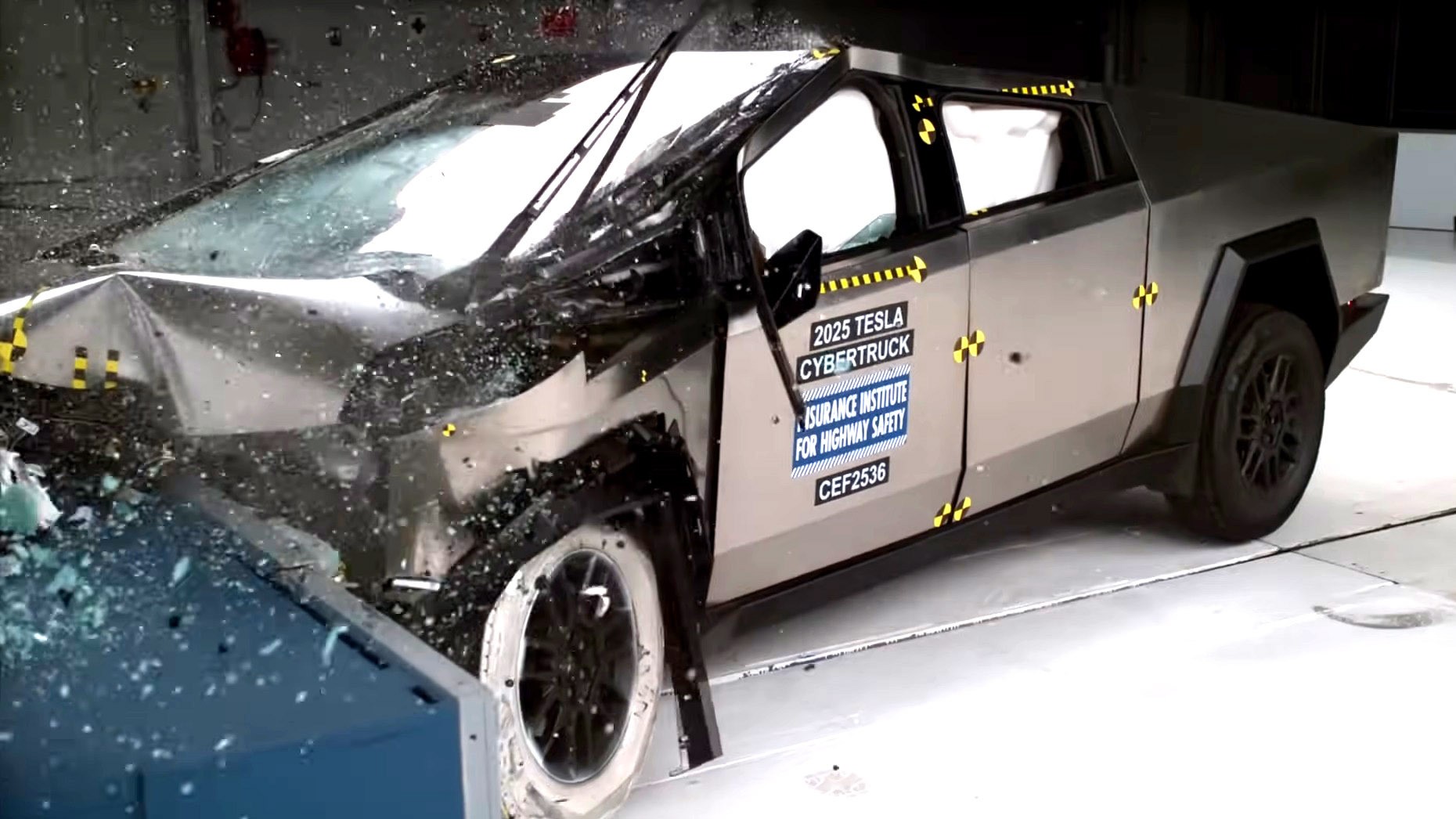
Tesla’s Cybertruck has earned the Insurance Institute for Highway Safety’s (IIHS) highest “Top Safety Pick+” rating, a significant milestone that validates the vehicle’s crashworthiness. However, this success doesn’t guarantee a smooth rollout in Europe, where stricter pedestrian safety standards pose a major challenge.
US Safety Standards: A Win for Tesla
The IIHS award signifies that Cybertruck models built after April 2024 meet rigorous US crash test criteria. This achievement is notable because the IIHS continually raises the bar for vehicle safety, pushing manufacturers to improve structural integrity and occupant protection. The Cybertruck passed all major tests, including small and moderate overlap frontal crashes, side impacts, and headlight performance.
Key improvements contributing to this rating include redesigned underbody and footwell structures. Tesla has even acknowledged the achievement by playfully referencing past skepticism about the vehicle’s safety capabilities.
Why Europe Is Different
While excelling in US tests is impressive, Europe operates under a different framework. The UNECE regulations and Euro NCAP prioritize pedestrian, cyclist, and overall urban environment safety to a much greater extent than US standards. This means that the Cybertruck’s design—specifically its rigid stainless steel body and angular shape—directly conflicts with European safety requirements.
European rules demand deformable front ends and energy-absorbing materials to minimize injury in pedestrian collisions. The Cybertruck’s sharp edges and stiff structure do not meet these criteria. Tesla’s own plant manager in Germany has stated that large-scale sales in Europe are unlikely without substantial modifications.
Are European Standards “Better”?
The question isn’t necessarily about which system is “better,” but rather about different priorities. US testing excels at evaluating crash dynamics involving large vehicles, reflecting the American automotive landscape. Europe, meanwhile, excels at protecting vulnerable road users—pedestrians and cyclists—who make up a larger portion of traffic fatalities.
The Cybertruck proves its ability to protect occupants effectively, but its current design may not meet Europe’s external safety requirements without major redesigns. For now, it remains an American success story in safety, with limited prospects for widespread sales in Europe.


