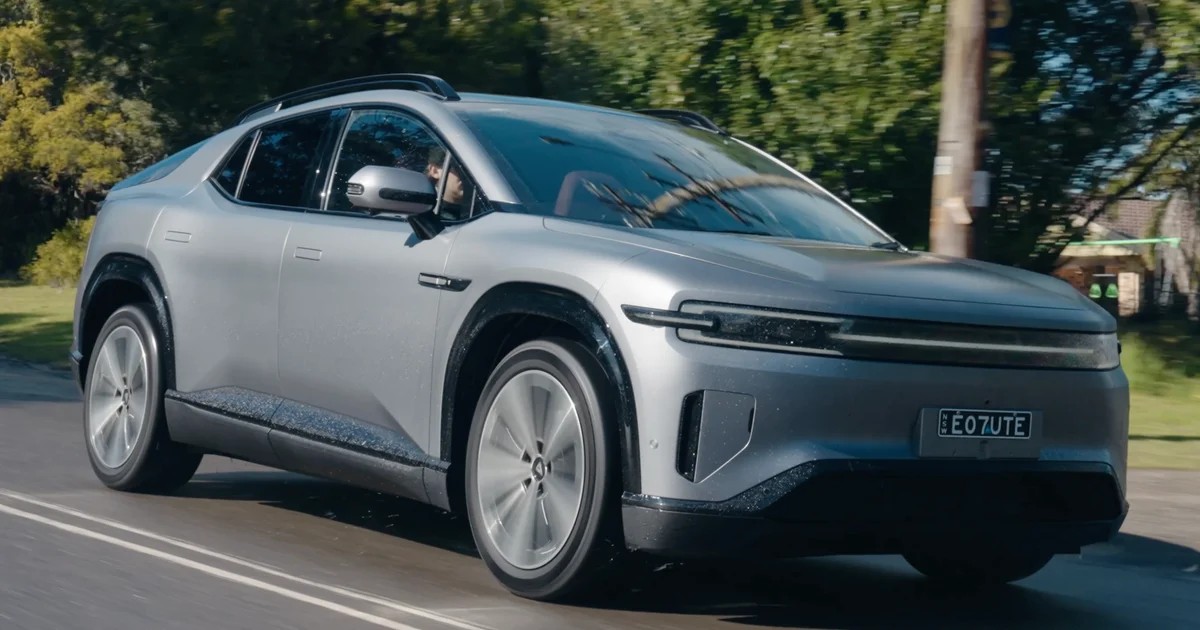
Deepal, a new entrant into the Australian car market, has temporarily suspended sales of its E07 Multitruck due to a failure to meet Australian Design Rule (ADR) 34/03 regarding child restraint anchor points. The issue, confirmed by Deepal Australia, affects vehicles manufactured without a required anchor in the middle rear seat position.
The Problem: ADR 34/03 mandates the presence of a child restraint anchorage in the center rear seat, a safety standard in place since 2019 for new vehicles and 2022 for all vehicles sold. Without this anchor, a child seat cannot be securely installed in that position, increasing the risk of injury during an accident. Deepal will conduct a recall campaign to rectify the non-compliance.
This incident is not isolated. Over the past several years, BYD, Honda, and Tesla have also faced similar regulatory hurdles in Australia. BYD paused deliveries of its Atto 3 in 2022, while Honda controversially launched the HR-V as a four-seater to avoid compliance issues. Tesla was forced to recall updated Model 3 sedans after launching a non-compliant version late in 2023.
Why This Keeps Happening: Australia’s automotive regulations often diverge from international standards, forcing manufacturers to either adapt vehicles specifically for the Australian market or risk non-compliance. This issue has prompted criticism from brands like Mitsubishi and Nissan, who cite ADR 34/03 as a barrier to market entry.
The Australian government acknowledged these concerns in late 2024, launching a review to harmonize ADRs with global standards. The review, led by Dr. Warren Mundy, sought public feedback on streamlining the approval process for vehicles, aiming to reduce costs and delays without compromising safety. The Federal Chamber of Automotive Industries advocated for adopting UN regulations instead of maintaining unique Australian standards.
The findings of this review are pending, but the recurring compliance failures highlight the need for regulatory reform. The current system creates unnecessary friction for automakers while failing to prevent safety issues, as demonstrated by the Deepal E07 recall.
The situation underscores the complexity of automotive regulations and the importance of aligning standards to ensure both safety and efficient market access.