Toyota’s rise to automotive supremacy in America wasn’t built on flashy marketing campaigns, but on engineering prowess. While legendary reliability stories surround models like the Hilux and 4Runner, the engine that truly propelled Toyota’s dominance wasn’t the indestructible 22R inline-four, nor the smooth MZ V-6 – it was the versatile 2GR-FE V-6, a modern workhorse that quietly conquered the market.
The Myth of the 22R: A Solid Start, Limited Reach
The 22R, produced from 1982 to 1995, earned Toyota its initial reputation for durability. This iron-block engine powered trucks like the Pickup and 4Runner, proving Japanese engineering could outlast American competitors. However, its strength was also its limitation: the 22R remained a truck engine, never scaling to the volume segments of sedans, crossovers, or luxury cars. Toyota needed something broader to truly win over the American car-buying public.
The MZ V-6: A Step Forward, But Not the Final Solution
The MZ V-6 (introduced in 1993) represented a significant leap forward. This smooth, reliable engine powered Camrys, Avalons, and even Lexus models, bridging the gap between Toyota and luxury buyers. It proved Toyota could compete in mainstream segments, but the MZ V-6 had its own constraints: it didn’t age gracefully and lacked the adaptability needed for a long-term, all-encompassing strategy.
The 2GR-FE: The Engine That Changed Everything
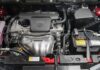
In 2005, Toyota introduced the 2GR-FE 3.5-liter V-6, and everything changed. Unlike its predecessors, this engine was engineered to function across almost the entire Toyota lineup. From the Camry and Highlander to the Sienna and even the Tacoma, the 2GR-FE proved its versatility by delivering consistent performance in diverse applications.
Why this mattered: This engine wasn’t just about power; it was about efficiency and longevity. The use of a timing chain instead of a belt significantly improved reliability. Toyota also understood that versatility meant meeting all market segments, and the 2GR-FE was deployed in everything from family sedans to off-road trucks.
The Engineering Behind the Dominance
The 2GR-FE’s success lies in its core design philosophy: longevity. The lightweight aluminum block and dual VVT-i technology allowed Toyota to fine-tune the engine for specific vehicle needs without sacrificing reliability. This flexibility is why it felt equally at home in a Camry and a Tundra.
Over the years, Toyota continuously refined the 2GR-FE, introducing direct injection, turbocharging, and hybrid compatibility. The 2GR-FKS variant, with both port and direct injection, even addressed carbon buildup issues that plagued other engines.
A Legacy That Persists
Even today, the 2GR-FE remains in production in select Toyota and Lexus models – a testament to its enduring quality. The engine’s longevity has allowed it to dominate the American market for over two decades. Toyota didn’t win by building one great vehicle; they won by building one great engine that could power them all.
In conclusion, Toyota’s dominance wasn’t about a single breakthrough, but a relentless pursuit of engineering excellence. The 2GR-FE V-6 embodied this approach, proving that the right engine, deployed strategically, can conquer an entire market.