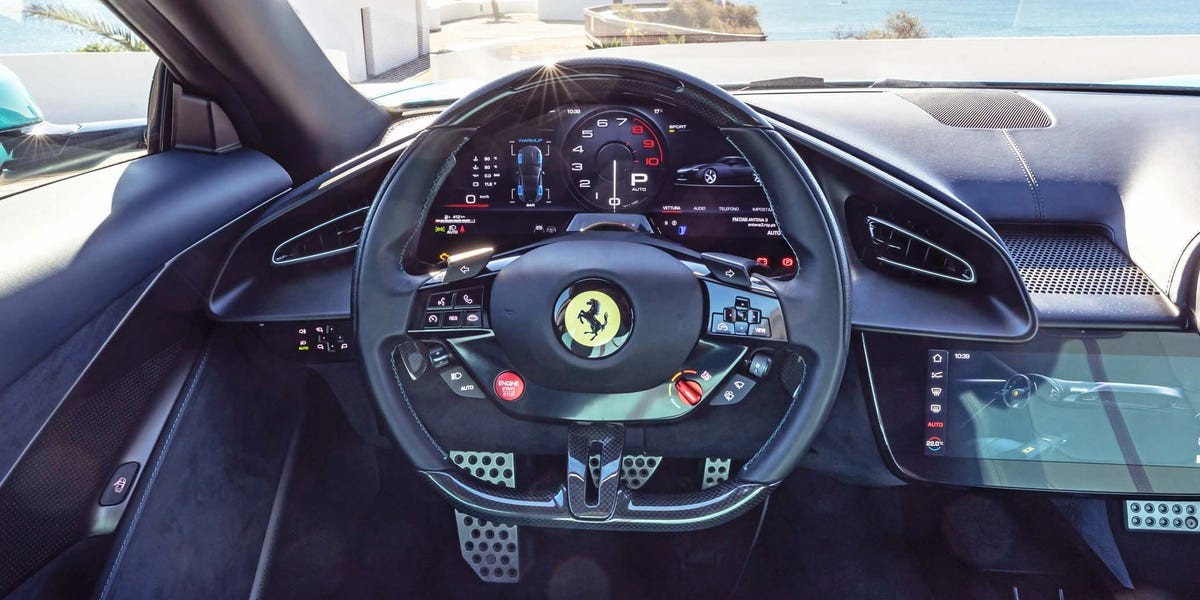
Ferrari is retrofitting steering wheels in several models to remove controversial haptic controls, in a rare admission of design misstep. The move comes after significant complaints from customers who found the touch-sensitive buttons frustrating and distracting.
The Shift in Design Philosophy
For years, automakers have been streamlining interiors by replacing physical buttons with touch-based interfaces. Ferrari, known for its traditional approach to luxury performance, recently adopted this trend with haptic controls on steering wheels. However, the response was overwhelmingly negative, with owners citing accidental activation and general usability issues.
The program will initially include the 12Cilindri and Purosangue models but will expand to the 296 GTB, 296 GTS, and Roma Spider. Ferrari confirmed that the retrofit replaces almost all haptic controls with physical buttons. One exception remains: the engine start/stop button, which Ferrari likely kept haptic to prevent accidental shutdowns.
Why This Matters
This is notable because automakers rarely admit design flaws and retroactively fix existing vehicles. Ferrari’s decision demonstrates the power of customer feedback, even within a luxury brand that historically prioritizes its own vision. The move also highlights the broader tension between minimalist design and functional usability.
The trend toward haptic controls is driven by cost savings (fewer parts) and a desire for cleaner aesthetics. Yet, for many drivers, tactile feedback is crucial for safety and convenience. Ferrari’s reversal suggests that even high-end brands must prioritize practicality over pure design trends.
The 2027 Ferrari Amalfi as Proof
The company has already begun implementing this change with the 2027 Amalfi, a refreshed version of the Roma. While the 2026 Roma was equipped with haptic controls, the 2027 model features primarily physical buttons on the steering wheel. This indicates a clear shift in Ferrari’s approach.
Ferrari’s willingness to adjust its designs based on customer feedback is a step toward better user experience, but also a sign that even luxury brands must adapt to real-world needs. The retrofit program shows that sometimes, going back to basics is the best way forward.