In the automotive world, most vehicles follow a predictable downward trajectory: the moment they leave the showroom, they begin to lose value. This depreciation is often aggressive, particularly with high-end luxury models that can see their market value plummet within just five years.
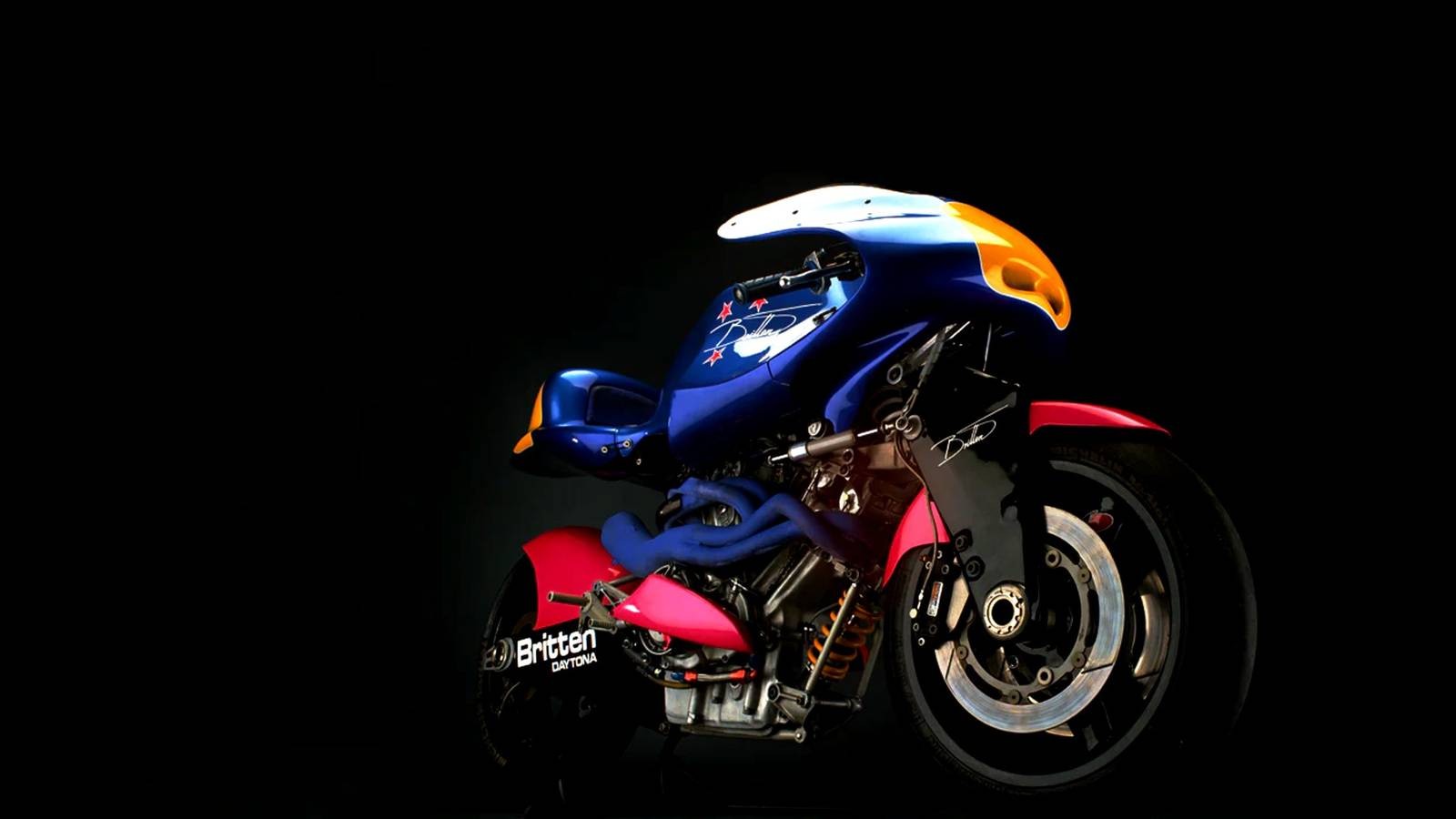
However, a rare breed of machine exists that defies this economic gravity. For these vehicles, scarcity, historical significance, and radical engineering transform them from mere transport into appreciating assets. The most prominent example of this phenomenon is the Britten V1000.
Breaking the Mold of Traditional Value
While the current record holder for the most expensive motorcycle is a 1915 Cyclone board track racer—which sold for a staggering $1.32 million —the Britten V1000 is positioned to challenge that summit.
Unlike most classic motorcycles, which see their value fluctuate based on nostalgia, the V1000 has demonstrated consistent, aggressive growth:
* Original Cost: In the 1990s, these handmade race bikes cost approximately $100,000 (roughly $200,000 in today’s inflation-adjusted dollars).
* Current Market Value: Private sales suggest the bikes are now worth upwards of $300,000.
* The Auction Factor: Because these machines have only changed hands through private, unrecorded sales, a public auction could potentially trigger a record-breaking bidding war.
A Masterclass in “Radical” Engineering
The V1000 is not just valuable because it is old or rare; it is valuable because it represents a fundamental departure from how a motorcycle is supposed to function. Developed by John Britten and his small team in New Zealand, the bike was a “David vs. Goliath” story that saw a tiny independent outfit take on established racing giants.
The Engine as the Chassis
The most striking feature of the V1000 is its chassis-less design. In a move that would be considered too risky for major manufacturers, Britten utilized the engine as a fully stressed member.
– The engine casings serve as the structural backbone of the motorcycle.
– This required the team to design and cast their own engine components in-house to ensure the bike could maintain structural integrity without a traditional frame.
– The resulting V-twin powerhouse produced 166 horsepower, a formidable figure for the 1990s.
Defying Suspension Norms
The V1000 also rejected conventional suspension geometry. Instead of a standard telescopic fork, it utilized an elaborate double wishbone system connected to a carbon composite girder fork. While girder forks were considered obsolete by the 1960s, Britten’s use of advanced composite materials turned an “old” concept into a cutting-edge, highly adjustable racing tool.
Why the Legend Endures
The Britten V1000 is a rare intersection of art, science, and high-stakes drama. It was built during an era before major manufacturers began widespread experimentation with composite materials, making its technical sophistication even more impressive.
The narrative surrounding the bike adds a layer of emotional value that is difficult to quantify. John Britten became a legend for proving that radical innovation could overcome massive corporate budgets, yet he tragically passed away just as his creation began to achieve international racing success.
With only 10 units ever produced, each bike is treated more like a museum piece than a vehicle. As the era of internal combustion matures and the historical significance of Britten’s work is further cemented, the V1000 remains a prime example of how extraordinary engineering can turn a machine into a masterpiece.
The Britten V1000 is more than a motorcycle; it is a physical testament to the idea that unconventional thinking can outperform established tradition, making it a cornerstone of motorcycling history.