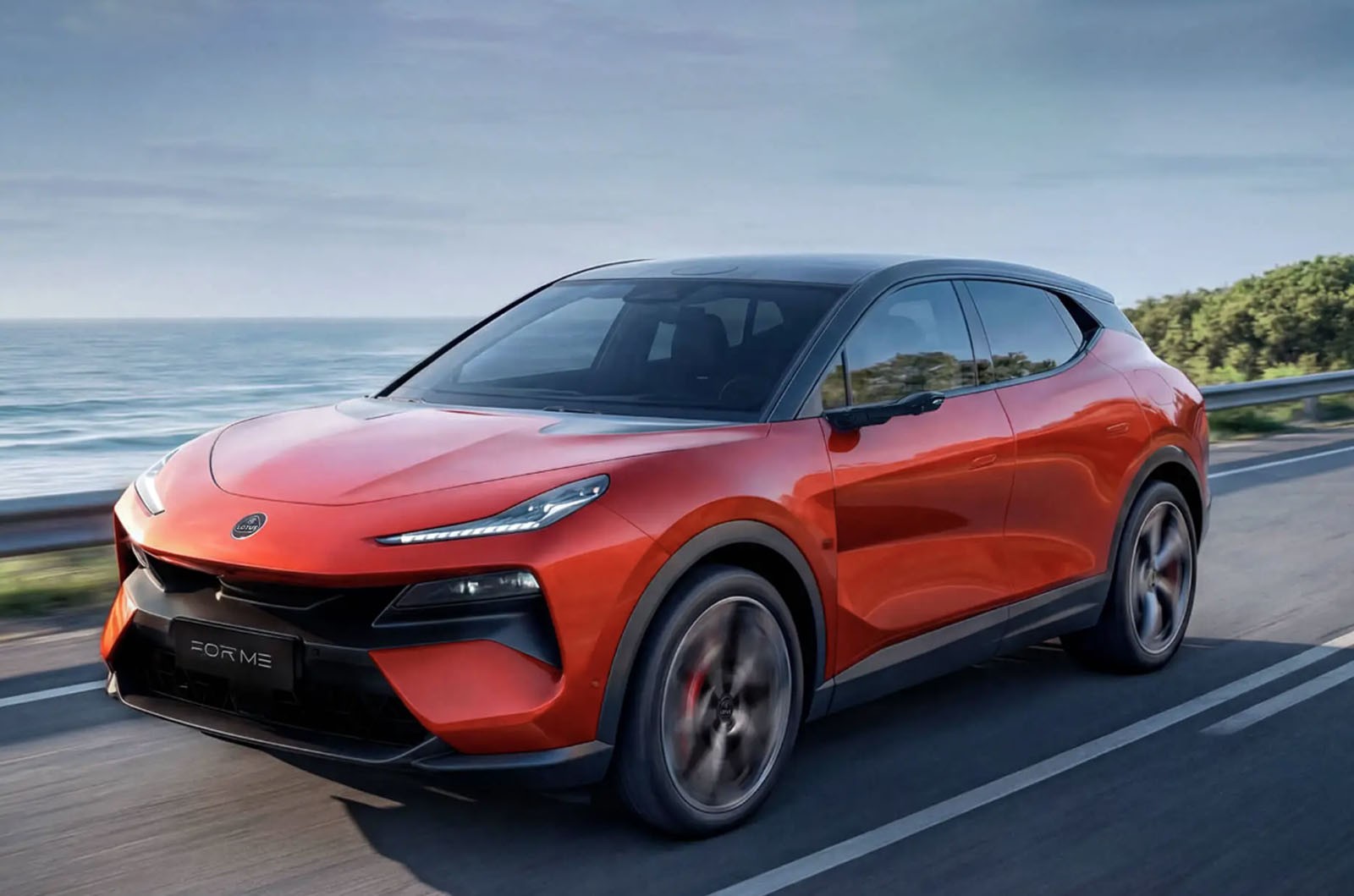
Lotus has unexpectedly shifted course, launching a plug-in hybrid (PHEV) version of its Eletre SUV after initially committing to an all-electric future. The move, announced in China and slated for a European release this summer under the name “Eletre X”, marks the brand’s return to internal combustion engines (ICE). This decision comes as sales of Lotus’s fully electric models, the Eletre and Emeya, have lagged behind initial projections.
Performance and Power
The Eletre PHEV boasts a combined output of 939bhp, exceeding the maximum 892bhp of the pure-electric Eletre R. This is achieved by pairing a 2.0-liter turbocharged petrol engine with dual electric motors. Acceleration from 0 to 62 mph is claimed at just 3.3 seconds. Lotus CEO Feng Qingfeng positioned the new model directly against high-performance luxury rivals, including the Lamborghini Urus and Ferrari Purosangue.
Hybrid System Details
The Eletre X features a 70kWh battery, smaller than the EV’s 108kWh pack, providing an electric-only range of 220 miles (based on China’s CLTC test cycle). The combined range is estimated at 880 miles. The battery supports ultra-fast “6C” charging, replenishing from 30% to 80% in approximately eight minutes. This technology is similar to that found in the Zeekr 9X, another vehicle under the Geely umbrella, suggesting potential for further performance upgrades.
Handling and Weight
To counter the weight increase typically associated with hybrid systems, Lotus has equipped the Eletre X with its “6D Digital Dynamic Chassis,” including an adaptive 48V anti-roll bar. This technology aims to prevent the handling issues often seen in heavier SUVs. The vehicle weighs between 2575kg and 2625kg, roughly matching the weight of the all-electric model.
Market Strategy and Financial Implications
Lotus’s pivot to PHEV technology is a direct response to slower EV adoption rates in certain markets, such as Italy and Saudi Arabia, where wealthy customers remain hesitant to switch entirely to electric. The company recorded an operating loss of $357 million for the first nine months of 2025, and the PHEV launch is expected to boost profitability.
“The launch of PHEVs will help Lotus’s sales in regions with slower uptake of EVs,” stated CEO Feng Qingfeng.
Lotus also plans to introduce a PHEV version of the Emira sports car by 2027, aligning with the upcoming Euro 7 emissions regulations. The brand had previously pledged to be fully electric by 2028, but this timeline has now been revised.
The Eletre X’s reintroduction of combustion engines represents a strategic realignment for Lotus, acknowledging that a hybrid approach is currently more viable for expanding its market reach and improving financial performance.