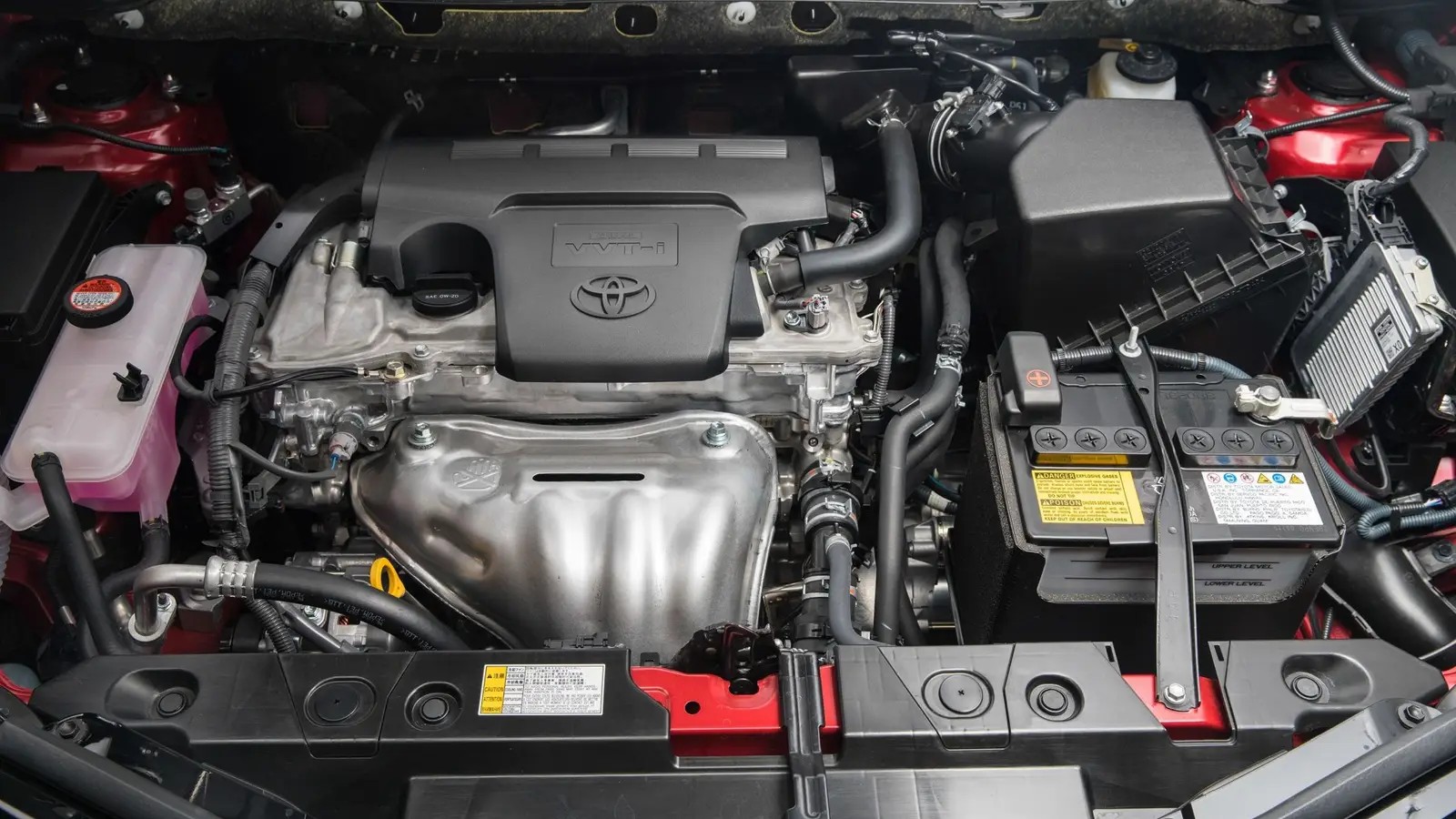
For years, skeptics doubted the longevity of hybrid vehicles, predicting premature engine failure. They were wrong. Modern hybrids consistently prove remarkably durable, and much of that success isn’t due to advanced battery tech – it’s thanks to a decades-old engine design that quietly revolutionized the industry. The key isn’t just having a combustion engine in a hybrid, but how that engine is engineered to withstand the unique stresses of the system.
The Hybrid Challenge: Start-Stop Cycles and Engine Wear
Conventional gasoline engines thrive on consistent operation. Long runs allow fluids to normalize, minimizing wear. The real damage occurs during cold starts, when lubrication is still settling and metal-on-metal contact happens. To mitigate this, engineers traditionally advise minimizing starts. Hybrids, however, do the opposite – cycling engines on and off constantly during stop-and-go driving.
This poses a fundamental problem: how do you build an engine that benefits from frequent shutdowns and restarts? Early hybrid adopters quickly discovered which designs would survive this punishment, and which would fail. The answer wasn’t in flashy innovation, but in a surprisingly conservative engineering choice.
Fleet Data: The Harsh Truth About Reliability
The real-world testing ground for early hybrids wasn’t controlled lab conditions, but the brutal reality of taxi and rideshare fleets. These vehicles accumulated mileage at an unprecedented rate, often idling for hours, accelerating aggressively, and braking hard. The engine cycled hundreds of times during a single shift, a torture test no conventional engine was designed to handle.
Yet, the data proved astonishing: hybrids didn’t just survive, they thrived. Warranties were rarely needed, maintenance costs were low, and fuel economy was exceptional. This wasn’t luck; it was the result of one automaker making a critical design decision.
The Atkinson Cycle: A Thermal Efficiency Breakthrough
The secret? The Atkinson cycle. Unlike the conventional Otto cycle used in most gasoline engines, the Atkinson cycle delays closing the intake valves, reducing compression and maximizing expansion. This increases thermal efficiency at the cost of peak power – but in a hybrid, the electric motor fills the torque gap.
The result is an engine that extracts more work from each combustion event with less stress on internal components. This makes it ideally suited for frequent start-stop cycles, minimizing wear and maximizing longevity.
Toyota’s 2AR-FXE: The Engine That Proved It Could Work
Toyota wasn’t the first to explore hybrid technology, but it was the first to commit fully to a combustion engine designed specifically for hybrid duty. The 2AR-FXE, introduced in 2009, became the standard for Toyota and Lexus hybrids, powering vehicles like the Camry Hybrid, RAV4 Hybrid, and Lexus ES 300h.
This engine wasn’t a modified version of an existing design; it was purpose-built. Its high 12.5:1 compression ratio, combined with variable valve timing (VVT-i), optimized thermal efficiency while preventing detonation. Roller rocker arms, low-tension piston rings, and an electric water pump further reduced friction and ensured fast engine warm-up.
The Real-World Proof: 250,000 Miles and Beyond
The 2AR-FXE wasn’t just theoretically sound; it performed in the real world. Rideshare drivers routinely push Camry Hybrids past 250,000 miles without major engine issues – a feat unheard of with many conventional vehicles. This track record validated the Atkinson cycle’s effectiveness and established Toyota as a leader in hybrid reliability.
Legacy of the 2AR-FXE: The Foundation for Future Hybrids
While the 2AR-FXE has been replaced by newer engines like the A25A-FXS, its engineering principles remain central to Toyota’s hybrid strategy. The A25A-FXS builds on the 2AR-FXE’s success, pushing thermal efficiency even further.
The 2AR-FXE’s success wasn’t about revolutionary leaps; it was about building a solid foundation and refining it incrementally. This conservative approach proved more effective than chasing flashy innovation. Decades later, this engine remains an overlooked key to modern hybrid reliability.