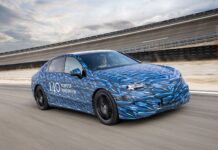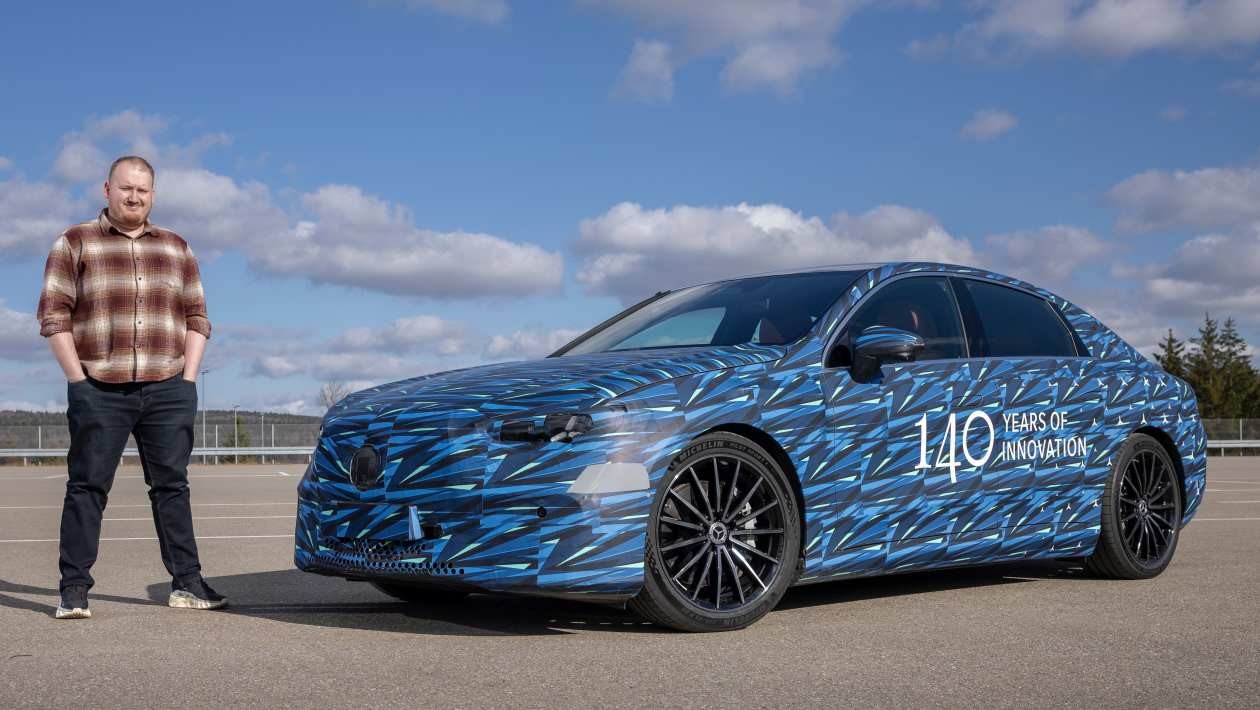
Mercedes-Benz is preparing to launch its first all-electric C-Class, a move that pits it directly against BMW’s i3 in the high-stakes competition for the luxury EV market. Initial impressions from exclusive test drives in Germany suggest that Mercedes is prioritizing a familiar driving experience, rather than radical reinvention.
Familiarity with a Modern Twist
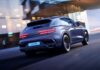
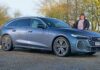
The C-Class Electric maintains the traditional saloon silhouette—a long hood and sleek profile—that has defined the model for decades. This contrasts with Mercedes’ more futuristic designs, such as the EQS and EQE, which feature a distinctly different aesthetic. This decision reflects a strategy to appeal to existing customers who value the C-Class’s established identity. However, the car will feature Mercedes’ polarizing illuminated grille, similar to the GLC Electric, as a visual signal of its electric powertrain.
Under the Hood: MB.EA Platform and Advanced Tech
The C-Class Electric is built on Mercedes’ new MB.EA platform, designed specifically for EVs. This architecture supports 800-volt charging for rapid replenishment and includes a two-speed transmission, similar to the Porsche Taycan, to optimize both efficiency and performance. The chassis also benefits from updated air suspension and rear-wheel steering from the S-Class, promising enhanced ride quality and agility.
On the Road: Sporty Handling and Refined Comfort
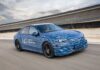
Test drivers report exceptional handling, with minimal body roll even during aggressive cornering. Mercedes has tuned the C-Class Electric to feel as agile as its gasoline counterpart, despite its heavier weight. The suspension adapts dynamically to road conditions and speed, ensuring a smooth ride, and is even connected to cloud-based data to anticipate road imperfections. The regenerative braking system is smooth, with optional one-pedal driving. Cabin noise is minimal, with only slight road noise intrusion during testing.
Performance and Range
While official specs remain under wraps, the C-Class Electric is expected to share the GLC Electric’s powertrain: dual motors, all-wheel drive, 482 horsepower, and 800 Nm of torque. The 94.5 kWh battery should deliver around 450 miles of range, though BMW’s i3 may offer an additional 100 miles. Charging speeds will be competitive, with a potential 10-80% top-up in under 22 minutes at 330kW.
A Direct Challenge to BMW
Mercedes-Benz is taking a strategic approach to electrification, offering both combustion and electric versions of its core models side-by-side. The C-Class Electric represents a critical step in this transition, directly challenging BMW’s i3 and continuing the long-standing rivalry between the two German automakers. With a blend of familiar design, advanced technology, and sporty performance, the C-Class Electric is poised to be a strong contender in the premium EV segment.