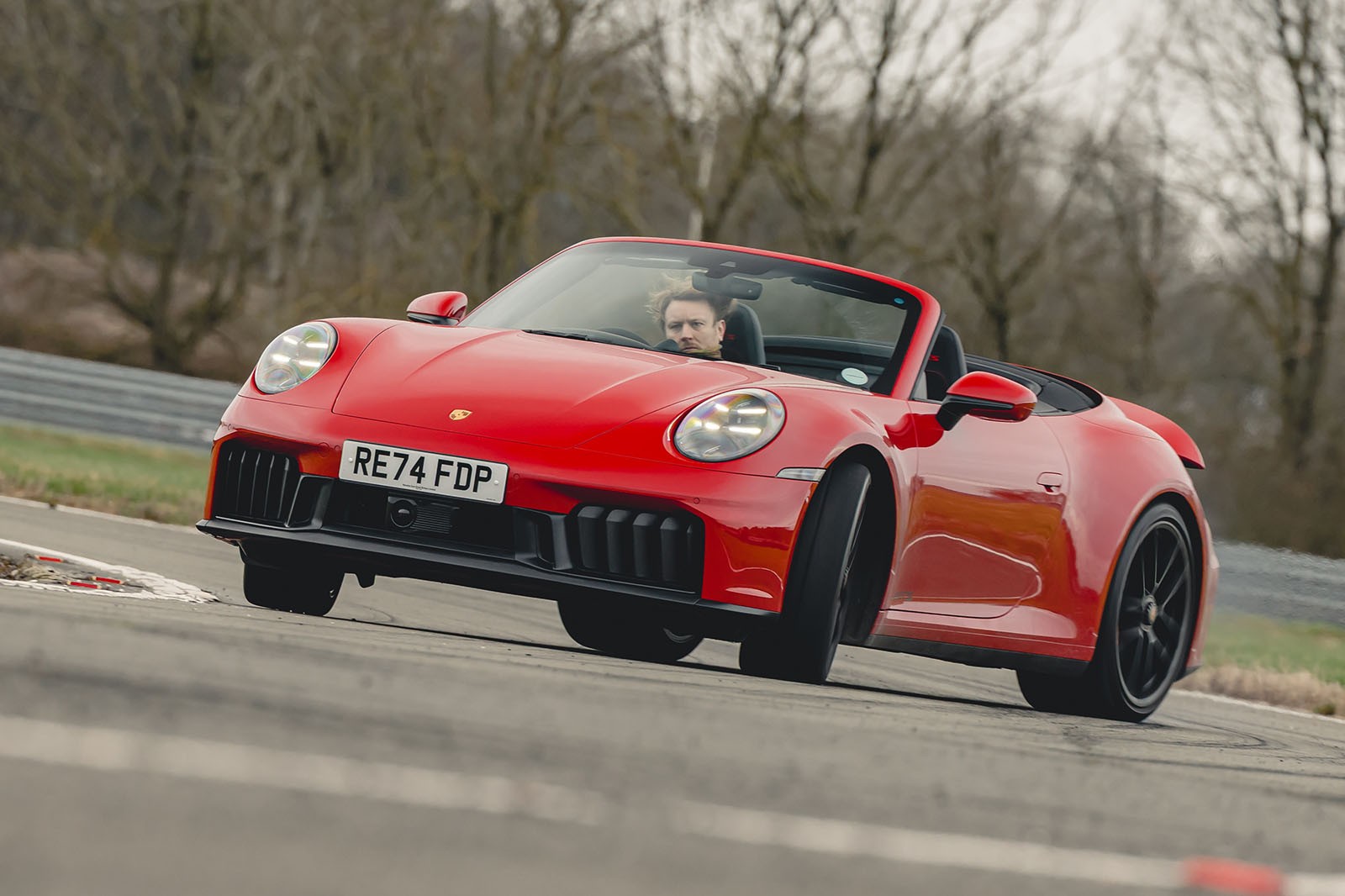
The Porsche 911 Cabriolet has evolved from a visually awkward, hunchbacked design to a sleek convertible that rivals its coupé counterpart in aesthetics. The current 992 generation seamlessly integrates its folding fabric roof, making it nearly indistinguishable from the hardtop version. This evolution is now in the hands of Tobias Sühlmann, who recently took over from long-time Porsche designer Michael Mauer.
Engineering for Open-Air Driving
Porsche builds the 911 Cabriolet on the same production line as the coupé, though with subtle structural differences. The convertible uses slightly less extruded aluminum but more aluminum plate, reinforcing the A-pillars with a lightweight, high-strength plastic composite. This design saves weight and improves rigidity over previous generations. The hydraulically powered roof folds neatly into a compact space – just 55cm long and 23cm high – and includes a glass window and magnesium support bows.
Cabin Experience and Visibility Trade-Offs
The interior of the GTS Cabriolet mirrors the coupé, with the notable exception of reduced rear visibility. The roofline significantly narrows the view compared to traditional 911s, resulting in a smaller rear window that makes the back darker. However, this is the price for enjoying an open-top driving experience. A retractable wind deflector mitigates wind buffeting at speed, though it cannot be used with rear passengers. The rear seats are slightly more upright than in the coupé but can still fold forward to create extra storage space.
Storage and Weight Considerations
Despite the retractable roof, the 911 Cabriolet retains the same 135-liter frunk capacity as the coupé, accommodating luggage and other cargo without compromise. The four-wheel-drive system and hybrid battery pack do not reduce this space. Performance testing shows that the 4WD Cabriolet achieved a 0-60 mph time of 2.9 seconds, only a tenth slower than the lighter, rear-wheel-drive coupé. Weight differences, environmental conditions, and traction variability explain the slight margin.
Performance Benchmarks
The Carrera 4 GTS Cabriolet is supercar-fast, with a quarter-mile time of 11.0 seconds – faster than the 2004 Carrera GT. The hybrid powertrain, featuring a 400V battery and electric turbocharger, delivers instant response and builds power in a way that feels naturally aspirated. The electric assistance is subtle but enhances responsiveness and prepares the platform for future hybrid integration. Braking performance remains strong, with a 70-0 mph stopping distance of 41.8 meters, surpassing the Aston Martin Vantage coupé.
The Hybrid Advantage
The new 3.6-liter engine, enhanced with an e-turbo, delivers a refined driving experience. The hybrid system is nearly undetectable, yet it contributes to a 5% increase in responsiveness and prepares the car for future hybrid technologies. This blend of performance and usability is a hallmark of the 992 generation.
Conclusion
The Porsche 911 Cabriolet demonstrates that open-top driving does not have to compromise performance or refinement. It retains the dexterity and poise of the coupé while offering the exhilaration of driving with the top down. This model proves that Porsche has minimized the drawbacks traditionally associated with convertibles, making it an exceptionally capable and enjoyable sports car.