The market for high-performance cars and luxury trucks is rapidly diverging from broader automotive trends, with prices escalating at an unprecedented rate. New data from Kelley Blue Book (KBB) reveals that while overall car prices are still rising, the luxury segment is accelerating far ahead, while affordable options dwindle. This shift highlights a growing disparity in the automotive market, where demand for premium vehicles remains strong even as incentives and sales lag elsewhere.
Performance Vehicles Lead the Price Surge
In February, high-performance cars saw the largest price jump of any segment, hitting an average transaction price of $133,918 – a 14.5% increase year-over-year. This is nearly triple the industry average, indicating that buyers with substantial disposable income are continuing to prioritize speed and luxury. Porsche, in particular, saw its average transaction price climb 11.1% to $125,458.
The trend is simple: demand for high-end vehicles remains robust, allowing manufacturers to push prices upward without significant resistance. This is partly driven by limited supply chains, but also by a consumer base that isn’t deterred by rising costs.
Luxury Trucks Follow Close Behind
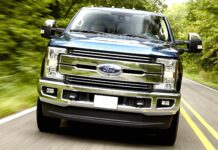
Luxury pickup trucks are also experiencing rapid inflation, with average transaction prices surging 13.9% to $99,698. Fully equipped trucks are now firmly in six-figure territory, reflecting a willingness among buyers to pay a premium for comfort, capability, and status.
This mirrors a broader trend in the truck segment, where manufacturers are increasingly offering high-trim packages with extensive features, driving average prices upward.
Broader Market Trends: A Slower Climb
While luxury segments race ahead, the overall automotive market is rising at a more moderate pace. The industry average transaction price reached $49,353 in February, up 3.4% from the previous year.
Manufacturer’s suggested retail prices (MSRP) also continue to creep higher, averaging $51,440 for the 11th consecutive month above the $50,000 mark. This suggests that while overall inflation is moderating, manufacturers are still leveraging pricing power where possible.
The Vanishing Affordable Car
At the lower end of the market, a more concerning trend is emerging: the disappearance of truly affordable vehicles. Subcompact car prices jumped 11.9% to $24,939, closing the gap with compacts, which average $27,341.
This increase isn’t due to organic demand, but rather the elimination of the cheapest models. The Mitsubishi Mirage has been discontinued, and the Nissan Versa is slated for removal, reducing the supply of ultra-low-cost options and artificially inflating average prices.
Nissan and Mitsubishi recorded some of the largest brand-level price increases, largely due to this shrinking entry-level inventory.
EV Incentives Soften the Blow (For Now)
Electric vehicle (EV) prices saw a slight dip to around $55,300 in February, aided by substantial incentives averaging over 14% of transaction prices. This has narrowed the price gap between EVs and gasoline-powered cars to roughly $6,500 – one of the smallest spreads recorded.
However, EV sales are faltering, with Tesla’s February sales down 8.9% year-over-year, marking their lowest monthly total since late 2021. The broader EV segment experienced a 26% drop in sales from the same period last year.
The Bottom Line
Despite the overall industry average remaining around $44,000, the reality is that luxury and performance vehicles are pulling the market upward, leaving fewer affordable options for budget-conscious buyers. The trend underscores a growing economic divide in the automotive sector, where the wealthy continue to spend freely while the average consumer faces shrinking choices.
The future of affordable cars remains uncertain as manufacturers shift focus towards higher-margin segments, leaving many wondering where the entry-level buyer will turn next.