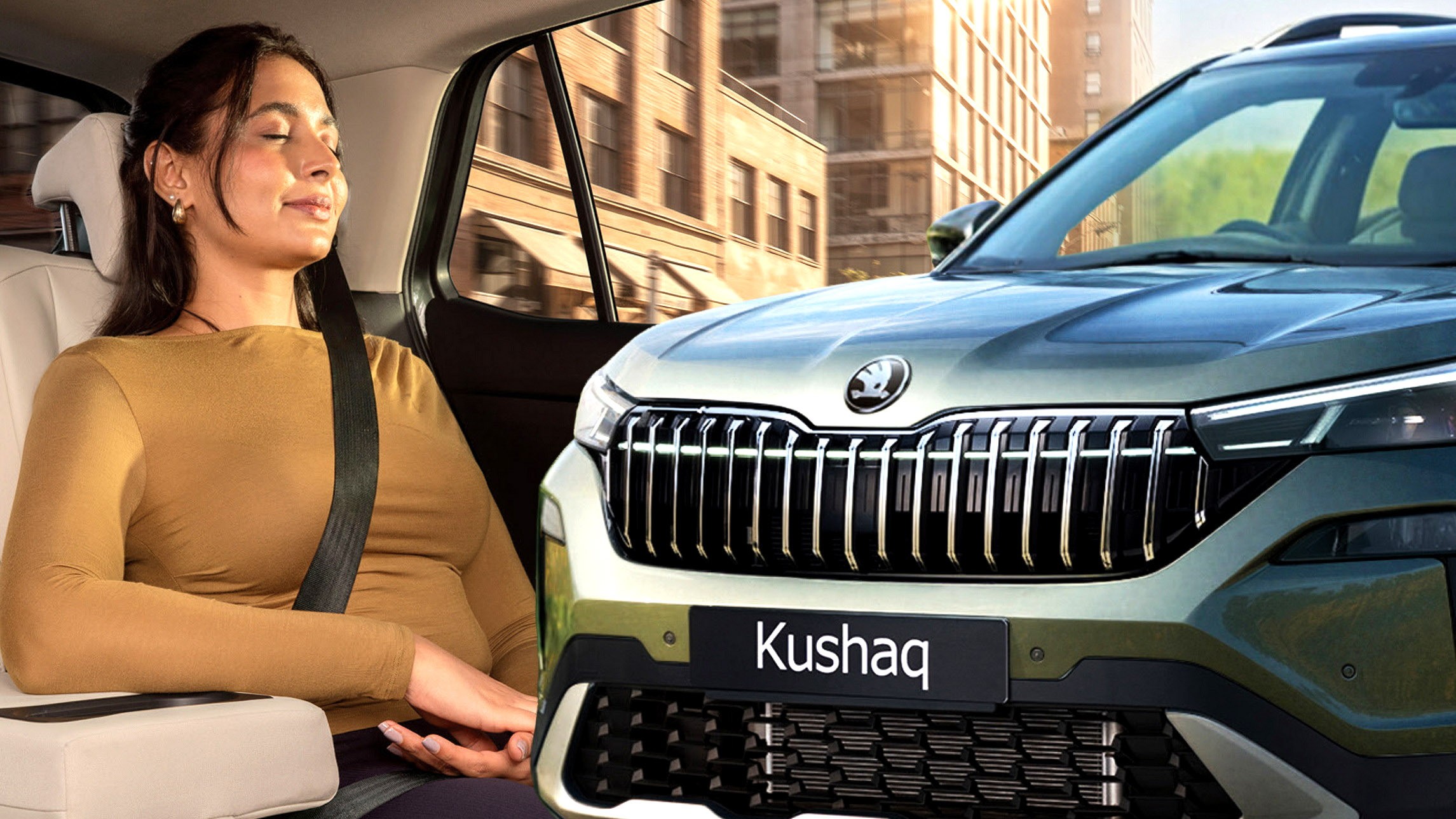
Skoda has unveiled a significant update for the Kushaq compact SUV in India, introducing features previously reserved for luxury vehicles—including rear massaging seats. This refresh comes nearly five years after the model’s initial launch and stands out in a market where mid-cycle updates are often limited to cosmetic changes.
Premium Features in an Accessible Package
The inclusion of massaging rear seats is notable. This amenity, typically found in high-end sedans like the Mercedes S-Class, demonstrates a growing demand among Indian buyers for luxury features even in budget-conscious segments. Beyond this headline feature, the updated Kushaq also boasts a larger panoramic sunroof—a highly sought-after option in India—and an upgraded 10.25-inch digital instrument cluster (previously 8 inches). The infotainment system now integrates Google’s Gemini AI, enhancing connectivity and functionality.
Subtle Exterior Updates
The exterior design receives a modern touch with revised headlights, slimmer lower units, and sleeker side blades on the bumper. The grille features an illuminated trim, and the central air intake has been enlarged with a skid plate reminiscent of the Jeep Avenger. At the rear, full-width LED taillights now display illuminated Skoda lettering, creating a more upscale appearance. A sportier Monte Carlo version mirrors Skoda’s approach with the European Kamiq.
Powertrain Remains Familiar, Gearbox Upgraded
The Kushaq continues to use the India-developed MQB-A0-IN platform, shared with the Slavia sedan. The powertrain options remain unchanged: a 1.0 TSI engine producing 113 hp and a 1.5 TSI engine delivering 148 hp. However, the 1.0 TSI now comes with a smoother eight-speed torque converter automatic, replacing the older six-speed unit. The 1.5 TSI retains its seven-speed dual-clutch automatic, now paired with disc brakes on all four wheels.
Market Position and Competition
Pricing for the updated Kushaq has yet to be announced, but is expected to carry a slight premium over the outgoing model, which currently ranges from ₹10.66 to ₹18.49 Lakh (approximately $11,700 to $20,300). The Kushaq competes directly with a crowded field of compact SUVs in India, including the VW Taigun, Hyundai Creta, Kia Seltos, Suzuki Grand Vitara, Toyota Hyryder, Honda Elevate, Tata Curvv, and the upcoming Renault Duster.
Skoda’s more affordable SUV, the Kylaq, starts at ₹7.59 Lakh ($9,000) and now includes added features such as an electric sunroof, powered seats, and 16-inch alloy wheels.
The Kushaq’s upgrades signal a broader trend in emerging markets: budget cars are increasingly offering features previously found only in higher-priced models elsewhere.
This shift highlights how manufacturers are adapting to evolving consumer expectations and competitive pressures in key growth markets.