





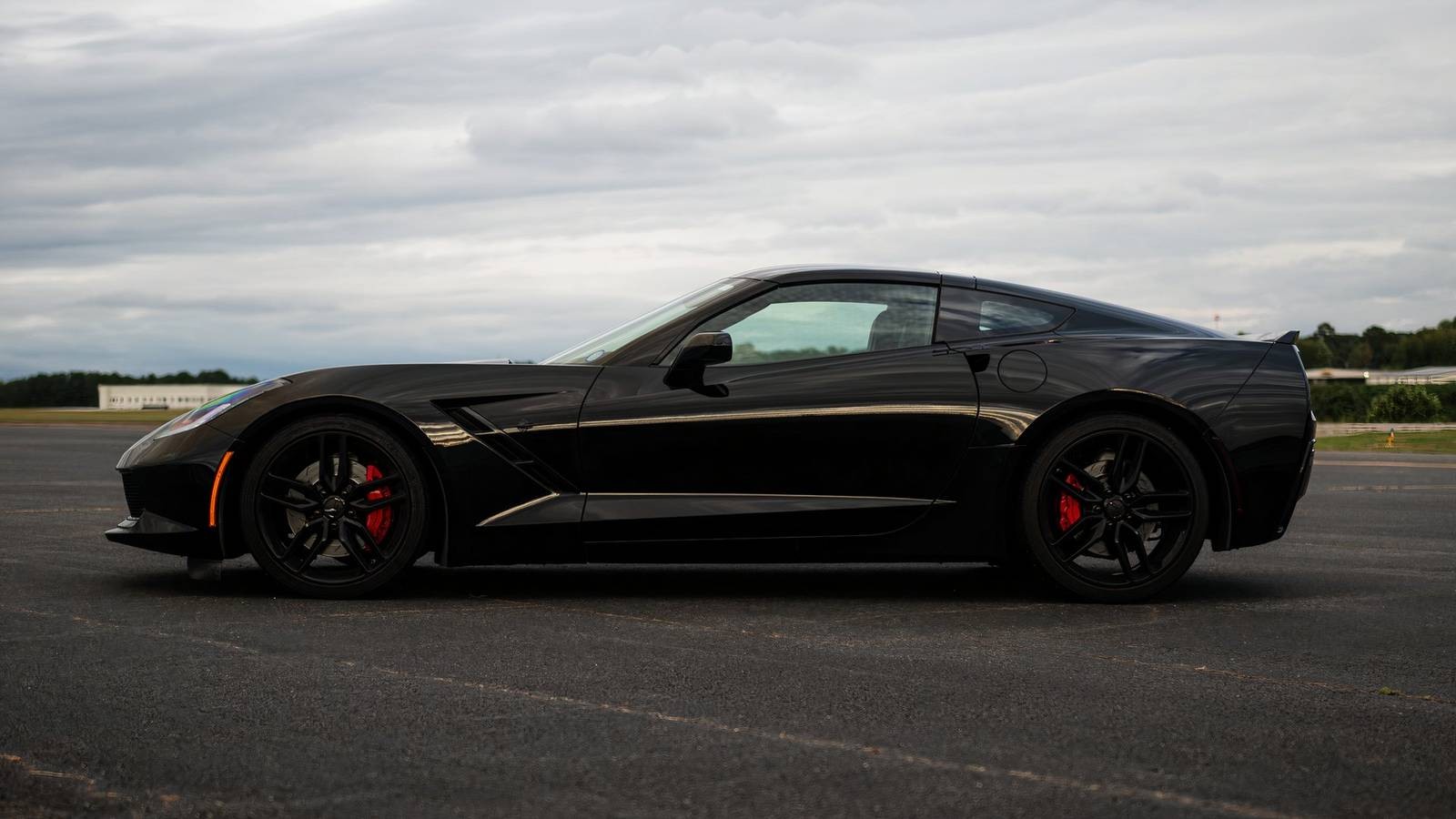
The dream of owning a high-performance sports car often clashes with financial reality. But the gap between aspiration and affordability is shrinking. A used 2018 Chevrolet Corvette Stingray can deliver performance comparable to, and in some respects exceeding, that of a new 2025 Porsche 911 Carrera – for roughly half the price. This isn’t merely a budget alternative; it’s a legitimate contender with a distinct personality.
The comparison between a precision-engineered German icon and an older American performance machine highlights a fundamental trade-off: refinement versus raw power. While the Porsche prioritizes smooth, clinical efficiency, the Corvette embraces a more visceral, charismatic driving experience. The real-world performance difference is surprisingly small, making the Corvette an unexpectedly strong value proposition.
Engines: Two Philosophies of Speed
The 2025 Porsche 911 Carrera boasts a 3.0-liter twin-turbo flat-six engine producing 388 horsepower and 331 pound-feet of torque. Its power delivery is refined, seamless, and optimized for precision. The Corvette, however, relies on a naturally aspirated 6.2-liter LT1 V8 that generates 455 horsepower (up to 460 with the performance exhaust) and a robust 460 pound-feet of torque. This engine is unapologetically loud and forceful, delivering immediate torque rather than a gradual build-up.
These differences translate into distinct driving sensations. The Porsche accelerates with polished smoothness, while the Corvette punches you in the chest with raw, unadulterated power. On paper, the Porsche is quicker to 60 mph (low 3-second range) compared to the Corvette’s 3.8 seconds, but the gap feels less significant behind the wheel.
Handling: Balance Versus Bravado
The Porsche 911 is renowned for its balanced chassis and ability to flatter any driver. Its rear-engine layout provides surprising grip in corners, while its crisp steering and immediate responses create an intuitive driving experience. The Corvette, while not as inherently balanced, delivers a more aggressive and engaging feel. The C7 Stingray’s double-wishbone suspension, especially when equipped with Magnetic Ride Control, handles corners surprisingly well despite its V8 power.
The Porsche rewards precision and finesse, while the Corvette rewards bravery and enthusiasm. Both cars offer exceptional handling, but they do so in fundamentally different ways.
Practicality and Ownership Costs
The Porsche 911 surprises many with its usability. Despite its sports-car shape, it offers small rear seats, a front trunk (frunk), and a well-appointed cabin with intuitive technology. The Corvette, however, is a strict two-seater but provides a decent-sized trunk for weekend trips. Its interior is sporty, driver-focused, and functional, though less luxurious than the Porsche’s.
More importantly, the Corvette shines in ownership costs. Insurance, maintenance, and parts are significantly cheaper, and buying used means avoiding the steepest depreciation. This makes it an attractive option for those who prioritize performance without breaking the bank.
Reliability and Long-Term Value
The 2018 Corvette Stingray benefits from the reliability of GM’s proven LT1 engine and the C7 platform. Maintaining it properly results in a dependable sports car for around $40,000. The Porsche, while engineered to high standards, carries the inherent costs of a new luxury performance vehicle: higher maintenance, pricier parts, and elevated insurance premiums.
Ultimately, the choice depends on individual priorities. The Corvette delivers an emotional, visceral driving experience, while the Porsche offers refined precision and technological sophistication. But when considering price, the Corvette emerges as a compelling alternative – offering supercar-level performance without the six-figure price tag. It’s a celebration of value, demonstrating that sometimes, the most exciting drive doesn’t require the highest price.