


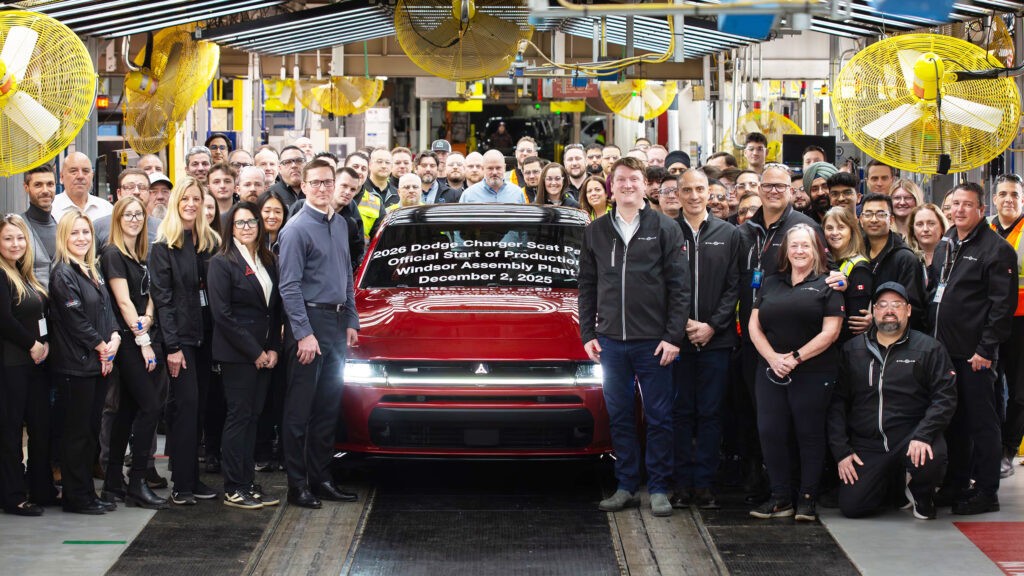
Stellantis is adding a third shift at its Windsor Assembly Plant in Ontario, Canada, a move that signals unexpected resilience in demand for the Dodge Charger and Chrysler Pacifica. Despite controversies surrounding the all-electric Charger and the aging Pacifica design, sales remain robust enough to justify the expansion. This decision represents a turnaround for a factory that recently faced scrutiny over production shifts to the United States and financial disputes with the Canadian government.
Production Shift and Context
The addition of a third shift—the first since 2020—was agreed upon in a 2023 collective bargaining agreement but delayed until this month. Currently, the plant produces both the Chrysler Pacifica and Dodge Charger. The electric Charger has underperformed compared to its gas-powered predecessor, with only 7,421 BEV units sold last year versus 34,754 ICE models in 2024. However, the introduction of the twin-turbocharged Sixpack version appears to have reinvigorated Charger sales.
The Pacifica’s Staying Power
The Chrysler Pacifica and its Voyager variant have remained surprisingly popular despite being in their current generation since 2017. Despite strong competition from rivals like the Toyota Sienna, Honda Odyssey, and Kia Carnival, sales increased by 2 percent last year to 110,006 units in the US. This sustained demand for a relatively unchanged design suggests continued consumer preference for the vehicle’s utility and features.
Labor Impact and Broader Implications
The third shift will create approximately 1,700 new jobs, according to Unifor Local 444 president James Stewart. This expansion comes after Stellantis faced criticism for shifting Jeep Compass production to Illinois, prompting Canada to seek financial restitution. The move may also signal a willingness to reinvest in Canadian operations, although the long-term implications for future production decisions remain unclear.
The unexpected strength in sales for these models demonstrates that even aging or controversial designs can thrive when meeting consumer needs. This shift also highlights the importance of labor agreements in securing manufacturing stability.


