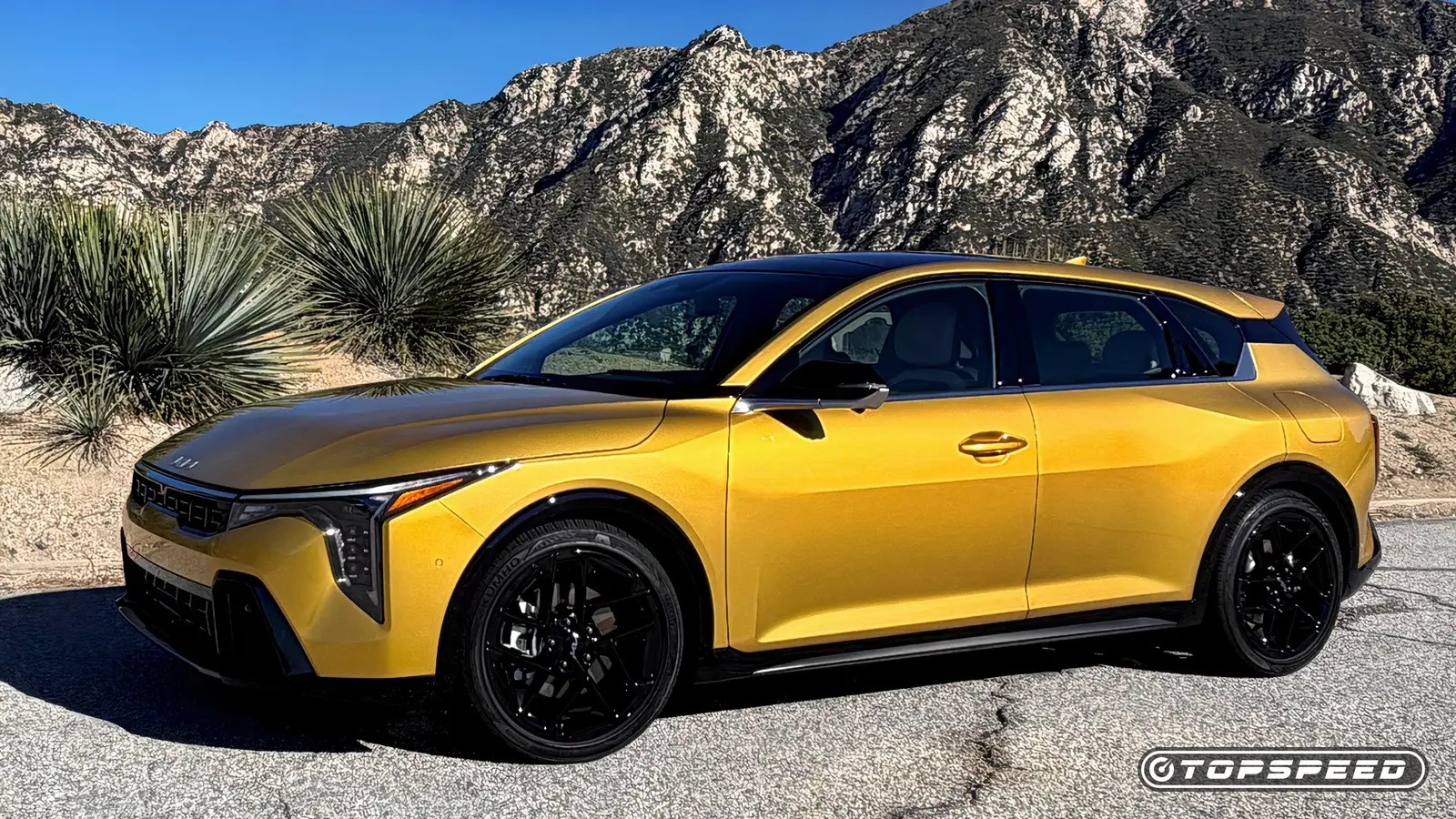
For years, the Honda Civic has been the undisputed yardstick for the hatchback segment. However, the arrival of the 2026 Kia K4 Hatchback suggests that the industry’s traditional benchmarks may no longer be the only way to win. While the Civic remains a formidable player, the K4 Hatchback—specifically in its GT-Line Turbo trim—is carving out a niche by refusing to compromise on the three pillars of modern car buying: performance, practicality, and value.
Performance: Immediate Power vs. Refined Efficiency
The driving experience of the K4 Hatchback is defined by its responsiveness. While the base model utilizes a 2.0L engine, the GT-Line Turbo stands out with its 1.6-liter turbocharged four-cylinder engine.
- Kia K4 GT-Line Turbo: 190 hp | 195 lb-ft of torque
- Honda Civic Sport (Base): 150 hp | 133 lb-ft of torque
The most significant difference lies in the torque delivery. The K4’s turbocharger provides a surge of power as low as 1,700 rpm, making highway merging and overtaking effortless. In contrast, while the Honda Civic Hybrid offers a smooth, high-output system (200 total hp), it lacks the immediate, punchy torque “surge” that characterizes the Kia’s driving dynamics.
Coupled with a smooth eight-speed automatic transmission and a sport-tuned multi-link rear suspension, the K4 manages to balance spirited handling on winding roads with enough composure to handle rougher urban pavement.
Versatility: A Significant Leap in Cargo Capacity
In the hatchback segment, “utility” is often a buzzword, but the K4 delivers tangible numbers that set it apart from both its sedan sibling and its primary competitors.
| Feature | Kia K4 Hatchback | Honda Civic Hatchback |
|---|---|---|
| Cargo Volume (Seats Up) | 22.2 cu. ft. | ~24.5 cu. ft. |
| Max Cargo (Seats Folded) | 59.3 cu. ft. | ~46 cu. ft. |
While the Civic maintains a slight edge in rear-seat cargo volume, the K4 wins decisively on maximum capacity. By folding the 60/40 split-rear seats, the K4 offers nearly 13 cubic feet more space than the Civic. This makes the K4 a much more viable option for weekend adventurers or those needing to transport bulky gear that a standard sedan trunk simply cannot accommodate.
Furthermore, the hatchback design provides an extra inch of rear headroom compared to the K4 sedan, improving the experience for adult passengers—a common pain point in compact vehicles.
The Value Proposition: Tech and Safety
In a market where features are often gated behind expensive trim levels, Kia has positioned the K4 as a high-tech, high-value contender.
- Interior Layout: The K4 features a driver-centric panoramic display consisting of dual 12.3-inch screens. Unlike many modern vehicles that move all controls to a touchscreen, Kia retains physical buttons for climate control, ensuring less distraction while driving.
- Standard Safety: The K4 comes well-equipped with a suite of advanced driver assistance systems (ADAS), including forward collision avoidance, blind-spot monitoring, and lane-keeping assist.
- The Bottom Line: With a starting price of approximately $28,890 for the GT-Line Turbo, the K4 competes directly with the Civic (starting near $27,895 ). However, when considering the standard inclusion of premium tech, wireless smartphone integration, and more expansive cargo capabilities, the K4 offers a more comprehensive package for the price.
Conclusion
The Kia K4 Hatchback is more than just a Civic alternative; it is a challenge to the idea that compact cars must trade performance for utility. By delivering superior torque, significantly larger maximum cargo space, and a tech-heavy cabin at a competitive price, the K4 positions itself as a versatile tool for drivers who refuse to settle for the industry standard.