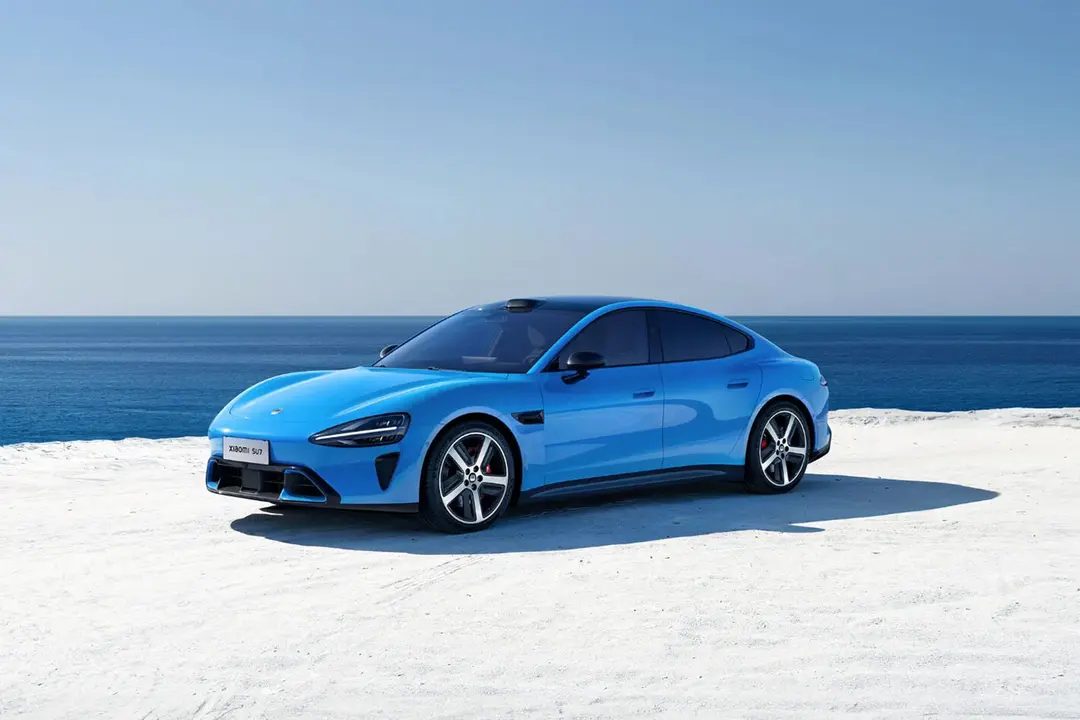
The Xiaomi SU7 not only survives in the Chinese domestic market, but also dominating it. Sales continue to grow and remain clearly ahead of competitors. This sedan is very similar to the Porsche Taycan, but with significant technology upgrades to keep it on top. What are the main changes? It now runs on an 800-volt architecture, fundamentally changing the way cars handle power and energy.
为什么 800V 对充电速度很重要
大多数老式电动汽车都依赖 400 伏系统。 跃升到 800 伏不仅仅是一个营销流行语;它也是一种技术。 这是一种物理转变,可以在不熔化电线的情况下实现更高的功率吞吐量。 对于新款 SU7,这意味着额定充电能力为 5.2 C。
5.2 C 额定值对于驱动器来说实际上意味着什么? 这意味着峰值充电功率(千瓦)可以是电池标称容量(千瓦时)的五倍。 结果是极快的速度。 小米声称 SU7 可以在大约 12 分钟内从 10% 充电到 80% 充电状态。 该公司甚至更加激进,承诺只需 10 分钟即可充电 20% 至 80%。 这足够快,足以在喝咖啡休息时填满。
Battery specifications and actual range
At the heart of the system is a 101.7 kWh battery developed by Xiaomi’s long-term partner CATL. CATL’s Qilin technology is known for its high density and structural efficiency.
On paper, the numbers are impressive. SU7 has a rated range of 902 kilometers based on China’s standard CLTC test cycle. If that seems too good to be true, look at the WLTP data, the standard used in Europe and elsewhere. The actual mileage on the road is estimated to be around 700 km.
The efficiency comes from the combination of 800 V architecture and silicon carbide (SiC) inverter. Silicon carbide semiconductors have lower resistance and heat loss than traditional silicon components and can withstand high voltages. This reduces energy loss during the discharge process and directly contributes to superior range.
800 volt architecture isn’t just about charging faster. It’s about reducing energy loss. The silicon carbide inverter keeps the power flowing efficiently and turns a large battery into real mileage.
This upgrade makes the SU7 look more like a Porsche alternative than just a Porsche replacement. It acts as a leader of modern electric vehicles. The charging speed is competitive with the highest in the industry, and the range is wide. The hardware is solid. The question is whether the software and driving dynamics can keep up with the electrotechnical features.

24-hour electric endurance test
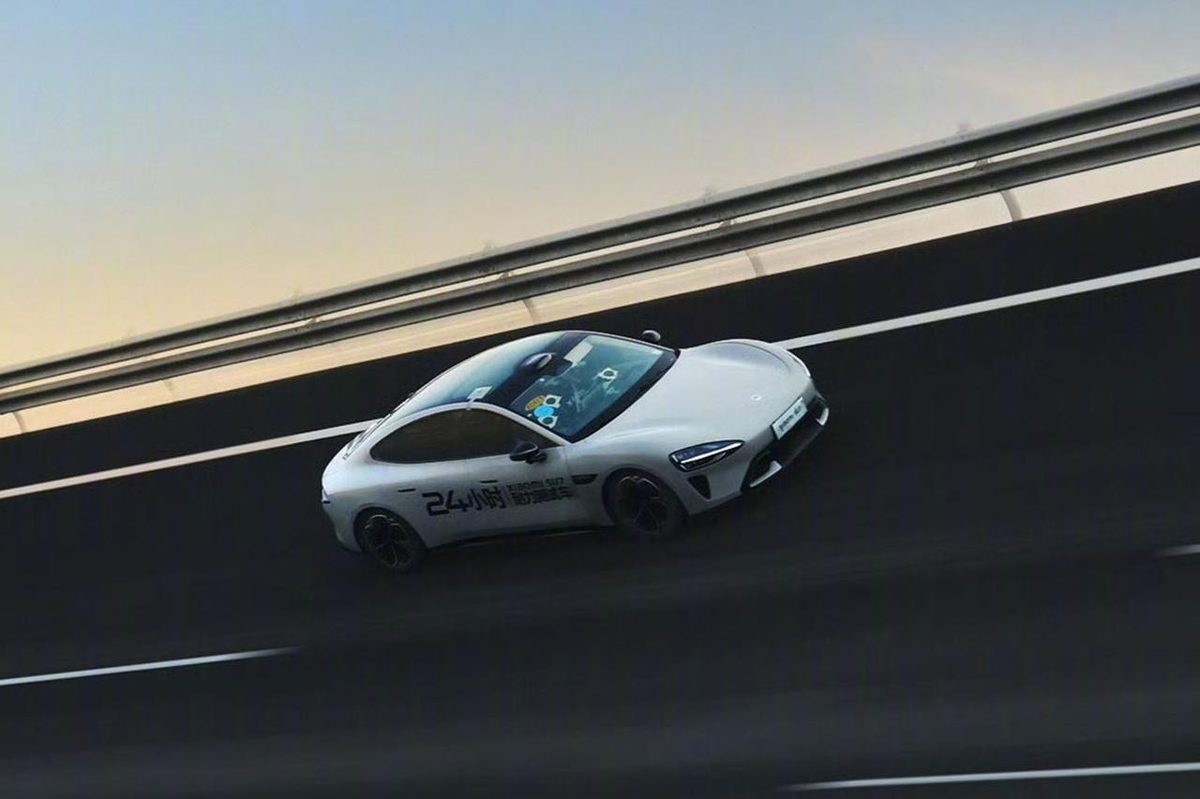
The Xiaomi SU7 is not just about range. It proves that a long-distance travel doesn’t have to be a logistical nightmare. The brand decided to take the oldest trick in the automotive book: a 24-hour endurance run. The goal is simple. Cover as much ground as possible during the day, including all charging stops.
result? A staggering 4,264 kilometers.
This is not a typo. The average speed of the Chinese electric sedan remained at 176.7 km/h throughout the journey. Xiaomi has not announced the exact number of charges required to hit that mark. You don’t need to know. The raw distance speaks for itself.
This performance effectively dismantles the benchmarks previously set by direct competitors. Let’s look at the numbers. The Xpeng P7 is a strong competitor in the mid-size electric sedan segment and has driven 3,961 kilometers in similar conditions. This is a solid effort. But the SU7 left it in the dust.
Next up is the Mercedes-Benz CLA. The German brand’s production car sits at 3,717 kilometers. The Xiaomi SU7 didn’t just beat it. It obliterated it. This is a significant shift in the hierarchy of efficiency and endurance.
But here is where things get tricky. Does this mean Mercedes has out of the game?
No.
Mercedes-Benz still holds the absolute record for standard production car. They achieved this with the AMG GT-XX. It’s not just a car. This is a rolling laboratory. The car was driven 5,479 kilometers in 24 hours. That is nearly 1,200 kilometers more than the Xiaomi SU7.
Why such a massive gap?
You have to look at the engineering. The AMG GT-XX is built for one thing: aerodynamic perfection. Its drag coefficient (Cx) is a remarkable 0.198. Most modern EVs struggle to break 0.20. Instead of relying on large spoilers or wings, the car uses plasma actuators to control airflow. Retractable wheel covers reduce turbulence. This is a masterclass in reducing resistance.
The powertrain is just as extreme. The drive unit produces 1000 kW. That’s not just acceleration power. This is also the charging speed. The car is replenish its battery at the same rate it draws power to move. This enables incredibly fast pit stops during endurance runs.
Mercedes didn’t stop at 24 hours.
The team kept the AMG GT-XX running for eight consecutive days. They pushed the limits of battery chemistry and thermal management. Result? 40,075 kilometers.
This is a level of endurance that most engineers can only dream of. The Xiaomi SU7 sets a new standard for mainstream electric cars. This goes to show that you don’t need a million-dollar aerodynamics lab to achieve outlieral efficiency. But it also shows that when you remove all compromises, there’s still a huge gap between consumer EVs and purpose-built endurance prototypes.
SU7 is a statement. The AMG GT-XX is an outlier. Both are valid. However, the definition of “record” depends entirely on the category you’re playing.