



For nearly a quarter-century, Honda’s K-Series four-cylinder engine has remained in continuous production, a remarkable feat in an industry rapidly shifting towards electrification. This longevity isn’t accidental; the K-Series balances performance, efficiency, and, critically, reliability in a way few engines can match. While other manufacturers abandon internal combustion entirely, Honda doubles down on this proven design, integrating it into both traditional and hybrid powertrains.
The Evolution of a Champion: From Emissions Compliance to Racing Glory
The K-Series emerged in 2001 as a direct replacement for Honda’s older B and H-Series engines. The goal was simple: meet increasingly strict emissions standards while maintaining, or even improving, real-world usability. Honda engineers didn’t just tweak an existing design; they started from scratch, creating an aluminum block with enhanced rigidity to handle higher operating speeds without vibration. Forged crankshafts and lightweight pistons further optimized responsiveness.
The shift from belt-driven to chain-driven dual overhead camshafts provided more precise timing control, particularly under stress. The engine’s defining feature, Honda’s i-VTEC system, combines variable valve timing, lift, and phasing for a broad torque curve and strong high-RPM breathing. Unlike earlier VTEC designs, the K-Series transitions smoothly, avoiding the abrupt changes that plagued older systems.
Engineers also reoriented the intake and exhaust layout to maximize airflow and simplify servicing. A tall intake plenum with long runners improved low-end torque, while a free-flowing exhaust manifold supported consistent scavenging. Coil-on-plug ignition and electronic throttle control refined spark and airflow for improved drivability and fuel economy. The K20A debuted in the 2001 Honda Stream, proving the architecture before being adopted in performance models like the Integra Type R and mainstream vehicles like the Civic and Accord. Consumer reviews consistently praise K-Series-powered models for their reliability and low maintenance costs.
The K20C: Modernizing for Efficiency and Durability
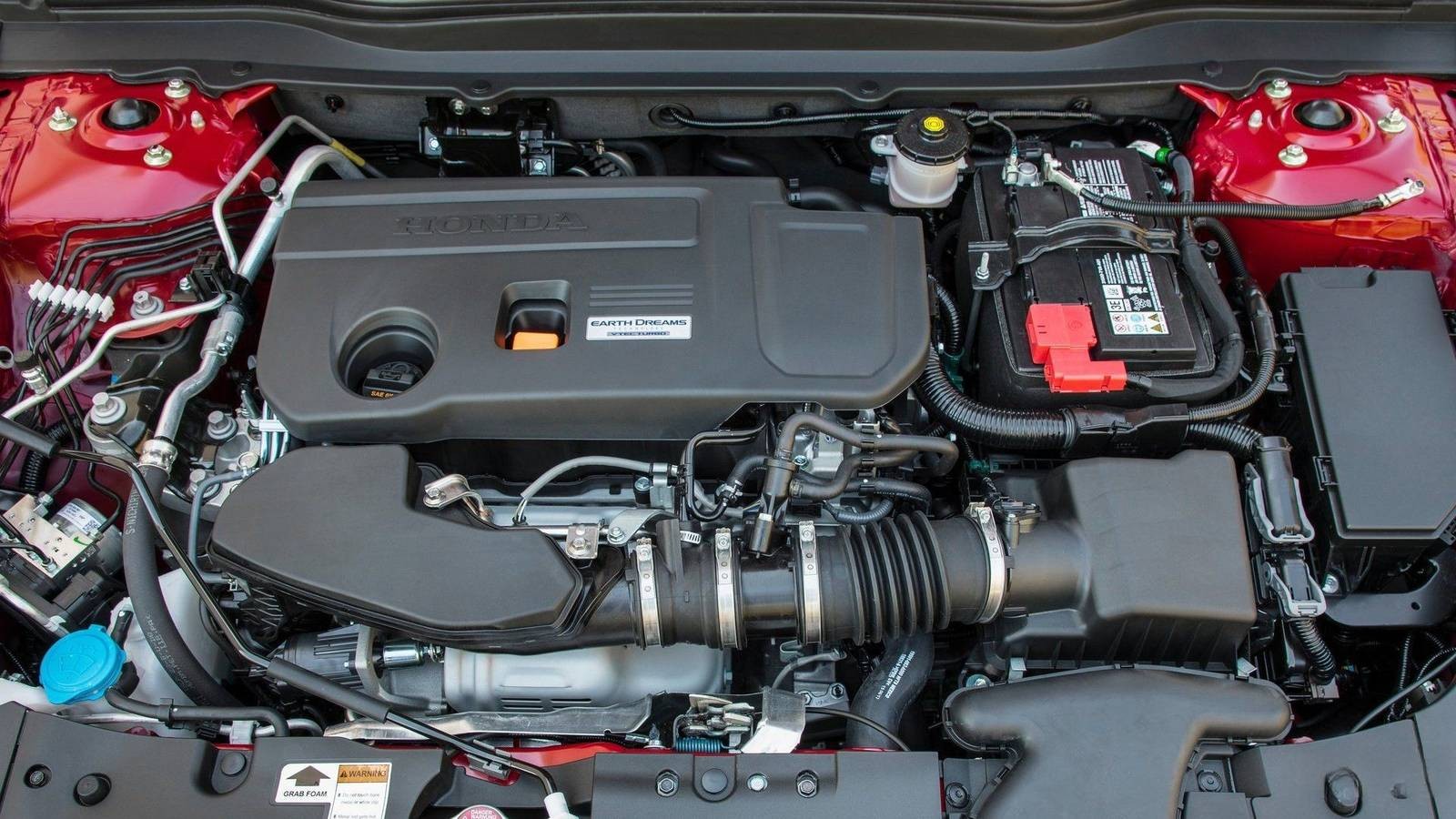
The current K20C iteration represents Honda’s commitment to the engine’s future. It’s engineered to meet even stricter global emissions standards and withstand the thermal demands of modern turbocharging. Key improvements include a reinforced, closed-deck aluminum block that minimizes distortion under pressure, low-friction rotating assembly with coated pistons for reduced heat and wear, and direct injection with multi-hole injectors for cleaner combustion.
Honda’s engineers modeled cylinder head ports extensively to optimize airflow, while a compact, low-inertia turbocharger ensures quick spooling without excessive thermal strain. A refined cooling circuit stabilizes temperatures during demanding driving, and a high-flow intercooler keeps intake temperatures low, preventing knock and protecting the engine during prolonged use. Integrated exhaust passages within the head reduce heat loss and improve turbo response.
Crucially, Honda prioritizes real-world drivability over peak horsepower, tuning the valve timing system to maximize mid-range torque and reduce stress on internal components. The K20C undergoes rigorous endurance testing, including extended full-load sessions and extreme temperature swings, ensuring predictable behavior, low maintenance, and consistent efficiency throughout its lifespan.
Proven on the Track: A Legacy of Racing Success
Honda didn’t just rely on road testing; they pushed the K-Series into competitive racing almost immediately after its release. The company’s racing division used the engine as a core component in its return to touring car competition, reinforcing internals, upgrading valve springs, and refining cam profiles for sustained high-RPM use.
K20-powered Civics dominated series such as the Japanese Super Taikyu Championship and the British Touring Car Championship due to the engine’s breathable architecture, thermal stability, and consistent power delivery. Teams appreciated the predictable behavior, sharp throttle response, and wide operating range afforded by the i-VTEC system.
The K-Series also proved exceptionally reliable in endurance events where competitors often required mid-season rebuilds. Honda leveraged this success to promote the engine as a modern performance base, using racing feedback to refine production variants for later models. The K-Series’ blend of durability, rev capability, and tuning headroom made it a respected package in manufacturer-backed and independent racing programs alike.
Why the K-Series Remains Viable: A Future-Proofed Design
Honda continues to invest in the K-Series because its architecture supports modern efficiency targets, strong durability, and flexible integration with hybrid systems. The rigid aluminum block, efficient cooling, and low-friction internals provide room to meet stricter emissions regulations without a complete redesign.
The engine handles high compression ratios, turbocharging, and prolonged thermal loads reliably, reducing warranty exposure and maintaining brand trust. Honda can scale the platform by adjusting bore, stroke, and intake/exhaust routing to fit compact cars to performance models without creating incompatible parts.
While currently not integrated into all hybrid portfolios, the K-Series is poised for broader electrification as Honda aggressively pursues hybrid technologies. Its compatibility with Atkinson cycle tuning and a robust supply chain make it a cost-effective and reliable option.
Honda continuously updates the K-Series with improved injectors, turbo hardware, valve timing, and cooling strategies without major structural changes. This approach minimizes development time while maximizing efficiency and performance. The engine’s serviceability further reduces ownership costs. Ultimately, the K-Series’ proven performance, resilience, and market appeal ensure its place as a cornerstone of Honda’s future strategies, even as the industry shifts toward electric powertrains.