Honda is significantly restructuring its product roadmap, delaying next-generation updates for several of its most critical vehicles until the 2030s. This strategic pause follows the company’s abrupt cancellation of three planned electric vehicles (EVs) earlier this year, a move that has forced a recalibration of its entire manufacturing and development schedule.
The delays affect core pillars of Honda’s lineup, including the Odyssey minivan, the Accord sedan, and the compact HR-V SUV. Even its luxury subsidiary, Acura, is feeling the impact, with updates to the MDX and Integra pushed back by several years.
The Ripple Effect of Cancelled EVs
To understand these delays, one must look at the context of Honda’s recent strategic pivot. Earlier this year, Honda announced it would scrap plans for three new EVs—the 0-series SUV, 0-series Saloon, and the Acura RSX—despite having spent years retooling its Ohio facilities for their production. This reversal, estimated to cost the company $15.8 billion, was driven by slower-than-expected consumer adoption of electric vehicles.
“The brand is very confident and excited in our future product strategy,” a Honda representative told Car and Driver, emphasizing a shift toward advancing “award-winning hybrid technology” rather than pursuing pure electric models.
However, canceling these EV projects created a vacuum in the production schedule. According to a supplier memo reviewed by Automotive News, Honda has chosen to extend the lifecycles of existing internal combustion and hybrid models to fill this gap, rather than rushing new designs to market.
Extended Lifespans for Honda’s Bestsellers
The supplier document reveals that production for several key Honda models will extend well into the next decade. This is a significant departure from the traditional five-to-seven-year redesign cycle common in the auto industry.
The Odyssey Minivan
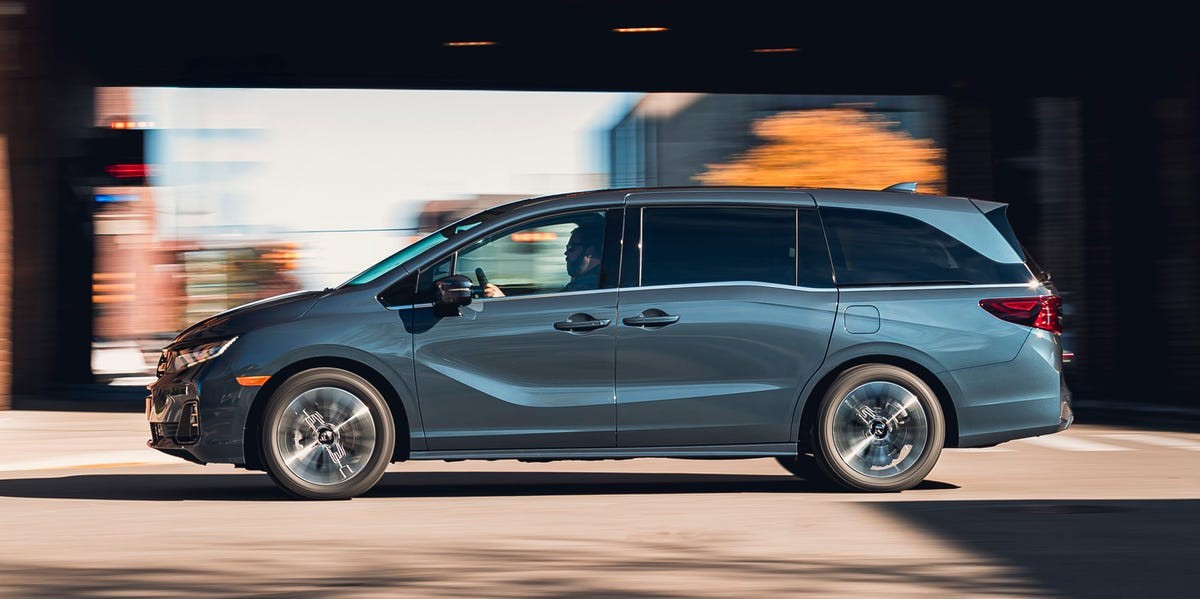
The Honda Odyssey, which last received a major overhaul for the 2018 model year, is not scheduled for a next-generation replacement until March 2030. The current generation has already undergone two facelifts.
Interestingly, Honda briefly considered discontinuing the Odyssey entirely until the new hybrid version could be ready. However, they reversed this decision to prevent customers from defecting to competitors. The strategy appears to be working: Odyssey sales rose 10% year-over-year in 2025, reaching 88,462 units.
The Accord Sedan
As Honda’s third-bestselling model, the Accord entered its 11th generation in 2023. Despite this relatively recent update, the supplier memo indicates no next-generation redesign is planned until at least early 2030.
Industry analysts suggest the Accord may eventually transition to a hybrid-only lineup, mirroring the strategy of its primary rival, the Toyota Camry. This shift would allow Honda to meet stricter emissions regulations without the infrastructure demands of full electrification.
The HR-V Compact SUV
The HR-V, a subcompact SUV that sold 148,771 units in 2025, will see its production extended by two years beyond original plans. A redesign is now expected in early 2032, meaning the current generation will have been on the market for nearly a decade. This longevity suggests strong market demand for the vehicle’s current form and price point.
Acura Faces a Thinner Lineup
The impact is even more pronounced for Acura, Honda’s luxury brand, which has a smaller portfolio to rely on.
- The RDX Gap: Acura is already facing a temporary loss of the popular RDX crossover. Originally, the brand intended to replace it with the electric RSX. With the RSX cancelled, Acura must now wait to develop a hybrid fourth-generation RDX, leaving a void in its mid-size SUV segment for a couple of years.
- The Integra Extension: The Integra’s lifecycle will be extended by three years, with production continuing until March 2032. Notably, the supplier document does not mention a successor, raising questions about the model’s long-term future.
- The MDX Delay: Perhaps the most significant hit comes to the Acura MDX, the brand’s best-selling vehicle. The next generation is not expected until early 2031. At that point, the current generation will be nearly a decade old, challenging Acura to remain competitive against newer luxury rivals.
Why This Matters
These delays highlight a broader trend in the automotive industry: the slowing pace of electrification. As consumer enthusiasm for EVs cools, legacy automakers are finding themselves with underutilized factories and development resources. By extending the life of proven, profitable internal combustion and hybrid models, Honda is mitigating risk and preserving cash flow.
However, this strategy raises questions about long-term competitiveness. Keeping vehicles on the market for nearly a decade may help in the short term, but it risks making Honda’s lineup appear outdated compared to rivals who continue to refresh their designs more frequently.
In summary, Honda’s decision to delay next-generation models until the 2030s is a direct response to the cancelled EV projects and shifting market demand. While this approach stabilizes production and leverages existing popular models, it tests the brand’s ability to maintain relevance in an increasingly competitive landscape.