Nothing can ruin the fun of a Sunday drive like a sudden, violent shudder. As you proceed with confidence, you hear a thump from under the hood. Mechanics call it “knock”. It’s like the end of the world. This can cause permanent damage to the engine. Or maybe the ignition timing is just a little off.
You have two options. You can drive to Honest Al’s, hand over a nice dinner’s worth of cash for two, and hope that Al will tell you what’s wrong (and apparently fix it for an extra fee). Alternatively, if you drive an older car with a distributor, you can get the timing light and fix it yourself.
The Tool You Need
正时灯本质上是发动机心跳的频闪灯。 它可以帮助您准确调整火花塞点火以点燃燃油空气混合物的时间。 如果正确的话,发动机就会以峰值功率和效率运行。 如果弄错了,你就会听到敲击声。
正时灯的形状和价格差异很大。 您可以便宜地购买一个简单的笔式灯。 但大多数人更喜欢“手枪式握把”风格。 它更符合人体工程学,当您在发动机舱狭窄的空间内使用工具时,这一点很重要。 花更多的钱有更大的好处吗? 更好的能见度。 廉价的灯在明亮的白天很难看清。 昂贵的可以穿透眩光。
请记住:本指南适用于older vehicles with distributors。 较新的汽车使用计算机控制的无分电器点火系统。 如果您的汽车是现代的,这篇文章可能对您没有多大帮助。
设置正时灯
timing light最好的一点是它永远不会耗尽电池。 它直接从汽车的 12 伏电池获取电力。 只要汽车在行驶并且电池工作,灯就会工作。
连接方法如下:
- 关闭发动机。
- 将红线夹到电池的正极端子上。
- 将黑线夹到负极端子上。
- 将信号线夹到一号气缸的火花塞线上。
如果您不知道哪个插头是第一,请停止。 不要继续。 查找您的车辆的维修手册或针对您的特定品牌和型号的在线论坛。 连接错误会给你带来错误的数据。
大多数现代timing light都有感应传感器。 您只需将其夹到火花塞电线上即可。 每次插头点火时,灯都会检测到电震动,类似于医生使用听诊器检查脉搏的方式。 一些较旧的装置要求您直接夹到火花塞尖端。 如果您的发动机是其中之一,请小心不要使发动机短路。
Reading the Flash
With the engine running, pull the timing light trigger. This light flashes whenever cylinder number 1 fires. This is based on the strobe effect. The flashing light essentially “freezes” the motion of the crankshaft pulley.
You can’t see the actual piston moving up and down. Instead, it measures ignition timing in degrees. These angles indicate the degree to which the crankshaft rotates relative to the piston at TDC (TDC) during the compression stroke.
Check the crankshaft pulley timing mark. The engine block usually has static marks that line up with the pulley. When you shine a light on it, the traces of pulley movement appear to have stopped. I’m looking for the position of the spark ignition based on the TDC mark.
The timing marks might be on the crankshaft pulley, the flywheel, or even the fan pulley. Read the user manual. Know what you’re looking for before you start waving your lights around.
Adjust the timing by turning the distributor cap. Clockwise rotation advance the timing (the spark ignites faster). Turning counter-clockwise retard the timing (spark ignition is delayed).
Why Adjust the Timing?
您可能希望在活塞到达上止点之前*点火火花。 这称为“提前”时机。 它可以提高性能。
但是,如果您遇到过度爆震,则可能需要延迟正时。 在上止点之后稍微点燃火花可以减少爆震。 但要小心。 延迟太多,你就会失去动力和效率。
那么,什么是正确的设置呢? 检查您的车辆排放控制信息标签。 它通常位于引擎盖下或挡泥板上(适用于美国制造的车辆)。 您的服务手册还将列出确切的规格。
最后的想法
这些是一般说明。 每辆车都是不同的。 您的发动机的怪癖和您使用的特定正时灯可能会改变您在引擎盖下看到的内容。 先进的程序,如调整真空正时,是存在的,但需要更多的知识。
坚持使用手册。 请阅读正时灯随附的说明。 请记住:非标准火花塞或电线等售后零件可能会影响您的读数。 如果您改装了您的汽车,您的正时灯可能会欺骗您。
Timing Light FAQ
Can I use timing light on modern cars?
Probably not. Modern cars use distributorless ignition systems controlled by the engine computer. A timing light are designed for older cars with a distributor.
How do I find the timing marks?
Look at the crankshaft pulley. The engine block must have graduations and static pointers. If you can’t find it, check the service manual. It could be in the flywheel or the fan pulley.
What does “Top Dead Center” mean?
TDC is the point of piston stroke closest to the cylinder head. Timing is measured in degrees before and after this point.
Does my car need a special timing light?
You don’t need a special model, but the pistol grip light with good visibility is easy to use. Inductive sensors attached to the spark plug wire are the most common and easiest to use.
What if the timing marks are reversed?
This is happening. Some vehicles display the degrees in reverse order. Remember to check the marks in the service manual before making adjustments.
Do aftermarket parts affect timing measurements?
Yes. Non-standard spark plugs or wires can interfere with the electrical signal detected by the timing light and cause inaccurate readings. If you are diagnosing a timing problem, use genuine parts.
The Purpose of a Timing Light
A timing light is the diagnostic tool you use to sync up ignition timing with engine rotation. It works by flashing in sync with the spark plug firing, allowing you to see the timing marks on the pulley or flywheel. Get the timing right, and your engine breathes efficiently, delivering peak power without wasting fuel. Get it wrong, and you’re looking at poor performance or, worse, engine damage.
How to Wire It Up
You don’t need a degree in electrical engineering to hook one up, but you do need to be careful with the connections. Start with the engine off. You’ll find three main clamps on the unit:
- Red wire: Connect this to the positive terminal of your battery. This provides the power.
- Black wire: Ground this to the negative battery terminal. A solid ground is non-negotiable.
- Signal probe/clamp: This is the critical part. You clamp this directly onto the spark plug wire for cylinder number one.
Once that’s set, you’re ready to check the timing.
Why Bother Buying One?
Do you actually need a timing light? If you have a modern car with electronic ignition and computer-controlled timing, probably not. The ECU handles it for you. But if you’re running an older carbureted engine or a classic muscle car, mechanical timing adjustments are still part of the maintenance routine.
Owning one saves you from the shop visit. A simple timing check can turn into a “diagnostic fee” at a mechanic’s garage. Doing it yourself is cheap, fast, and keeps your wallet intact.
Choosing the Right Tool
The market is flooded with options, but they generally fall into two buckets. The cheapest ones are small, pen-shaped devices. They’re portable but often lack the robust features of heavier units.
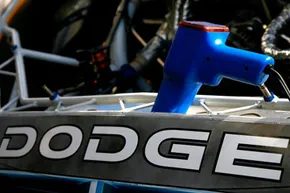
Most enthusiasts prefer the pistol grip design. It feels more substantial, offers better ergonomics for holding the light steady near the engine, and usually includes more durable wiring. The “ray gun” aesthetic is nice, but the grip comfort is what actually matters when you’re squinting at tiny timing marks under a hood.
How Inductive Timing Lights Work
The most common type you’ll buy is an inductive timing light. It works without any wires to the engine itself. The head of the light has a sensor that clamps around the spark plug wire.
Think of it like a stethoscope for your car’s electrical system. When the spark plug fires, a high-voltage pulse travels down the wire. The inductive sensor detects that electromagnetic jolt and triggers the strobe light to flash. The flash is timed exactly when the spark happens, freezing the motion of the spinning pulley just long enough for you to read the marks. It’s a clever, non-invasive way to check engine health without stripping down components.
Engine room: Powering the Challenge
There’s more to the E46 M3 than brute force. It all depends on how you deliver that power. Under the hood is the S54B32, naturally aspirated inline six-cylinder engine that revs to 8,000 rpm. That redline is not a marketing ploy. This is a mechanical requirement. BMW has tuned this engine to be to breathe harder than anything before it.
The maximum power is 333 horsepower. Torque is 262 lb-ft. Those numbers may not seem like a big deal compared to modern turbocharged rivals, but they can be misleading if you ignore the curve. The power band is flat and wide. You can shift into fifth gear at 2,500 rpm and still have enough pull for highway driving. Or you can scream it to the limiter and tearing through the cabin.
The air intake system has been redesigned. Larger throttle body. A revised cam profile. These changes are not superficial. Thanks to these, the S54 can produce more torque throughout its entire rev range than its predecessor, the S52. The result is an engine that is responsive at low speeds and explosive at high revs.
Chassis dynamics: cornering clarity
Power is meaningless if you can’t put it down. The E46 M3 solved this problem with a stiffer chassis and unique suspension setup. The front frame is reinforced. Control arms is made of forged aluminum. This reduces unsprung weight and improves steering response.
The rear suspension uses a multi-link design. This way you can keep your tires on the ground in sharp turns and at the same time remain composed over bumps. BMW also added a limited slip differential (LSD). This ensures that both rear wheels get power even when one tries to spin out.
Braking power comes from the four-piston calipers. It bites into a 13.8-inch ventilated rotors. Braking distance is impressive, but pedal feel is linear. You modulate the brake with your foot, not by pumping. This gives the driver confidence when trail-braking into tight corners.
Driving experience: Connection over comfort
The interior of the M3 is not luxurious. It’s driver-focused. The seats are firm. The steering wheel is thick. The shift lever stroke is short. Everything feels very mechanical. There’s no power steering assist that masks road feedback. You can feel the every imperfection in the pavement. Some drivers don’t like this. Others live for it.
The exhaust note is an important part of the experience. It makes a mild burble at idle. When the revs reach 4000 rpm, it turns into a roar. Once it gets past 6000rpm it starts to scream. It’s not as loud as a supercar, but it’s unique. This sound comes from the cabin because BMW did not overinsulate the firewall.
The weight distribution is close to 50/50. This balance helps the car feel neutral when cornering. Understeer is minimal. Oversteer can be induced, but it can be controlled. M3 rewards skilled drivers. It punishes hesitation.
Maintenance and reliability: The Catch
The S54 engine is powerful, but not invincible. Failure to change the oil can cause the VANOS (variable valve timing) system to malfunction. Symptoms include poor idling and loss of.