Ask yourself what the cooler actually does. It’s not a vanity project. It’s the difference between a smooth commute and a tow truck bill. The cooling system prevents internal combustion engines from melting. Without it, friction and combustion would turn your block into slag in minutes.
Earlier cars used air cooling. No liquid coolant. Just fins and wind. But when engineers were looking for better performance, air alone wasn’t enough. They needed something stronger. So they switched to liquid cooling. And the radiator became the heart of this system.
Mechanics of heat transfer
Think of the radiator as a heat exchanger. That’s its job. It removes excess heat from the engine’s liquid coolant and releases it into the air flowing past. It’s a simple concept. Technology lives in implementation.
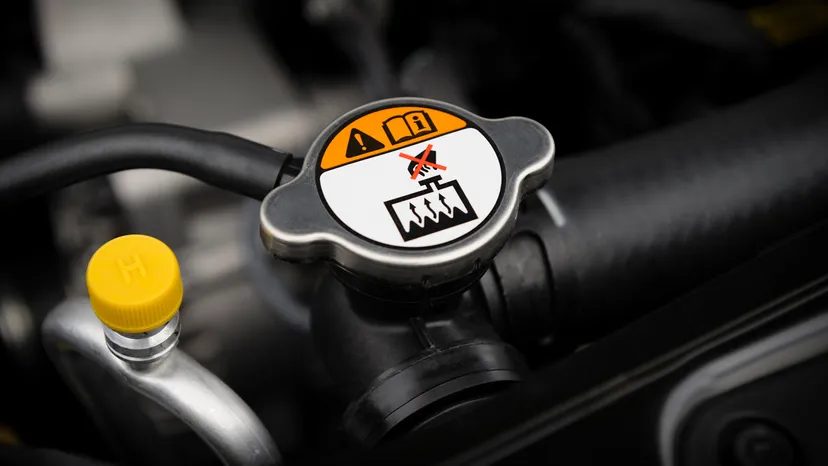
There are tubes inside the radiator. Hot coolant flows through them. Both ends have reservoirs for overflow. There is also a cap. It’s not just a cover. It’s a pressure valve. This maintains system pressure and prevents premature boiling of the coolant.
But here’s the detail that most people miss. The tubes inside often contain a turbulator. What is a turbulator? It is a small device that stirs a liquid.
Without movement, the coolant in the middle of the tube can stay hot while the fluid near the metal walls cools. This is ineffective. A turbulator creates turbulence. It stirs the liquid. Every bit of coolant is cooled, not just the surface layer. The fluid circulates more efficiently. The engine stays at a constant temperature.
Why air cooling is not enough for modern engines
The heat exchanger removes heat from the machines. It heats the air around it. Very easy.
Air-cooled engines depend on cooling elements. These are thin metal fins. They offer a large surface area. The larger the surface, the greater the contact with air. Air pulls heat away.
On air-cooled models, these fins wrap around the cylinder head. There are the combustion chambers. That’s where the heat comes from. But ventilation is important. If the car is stationary, the fins don’t get fresh air. The system stagnates.
This is why fans are often needed. They blow cool air over the fins. They regulate the temperature when natural airflow fails. Modern high-performance engines produce too much heat for passive cooling alone. They need the radiator. They need the liquid loop. You need a turbulator.
So the next time you check your coolant level, remember that you’re maintaining a complex dance of pressure, flow and turbulence. It keeps the engine alive.
Air-cooled blocks are cheap to cast, sure. But they can’t handle the thermal loads of modern performance engines. So, almost every car on the road today uses a water-cooled loop. You’ve got a radiator, coolant, and a water pump pressurizing hot liquid through a maze of hoses and tubes.
Think of the radiator as a massive heat sink. It’s packed with hundreds of thin fins.
Hot coolant leaves the engine block and hits the radiator’s inlet tank. From there, it trickles through those fins. Cooling fans blast air between them. The metal sheds heat. The liquid returns to the engine at a safe operating temperature. It’s a closed loop. It works because physics doesn’t care about your commute.
The Stress on Hot Coolant
The cooling system is always under siege. It needs to scrub excess heat while the engine is running at high RPMs. Let that coolant temperature spike? Or let the level drop? You’re looking at a cracked block or a warped head. Catastrophic.
This is why you need a robust system. And you need to maintain it.
Every component matters. The radiator. The hoses. The tubes. The pump. The reservoir. Inspect them. Replace them if they look tired. One bad seal. One hairline crack. It stops the flow. Heat builds up. Then everything fails.
The Heart of the System: Water Pump
The water pump is arguably the most critical part of the assembly, right next to the radiator. It’s also a common failure point.
It’s driven by the timing system—usually a belt or chain. It spins. It pressurizes the coolant. It keeps the fluid moving at a steady, regulated pace through the entire loop.
Since it runs whenever the engine runs, it wears out. Bearings grind. Seals dry. Eventually, it stops spinning properly or starts leaking. A failing pump chokes the flow to the radiator. It dumps fluid onto your driveway.
Don’t wait for the overheating warning light. Inspect the pump during regular maintenance. If you see signs of trouble, replace it. Now.
The Radiator Cap: More Than Just a Lid
Coolant gets hot. Hot fluid expands. That expansion creates massive pressure. Inside the enclosed space of the radiator, that pressure builds fast.
The radiator cap isn’t just a plug. It’s a pressure-release valve.
Most caps are calibrated to open at 15 pounds per square inch (psi). That’s the standard.
When internal pressure hits 15 psi, the valve pops open. Steam and excess fluid escape into the overflow tanks on either side of the radiator. This prevents the system from blowing apart.
When the engine cools down, the fluid contracts. A vacuum forms. The system sucks that cooled fluid back from the overflow tanks into the main loop. Cycle repeats.
Secondary Cooling Loops
Your transmission needs cooling too. Automatic transmissions generate serious heat.
Many radiators have a built-in heat exchanger for this. It’s a radiator within a radiator.
Hot transmission fluid flows through small tubes inside the main radiator. Coolant flows around those tubes. The coolant steals the heat from the transmission fluid. The transmission fluid drops in temperature. The coolant picks up the load. Then the main radiator fans blow that heat into the air.
There’s also the A/C system. It uses its own smaller condenser (often called a radiator in loose terms) and liquid refrigerant to keep your cabin from turning into an oven.
Radiator Cap FAQs
How much does it cost to replace a radiator cap?
About $10. It’s one of the cheapest parts on the car.
What is a pressure cap?
It’s a release valve. It opens at a set maximum pressure to protect the system.
How many PSI is a pressure cap?
Usually 15 psi. When the fluid pressure exceeds that, the valve opens. Heat escapes. Excess coolant overflows into the side tanks.
Are all radiator caps the same size?
No. The fit depends entirely on your vehicle’s radiator neck.
How often should you change your radiator cap?
You probably won’t need to change it. These things last as long as the car runs. But inspect it. Every now and then. Pressure relief valves can stick. If it doesn’t pop, it’s useless. And a stuck cap is a recipe for a burst hose.