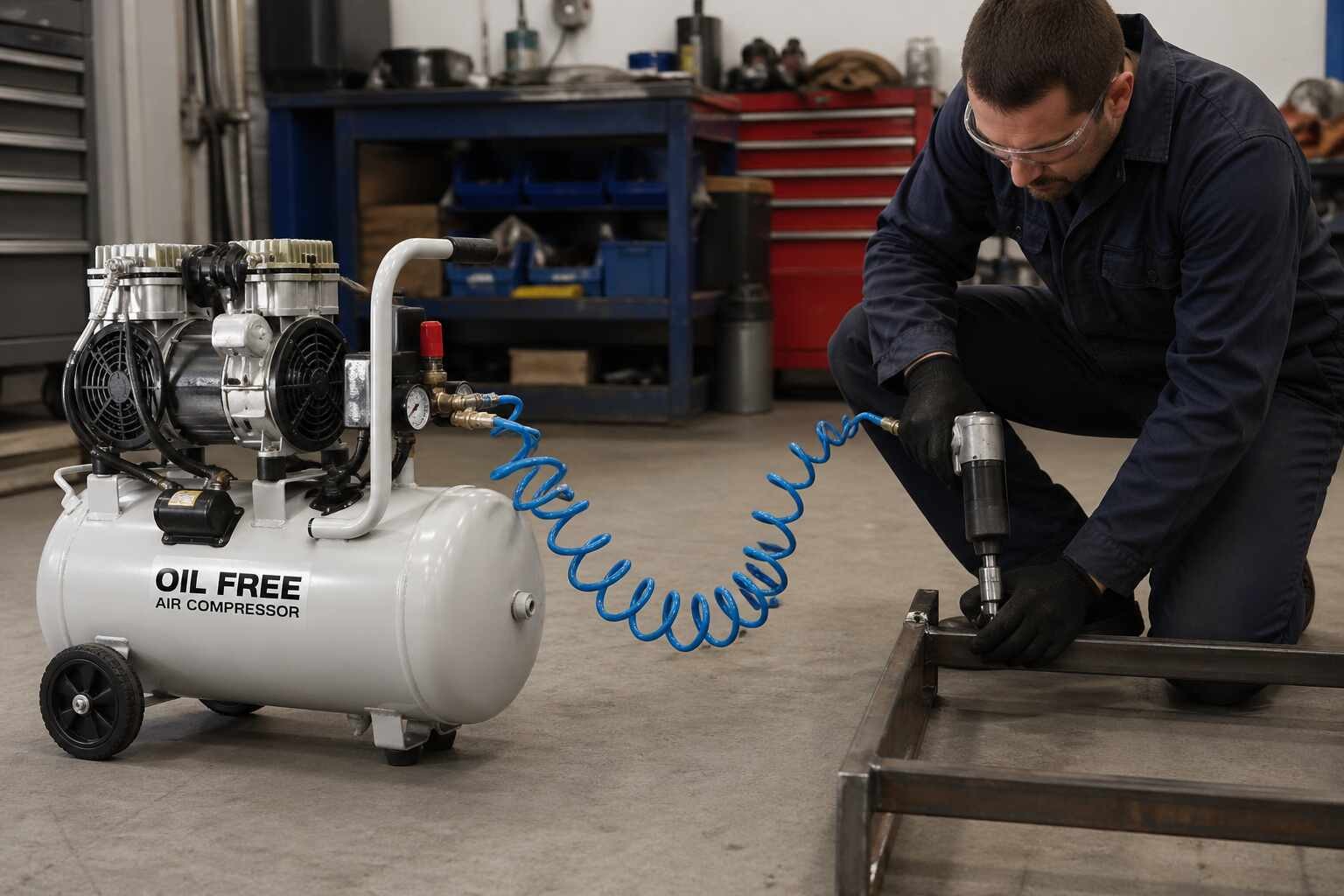
For any automotive enthusiast or professional technician, the satisfaction of a job well done lies in the details. A flawless paint job, a perfectly seated tire, or a precise mechanical assembly requires more than just skilled hands; it demands reliable, high-quality air.
While technical expertise is paramount, it is rendered ineffective by inferior workshop equipment. Among the various tools in an auto shop, the air compressor serves as the backbone of operations. Specifically, oil-free rotary screw compressors have emerged as a critical investment for those seeking professional-grade results without the complications of traditional oil-injected systems.
The Case for Oil-Free Technology
The primary advantage of oil-free compressors is the purity of the air they deliver. In automotive applications—particularly in paint preparation and finishing—contamination is the enemy. Even microscopic amounts of oil aerosolized from a traditional compressor can cause serious surface defects, such as fisheyes (small craters in the paint) or uneven curing. Oil-free systems eliminate this risk by design, ensuring that the air reaching your spray gun or tool is clean.
Beyond air quality, these systems offer practical operational benefits:
* Reduced Maintenance: Without the need to manage, change, or dispose of compressor oil, routine upkeep is significantly simplified.
* Energy Efficiency: Modern oil-free designs are increasingly efficient, lowering long-term operating costs.
* Versatility: They handle demanding tasks—from inflating tires to powering sanders and impact wrenches—with consistent performance.
For hobbyists and small shop owners, this combination of cleaner output and easier maintenance makes oil-free compressors a smarter long-term investment than their oil-lubricated counterparts.
Decoding the Specifications: PSI, CFM, and Tank Size
Choosing the right compressor is not just about brand recognition; it requires understanding how specifications translate to real-world performance. Three key metrics determine suitability:
- PSI (Pounds per Square Inch): This measures pressure. Most standard automotive tools operate within a specific PSI range. Ensure your compressor can meet the maximum PSI requirement of your heaviest-duty tools.
- CFM (Cubic Feet per Minute): This measures volume—the amount of air available for continuous use. While impact wrenches may function on moderate airflow, tools like sanders and paint sprayers demand high, consistent CFM to avoid stalling or pressure drops.
- Tank Capacity: The tank acts as a reservoir, providing a buffer of air when tools demand more than the compressor can generate instantly. A larger tank helps maintain steady pressure during intermittent, high-demand tasks.
Pro Tip: Always match your compressor’s output to the tools you use most frequently. A slight over-specification in CFM can prevent performance slowdowns and ensure smoother, more precise repair work.
Top Brands for Automotive Workshop Compressors
The market offers several reputable manufacturers known for reliability, engineering quality, and suitability for automotive environments. Here are four standout brands:
1. Quincy Compressor
Established in 1920, Quincy is a legacy name in industrial and automotive compression. Their oil-free models are engineered for long-term reliability and constant air quality.
* Best For: Users who prioritize durability and professional-grade support.
* Key Feature: Comprehensive warranty protection and 24-hour service support through licensed partners, ensuring minimal downtime.
2. Ingersoll Rand
A global leader with a strong presence in professional vehicle workshops, Ingersoll Rand is synonymous with robust engineering. Their systems are designed to perform consistently in tough maintenance settings.
* Best For: Professional technicians and serious enthusiasts who need dependable airflow for multiple simultaneous tools.
* Key Feature: Proven track record in high-stress environments, making them a safe reference point for long-term workshop investments.
3. California Air Tools
This brand has carved a niche by focusing on ultra-quiet operation. For home garages and smaller workshops where noise pollution is a concern, California Air Tools offers an ideal solution.
* Best For: Hobbyists working in residential areas or shared spaces.
* Key Feature: Significantly lower decibel levels compared to traditional compressors, allowing for a more comfortable working environment without sacrificing airflow consistency.
4. Kaeser Kompressoren
Representing premium European engineering, Kaeser is known for precision and efficiency. Their systems are built with high-efficiency motors and advanced design principles.
* Best For: Buyers viewing equipment as a long-term asset, prioritizing energy efficiency and build quality.
* Key Feature: Advanced system design that maintains stable airflow while reducing energy consumption, offering a balance of professional results and lower operating costs.
Selection Criteria and Maintenance Insights
The brands above were selected based on their reputation for clean air delivery, engineering quality, and energy efficiency. When evaluating your own needs, consider the following:
- Support for Pneumatic Tools: Can the compressor handle the specific CFM and PSI requirements of your primary tools?
- Long-Term Value: Does the energy efficiency and durability justify the initial investment?
Common Questions Answered
Q: What maintenance does an oil-free compressor require?
A: Significantly less than oil-injected models. Routine upkeep typically involves checking and replacing air filters, draining moisture from the tank (if applicable), and inspecting hoses and fittings for leaks. There is no oil to change.
Q: Why is oil-free air better for painting?
A: Oil-free compressors eliminate the risk of oil contamination in the air stream. This prevents paint defects like fisheyes and ensures a smoother, more professional finish.
Q: How do I determine if I have enough CFM?
A: Compare the CFM rating of your compressor with the requirements listed on your air tools. For consistent performance, choose a model with a CFM rating slightly higher than the highest requirement among your most frequently used tools.
Conclusion
Investing in a high-quality oil-free air compressor is more than a purchase; it is a commitment to precision and efficiency in your automotive repairs. By ensuring clean airflow and reliable performance, these systems empower enthusiasts and professionals alike to achieve flawless results, from mechanical maintenance to aesthetic finishing. Choosing the right brand and specification not only enhances the quality of your work but also reduces long-term maintenance burdens, making it a cornerstone of any well-equipped workshop.