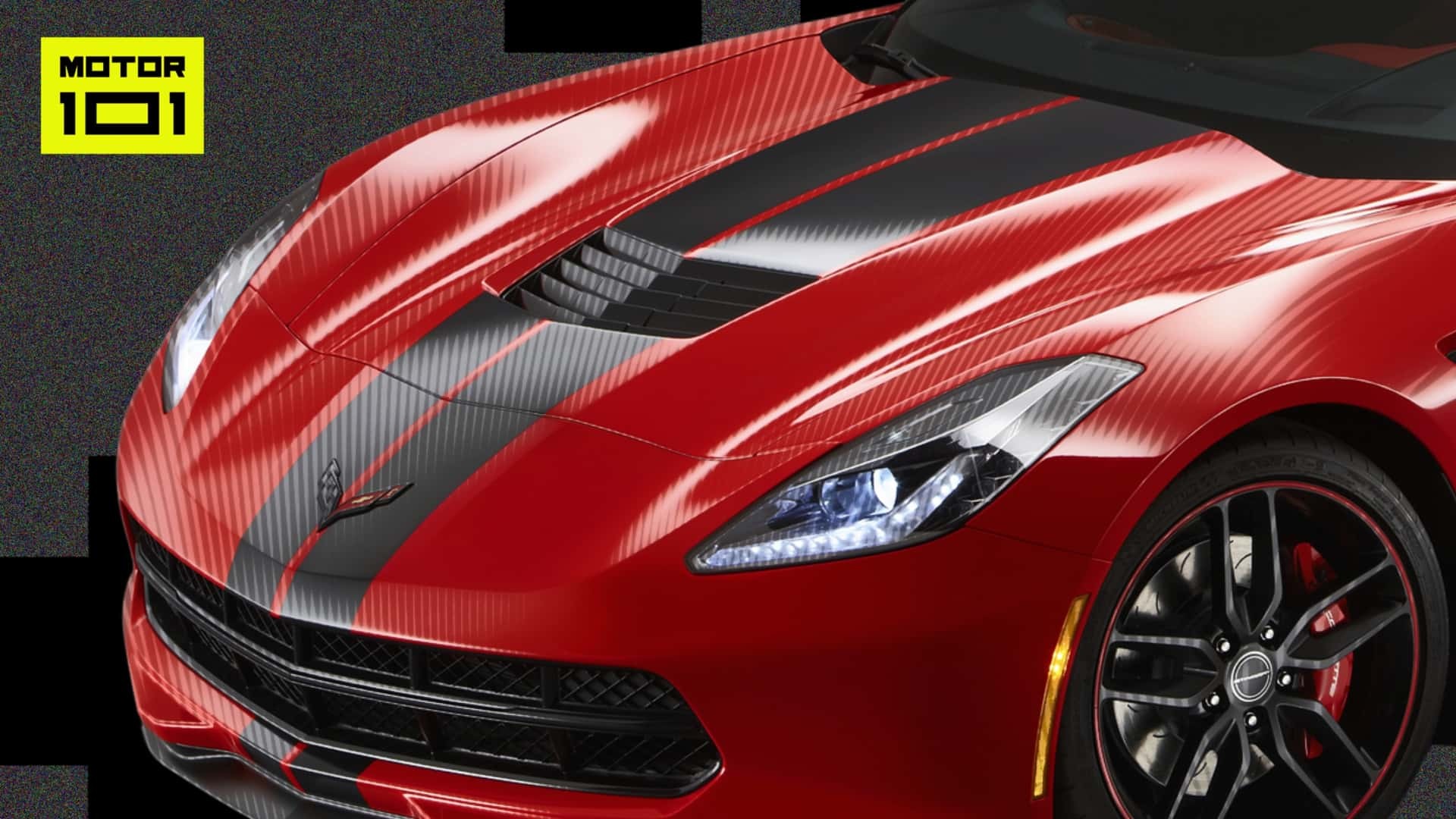
The Chevrolet Corvette is an automotive anomaly. Born as a post-war tribute for veterans seeking a taste of European luxury, it has defied every major economic and cultural shift for over seven decades. It survived the gas crises of the 1970s, the financial collapse of 2008, and the current upheaval in the automotive industry.
Affectionately dubbed “America’s sports car,” the Corvette occupies a unique cultural space. While the Ford Mustang and Chevrolet Camaro are often viewed as muscle cars—loud, rough, and accessible—the Corvette has historically positioned itself as a more refined, aspirational grand tourer. It is the car of choice for enthusiasts who want performance without the exclusivity of a Ferrari, bridging the gap between mainstream American engineering and exotic European engineering.
From its fiberglass beginnings to its current mid-engine supercar status, the Corvette’s story is one of relentless evolution. Here is how each generation redefined what an American sports car could be.
C1: The Fiberglass Pioneer (1953–1962)
The Corvette’s origin story began with Harley Earl, General Motors’ design chief. Noticing that returning WWII veterans were buying European sports cars, Earl pushed GM to create a domestic competitor. The result was the 1953 show car: a two-seater with a revolutionary fiberglass body, a modest inline-six engine, and a two-speed automatic transmission.
Public reaction was enthusiastic, leading to production in Flint, Michigan. However, the early Corvette struggled to find its identity. Critics noted it was neither comfortable enough for long-distance touring nor agile enough for true sports car driving. The “solid axle” suspension made it stiff, and performance was lackluster.
Why it matters: The C1’s legacy is not in its performance, but in its existence. It proved that Americans wanted a dedicated sports car. By 1955, GM introduced the V8 engine, transforming the Corvette from a novelty into a viable performance machine. The introduction of quad taillights in 1961 established a design signature that remains iconic today. Today, the C1 is a collector’s item, valued for its historical significance rather than its driving dynamics.
C2: The Sting Ray Era (1963–1967)
Under the guidance of engineer Zora Arkus-Duntov and designer Bill Mitchell, the C2 marked a dramatic departure from its predecessor. Nicknamed the “Sting Ray” (two words), this generation featured a sleeker, more aggressive fiberglass body and, crucially, independent rear suspension. This mechanical upgrade significantly improved handling, giving the Corvette genuine sports car credentials.
The C2 era saw rapid performance gains. GM introduced larger V8 engines, four-wheel disc brakes, and the high-performance “Z06” package. The most legendary variant, however, was the Grand Sport—a lightweight, aluminum-bodied racing prototype built in secret to challenge the Ford Shelby Cobra. Only five were made, but they cemented the Corvette’s reputation on the track.
Why it matters: The C2 is often considered the sweet spot of classic Corvettes. It retained the romantic, chrome-heavy aesthetic of the 1950s while introducing the mechanical sophistication required for serious driving. The 1963 model’s split rear window remains one of the most recognizable design elements in automotive history.
C3: The Shark and the Oil Crisis (1968–1982)
Inspired by the 1965 Shark II concept car, the C3 adopted a larger, more angular design. It retained the “Stingray” name (now one word) and much of the C2’s underlying hardware, but it faced significant headwinds. The 1970s oil crisis forced GM to downsize engines and lower compression ratios. Simultaneously, new safety regulations replaced chrome bumpers with body-colored plastic units, altering the car’s aesthetic.
By 1975, the base V8 produced only 165 horsepower—a stark contrast to the raw power of the early 1960s. Despite these constraints, the C3 was the longest-running Corvette generation, lasting 14 years. By the end of its lifecycle, the Corvette was struggling to compete with emerging Japanese and European rivals.
Why it matters: The C3 represents the Corvette’s survival mode. It maintained the brand’s presence during a difficult decade, but its performance lagging behind competitors like the Datsun 280ZX and DeLorean DMX highlighted the need for a radical redesign. Production moved from St. Louis to Bowling Green, Kentucky, setting the stage for a new era.
C4: Modernization and the Lotus Connection (1984–1996)
After skipping the 1983 model year, GM launched the C4 with a clean-sheet design. Featuring a wedge-shaped body and a “birdcage” unibody chassis, the C4 was lighter and more rigid than its predecessors. The interior was modernized with digital gauges, and handling was improved with updated suspension and steering.
The standout achievement of this era was the 1990 ZR-1. Developed with help from Lotus after GM acquired the British firm, the ZR-1 featured an aluminum-block, dual-overhead-cam V8 engine producing 375 horsepower. It was the fastest production car in the world at the time, hitting 60 mph in under five seconds.
Why it matters: The C4 brought the Corvette into the modern era, but it suffered from reliability issues common to GM vehicles of the 1980s and 1990s. While it offered impressive performance on paper, finding a well-preserved example today is challenging. Nevertheless, it laid the groundwork for the electronic sophistication that would define future generations.
C5: The Supercar Killer (1997–2004)
The C5 was a rebirth. After internal debates about the Corvette’s future, GM launched a completely redesigned model based on customer feedback. The C5 replaced the C4’s sharp angles with smoother, more aerodynamic curves. It introduced the legendary LS1 V8 engine, producing 345 horsepower, and featured advanced engineering like balsa wood in the chassis for noise isolation and a 51:49 weight distribution.
Performance options included magnetic ride control and a high-output Z06 variant. On the track, the C5-R dominated American Le Mans Series (ALMS) competition, winning its class at Le Mans three times.
Why it matters: The C5 is widely regarded as the generation that forced European manufacturers to take notice. It offered supercar-level performance at a fraction of the price, combining reliability, comfort, and speed in a way that previous Corvettes had not. It transformed the Corvette from a niche enthusiast car into a mainstream performance icon.
C6: Global Ambitions (2005–2013)
The C6 signaled GM’s intent to compete directly with European exotics. Smaller and more refined than the C5, it shared its platform with the Cadillac XLR. The base model produced 400 horsepower, but the real headline was the ZR1. Featuring a supercharged engine, carbon fiber components, and Brembo brakes, the ZR1 produced 638 horsepower and held the Nürburgring lap record for production cars.
Why it matters: The C6 delivered on the promise of exotic performance. While it still didn’t match the precision handling of a Porsche 911, it offered comparable speed and acceleration. The C6.R continued the brand’s racing dominance, securing multiple Le Mans class wins. This generation solidified the Corvette’s status as a legitimate competitor in the global supercar market.
C7: Refinement and Power (2014–2019)
The C7 built upon the C6’s success with sharper styling and improved technology. It featured a new LT1 V8 engine, an eight-speed dual-clutch transmission, and a modernized interior with an eight-inch touchscreen. The return of the “Stingray” name for the base model linked it to the car’s heritage, while the Z06 and ZR1 variants pushed performance to new limits.
The ZR1, with its 755-horsepower supercharged V8, was so powerful that it struggled with cooling on the track, leading GM to offer extended warranties and additional radiator packages.
Why it matters: The C7 represented the peak of the front-engine Corvette formula. It was fast, reliable, and technologically advanced, but it was also reaching the physical limits of its layout. The need for a more radical approach became evident, leading to the most significant change in the Corvette’s history.
C8: The Mid-Engine Revolution (2020–Present)
The C8 broke with 68 years of tradition by moving the engine behind the driver. This mid-engine layout, long desired by engineers like Zora Arkus-Duntov, improved weight distribution and handling. The base Stingray produces 490 horsepower and starts at under $60,000, offering value that rivals no other manufacturer can match.
Initially divisive among purists, the C8 has gained widespread acclaim for its balanced driving dynamics. GM has since expanded the lineup with the hybrid E-Ray, the 1,064-horsepower ZR1, and the 1,250-horsepower ZR1X. These models compete directly with hypercars from McLaren and Ferrari.
Why it matters: The C8 redefined the Corvette’s identity. It is no longer just an American sports car; it is a global supercar contender. By embracing mid-engine architecture and hybridization, GM has ensured the Corvette’s relevance in an increasingly electrified and competitive market.
What’s Next?
The future of the Corvette remains uncertain but promising. With the rise of electric vehicles, many expected an all-electric C9. However, recent “CX” concept cars suggest GM may skip the C9 designation entirely, focusing instead on refining the mid-engine platform.
Expect the next generation to feature even more exotic styling, increased performance, and likely a hybrid or electrified powertrain. The V8 engine may persist in some form, but the Corvette’s evolution will continue to prioritize speed, efficiency, and technological innovation. As GM has proven time and again, the Corvette is not just a car; it is a symbol of American ingenuity, constantly adapting to stay ahead of the curve.
The Corvette’s journey from a fiberglass curiosity to a mid-engine supercar demonstrates the power of iterative design. By listening to critics, embracing new technologies, and refusing to rest on its laurels, Chevrolet has kept America’s sports car relevant for over seven decades.