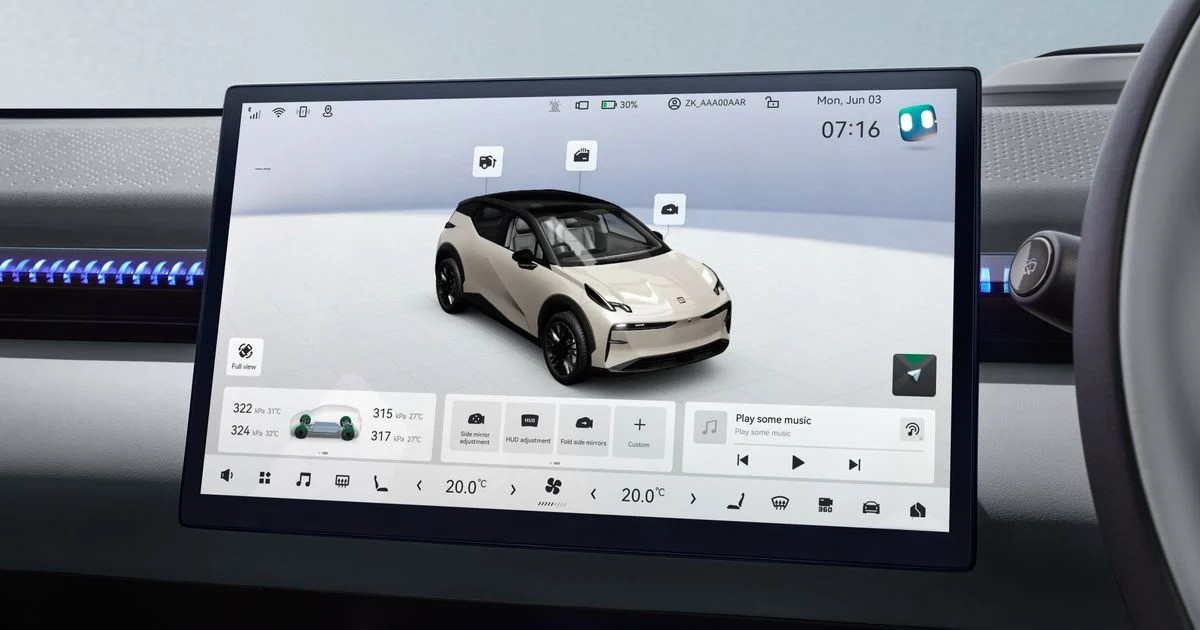
Zeekr, the premium electric vehicle brand under Geely, has issued a firm response to growing international concerns regarding data privacy and cybersecurity associated with Chinese-made vehicles. Mars Chen, Zeekr’s Vice President for Global Markets, reaffirmed the company’s strict adherence to local laws and its willingness to collaborate with regulators as data privacy frameworks evolve.
Speaking to Australian media from Zeekr’s headquarters in Hangzhou, Chen emphasized that the brand is proactively managing these sensitive issues. “Data privacy is a very sensitive question,” Chen acknowledged, noting that Zeekr’s products currently comply with all existing local legislation. He further stated that the company is prepared to support any future regulatory upgrades necessitated by the rise of intelligent, connected vehicles.
Proactive Compliance and Local Expertise
Chen leveraged his personal background to reassure stakeholders of Zeekr’s commitment to security standards. Having spent 20 years working in Australia for Huawei, Chen argued that he possesses a deep, practical understanding of the region’s regulatory landscape and security expectations.
“When we entered Australia, we analysed end-to-end not just the regular car communication process, but also data connectivity and where the data can be stored,” Chen explained. This analysis included rigorous scrutiny of potential data transmission pathways to ensure no unauthorized data flows back to China.
This proactive stance comes at a critical time. Earlier this year, the Australian Privacy Commissioner revealed open investigations into two unnamed Asian automakers for potential privacy law breaches. While the specific identities were not disclosed, the investigations highlight the increasing regulatory pressure on foreign manufacturers operating in Australia.
The Geopolitical Context of Connected Cars
The scrutiny facing Zeekr is part of a broader global trend where “connected cars” are viewed through the lens of national security. As vehicles become more intelligent, collecting vast amounts of data on location, habits, and surroundings, governments are increasingly concerned about who owns this data and how it is used.
- United States: In 2024, President Joe Biden moved to ban software and hardware from China and Russia in vehicles sold in the US, effectively locking Chinese brands out of the world’s second-largest auto market.
- Australia: Similar to the 2018 ban on Huawei’s involvement in 5G infrastructure due to national security concerns, Australian authorities are closely monitoring data practices of connected devices.
Despite these geopolitical tensions, Chinese EVs have made significant inroads into the Australian market. Brands like BYD and MG are now staples in the country’s electric vehicle landscape, raising questions about how data sovereignty is balanced with consumer choice and market competition.
Government Fleet Inclusion: A Point of Contrast
Interestingly, while cybersecurity concerns rise, Chinese-made EVs are gaining ground in official government fleets. As of April 1, 2026, several BYD and MG models were added to the ‘Private Plated Vehicle Standard List,’ allowing Australian parliamentarians to lease these vehicles using taxpayer-funded allowances.
The approved models include:
* BYD: Atto 1, Dolphin, Seal, Sealion 6, Sealion 7, Shark 6
* MG: S5 EV
These options sit alongside established non-Chinese brands such as Kia, Tesla, Hyundai, and Toyota. While most vehicles on the list are available in various trims, some restrictions apply; for example, the Kia EV9 is limited to the base ‘Air’ trim for government leases.
Parliamentarians can choose between a leased vehicle or an additional electorate allowance of $19,500 per annum. Senators in the Northern Territory and representatives from large electoral divisions may also request additional four-wheel-drive vehicles.
Zeekr’s Market Strategy: Focusing on Individual Consumers
Despite the availability of government leasing programs, Zeekr has explicitly stated it has no plans to target the public sector. Chen clarified that Zeekr’s strategy is distinct from competitors who might pursue government tenders to boost market share.
“We are not some brands that want to go to public tender for the administration [official’s] use… this is not Zeekr, we focus on individuals,” Chen said. He noted that in many markets, including China, luxury EVs like Zeekr’s exceed the price caps set for public servant vehicles.
In Australia, Zeekr’s entry-level model, the Zeekr X, starts at $48,900 drive-away, while the larger 7X begins at $57,900 plus on-road costs. By positioning itself as a brand for individual drivers and passengers rather than government entities, Zeekr aims to bypass the bureaucratic complexities of public sector procurement while maintaining a focus on premium consumer experience.
Conclusion: Zeekr’s response underscores the delicate balance Chinese automakers must strike in Western markets: proving robust data security to satisfy regulators while competing for consumer trust. As global scrutiny on connected vehicles intensifies, transparency and local compliance will likely become key differentiators for Chinese brands seeking long-term success outside their home market.