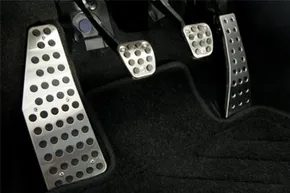
Before the late 1980s, driving was physical. You pressed a pedal. A cable pulled a butterfly valve open. Air rushed in. Fuel mixed. Fire happened. The wheels turned. Simple. If you wanted more speed, you just stomped harder. The throttle opened wider. Power followed.
Now? It’s all digital. Electronic throttle control (ETC). Drive-by-wire.
Press the gas pedal today and you aren’t opening a valve directly. You’re triggering an accelerator pedal module. That gadget converts your foot pressure into an electric signal. The signal hits an electronic control unit (ECU). The ECU processes your input. It also checks outside variables. Then it commands the throttle to open. Not for maximum power necessarily. For optimum efficiency.
Complex? Yes. Beneficial? Mostly. But the complexity introduces new vulnerabilities.
Why ETC Beats Mechanical Linkages
It seems counterintuitive. Why replace a system that works with one that can fail electronically?
The answer lies in maintenance and safety.
Mechanical throttles are full of moving parts. Cables. Springs. Linkages. They wear out. Over time, the components degrade. Electronic systems have far fewer moving parts. Signals move via electric impulses. Less wear means less maintenance.
Then there’s safety.
Mechanical systems rely entirely on your foot. If you stomp, the throttle opens. Period.
Electronic systems look at everything. The ECU reads the accelerator input. But it also monitors wheel slip. It checks tire grip. It watches the steering angle. It monitors brake pressure.
“An electronic throttle control system can balance several factors that affect a car’s speed and direction — not just a foot on the pedal.”
The ECU can correct driver error. It can keep the car under control. It’s a key component in cruise control. It adds safety layers mechanical systems simply cannot match.
The Toyota Recall Shadow
Despite these benefits, ETC has a bad reputation.
In 2009, headlines exploded. Toyota recalled hundreds of thousands of vehicles. Acceleration control problems plagued the fleet. Drivers panicked. The press hammered the technology.
The backlash wasn’t entirely fair. The issues were often due to floor mats trapping pedals or sticky accelerators. Not necessarily a failure of the electronic logic itself. Yet the stigma remained.
This brings up the biggest fear.
If the system is electronic, can it be hacked? Can outside signals interfere?
Can External Signals Interfere with ETC?
This is the question that keeps gearheads awake at night.
Can a rogue signal override your foot? Can electromagnetic interference force the throttle open?
The system isn’t perfect. It’s not invincible. But it’s not a blank check for hackers either.
Failsafes exist. The ECU runs diagnostics. It checks for signal consistency. If a signal looks weird, the system often defaults to a limp mode. Or it shuts down the throttle control entirely.
But how does it distinguish between a real command and an interference spike?
That’s where the complexity gets tricky.
We need to look at the failsafes. We need to look at the hardware. And we need to understand why the 2009 recalls didn’t actually prove that ETC is vulnerable to remote hacking.
Spoiler: It’s not that simple.
Let’s dig into the failsafes.
The EMI Myth and the Reality of Throttle Faults
You are merging onto the highway. Traffic is dense. Suddenly, the踏板 sticks. The car lunges forward. Panic sets in. Many drivers swear this happens because of electromagnetic interference (EMI). They blame cell phones. They blame power lines. They blame the invisible waves zapping their electronics.
It sounds plausible. Until you look at the engineering.
Experts and drivers point to EMI as the culprit for electronic throttle control (ETC) failures. The theory is simple: interference causes a short circuit. The throttle opens. The engine revs. The car surges. It’s a scary narrative. And it has a famous proponent.
Professor David Gilbert proved it could happen.
Gilbert’s Toyota Demonstration
Gilbert is a professor of engineering at Southern Illinois University. He went on ABC News to show how fragile modern cars really are. He took a Toyota Avalon. He cut wires. He reconnected them in a specific way. He created a short circuit.
The result? The engine revved. The car accelerated. Brakes were applied. The car did not stop. It kept going.
It was a powerful visual. It was also a contrived scenario.
Critics fired back immediately. Gilbert had to physically cut and reconnect wires in the ETC system. This is not normal wear and tear. This does not happen in a car driven on a standard commute. The odds of this specific wire-cutting event occurring naturally are near zero.
Most experts agree. The systems are well-insulated. EMI is unlikely to compromise the throttle. But that does not mean automakers have ignored the possibility. They have built in failsafes.
Redundancy in the ETC System
Electronic throttle control systems are not simple. They are complex networks of sensors and logic. And like all complex systems, they have redundancies. These are backups. They are there to keep the car running or to shut it down safely if things go wrong.
Here is how they work.
Most ETC systems are designed to close the throttle at the first sign of trouble. If the engine control unit (ECU) detects a sensor fault, the system reverts to idle. The throttle closes. The engine does not surge.
Redundancy is built into the sensors themselves. You do not get just one sensor for driver input. You get two. Each sensor position uses dual sensors. If one fails, the other catches the signal. If the two sensors report different readings, the system assumes a fault. It closes the throttle. It idles the engine.
The Smart Throttle Motor
What about power surges? What about actual short circuits?
Most systems use a smart throttle motor. This is the final gatekeeper. Signals from the ECU must pass through this motor before the throttle plate actually moves.
The motor is designed to recognize voltage and signals that come from the ECU. If it detects voltage or signals that did not come from the engine control module, it shuts the engine down. It does not open the throttle.
If electromagnetic interference were strong enough to affect the ETC, the system is designed to shut down. Not surge. Not accelerate. Shut down.
This is not to say ETC systems are problem-free. They are not. But they have been designed with multiple layers of protection. If working properly, these failsafes should prevent unexpected engine surges.
Brake Override Technology
Consumer awareness has changed the game. Unintended acceleration is a hot topic. Questions about ETC are everywhere. Car makers are listening.
They are adding another failsafe. Brake overrides.
These systems allow driver inputs to step in and override the throttle. If the system malfunctions and the throttle opens on its own, stepping on the brakes will close it. This technology is already available on many cars. German manufacturers lead the way here.
It is a simple concept. Driver input wins. Always.
Moving Beyond the Throttle
Electronic throttle control is just one piece of the puzzle. It is not the only electronic component under the hood.
There are others. Sensors. Modules. Actuators. All working together. Or failing together.
Read on to learn about the other systems. The story does not end with the throttle. It continues into the wiring harness. Into the software code. Into the very heart of the modern machine.
And the questions? They are just getting started.
The Debate Rages On
The technical side of things gets messy when you dig into the reports. Brad Bergholdt at McClatchy-Tribune pointed out that Electronic Throttle Control (ETC) systems are intricate. They are precise, sure. But precision doesn’t mean immune to error. That February 2010 reporting laid the groundwork for understanding why mechanics were so confused.
Anita Lienert of Inside Line tracked down Toyota’s own presentation on electromagnetic interference testing. The company was trying to prove their systems could handle stray electrical noise. They claimed the ETC was robust. But robustness in a lab isn’t always the same as reliability on a bumpy highway with a dying alternator.
Jayne O’Donnell at USA Today asked the harder question. Could electronics actually be causing these runaway cars? It wasn’t just a hunch. She looked at the data. The suspicion was that a sensor glitch or a voltage spike could trick the engine control unit into thinking the driver wanted full throttle.
Experts Clash Over Evidence
Then came the counter-punch. Joseph Rhee, writing for ABC News, covered Toyota’s aggressive pushback. They didn’t just dispute critics. They attacked the methodology of an auto expert who claimed to have recreated a sudden acceleration event. Toyota called the research unrealistic. They argued the test conditions didn’t reflect real-world driving.
Brian Ross added fuel to the fire with video evidence. An expert recreated the sudden acceleration scenario for ABC News. The footage showed how easily a car could surge forward if the floor mat interfered with the pedal. Or if the ETC misread the signal. It was compelling visual proof, even if Toyota refused to accept it as definitive.
Ken Thomas and Stephen Manning from The Associated Press reported that Toyota was actively disputing the critic who blamed electronics. The automaker dug in. They didn’t want the narrative to stick.
Toyota released a comprehensive analysis in March 2010. They targeted the congressional testimony by Gilbert and a specific ABC News segment. Their press release argued that the conclusions drawn were flawed. They insisted their engineering was sound. The conflict wasn’t just about cars anymore. It was about trust.
“Comprehensive Analysis Raises Concerns About Gilbert Congressional Testimony.”
The sources pile up. Pico Technology provided technical notes on ETC systems back in March 2010. They highlighted how these controls work. Complex. Precise. But capable of failure. The industry was watching. The public was scared. And the manufacturers were fighting for their reputation.
Where Do We Stand?
We still have the safety quizzes. The crash test videos. The guides on how airbags and red-light cameras work. These are the baseline facts. They don’t change. But the question of sudden acceleration? That’s still lingering.
Did electromagnetic interference play a role? Did faulty floor mats cause the majority of incidents? Or was it a combination of human error and mechanical flaw? The experts disagree. The manufacturers defend their engineering. The data is there. But the interpretation remains contested.
If you’re buying a used car from this era, check the throttle body. Inspect the wiring. Don’t just trust the dashboard lights. The technology was advancing. But so were the risks.
What’s Next?
The sources listed here are from 2010. The story isn’t fully closed. Newer models have better safeguards. Redundant sensors. Better shielding against interference. But the core issue remains. Electronics are complex. And complex systems can fail.
When you press the gas pedal, you’re trusting a computer. A tiny chip decides how much fuel to inject. How much air to allow. If that chip gets confused, you’re moving faster than you intended