


You look at a spinning wheel and see motion. Underneath, there is violence. Controlled, hydraulic violence. A disc brake system is not magic. It is physics and friction packed into a tight assembly. If you want to stop a car, you need to understand what actually grabs the wheel.
The core components of a disc brake setup
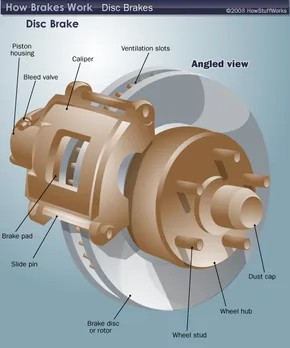
Let’s strip it down. A basic disc brake system relies on a few key players doing heavy lifting.
- The rotor (or disc): This is the spinning part attached to the wheel hub. It gets hot. Really hot.
- The caliper : The stationary housing that straddles the rotor. Think of it as the clamp.
- Brake pads : These live inside the caliper. They are the friction material that bites into the rotor.
- Pistons : Hidden inside the caliper, these push the pads against the rotor when you press the pedal.
When you hit the brake pedal, hydraulic pressure forces those pistons out. The pads squeeze the rotor. Kinetic energy turns into heat. The car slows down.
How hydraulic pressure moves the parts
It starts at your foot. You press the pedal. That force pushes a piston in the master cylinder. Fluid moves through lines. It reaches the caliper. The fluid has nowhere to go but to push the caliper’s piston.
The fluid doesn’t compress. That’s why the force transfers directly from pedal to pad.
The piston pushes the inner pad against the rotor. The caliper slides or floats. This pulls the outer pad against the other side of the rotor. It’s a vice. A hydraulic vice.
Why disc brakes beat drum brakes
Old school cars used drums. Discs are the standard now. Why?
- Heat dissipation : Rotors spin in the open. Air cools them. Drums trap heat. Heat fades brakes.
- Self-cleaning : Water and debris fly off a rotor. They get trapped in a drum.
- Consistency : Discs don’t warp as easily under normal use.
If you drive in the rain, disc brakes stay reliable. Drum brakes get soggy. They lag. Discs bite immediately.
What happens when you lift off the pedal?
Pressure drops. Springs or seal elasticity pull the pistons back slightly. The pads release. The rotor spins freely again. No dragging. No grinding. Just clean release.
But here’s the thing. The heat stays. For a while. That’s why track days require cooling breaks. Metal expands. Fluid boils. If you ignore the physics, you lose stopping power.
Disc brakes aren’t perfect. They wear out. Rotors warp. Pads dust. But they work. Every time you stop, it’s this simple, brutal mechanism saving your day.
Next time you see brake dust on your wheels, remember: that’s the cost of friction. And friction is what keeps you alive.


