


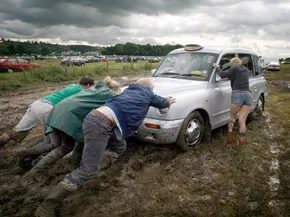
Mud gets thick. Rain turns dirt into a trap. Even a fully loaded 4×4 with aggressive tires can end up high-centered on a slick bank or buried in wet clay. In that moment, a tow hook is the difference between walking home and calling a tow truck. But using one wrong is easy. It takes one sharp jerk to bend a frame rail or snap a mount.
You need to know the weight limits of your strap, the angle of attack, and where the hook actually goes on the chassis. Getting these details right prevents expensive structural damage.
Identifying The Correct Tow Hook Placement
Not every loop on your bumper is a tow point. Some are designed for lifting, others for pulling, and some are purely decorative. Look for the manufacturer’s designated tow hooks. These are usually bolted directly to the frame or subframe. If you see a loop on a plastic bumper without a visible metal backing, do not pull it. That piece will tear out.
Where is the best place to attach a strap? Always use the front tow hooks for forward extraction. If you are backing out, use the rear designated points. Never use a license plate bracket or a bumper accessory as a primary anchor.
Choosing The Right Strap And Load Capacity
The strap matters. A standard ratchet strap from a hardware store is not a recovery strap. Recovery straps are made of heavy-duty webbing with reinforced stitching and hooks that can handle high tension. Check the Working Load Limit (WLL).
- Light Duty: 5,000 to 7,500 lbs. Good for small cars on paved or firm surfaces.
- Heavy Duty: 10,000 to 25,000+ lbs. Required for large trucks, SUVs, or soft terrain.
If the vehicle is stuck in deep mud, the resistance is high. Using a low-capacity strap will cause it to fail. A broken strap can whip back and hit a person or shatter glass. Always match the strap capacity to the weight of the stuck vehicle plus a safety margin.
Safety Checks Before You Pull
Before you start the tow vehicle, walk around both cars. Is the path clear? Is the angle safe? A straight pull is best. If you must angle, keep it under 30 degrees. A wide angle increases leverage on the tow hook and can rip it from the chassis.
Clear the area of bystanders. Stand behind the recovery vehicle, not in front. If the strap snaps, the recoil force is dangerous. Wear eye protection and gloves. Mud and wet surfaces mean the recovery vehicle might slide. Ensure it has good traction or use tire chains if necessary.
Common Mistakes To Avoid
Pulling too fast is the biggest error. Recovery is slow and steady. A sudden yank creates a shock load that multiplies the force on the hook. Instead, build tension gradually. If the car doesn’t move, stop. Assess the situation. Adding more force without changing the technique will only cause damage.
Also, watch the tow vehicle’s speed. It should be in first gear or low 4WD. The goal is constant, low-speed movement. If the recovery vehicle accelerates, the tow hook takes the hit.
“A slow, steady pull protects the chassis.
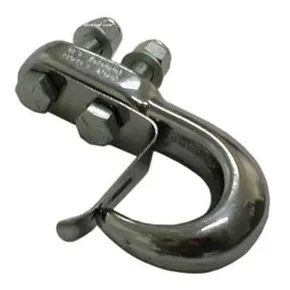

Why You Should Only Bolt Hooks to the Frame
It sounds obvious. Tow hooks are just hardware. You bolt them to the chassis or slide them onto the receiver. That is the only safe place.
Do not strap a winch line to your bumper. Do not loop a chain around your axle. Those parts were engineered to absorb minor impacts, not the thousands of pounds of tension generated by a stuck truck. The metal will bend. The paint will shatter. You will be on the phone with your insurer.
The U.S. Department of Transportation (DOT) mandates that every American-made vehicle includes four designated attachment points in the frame. These are your legal and physical lifelines. If you are missing factory points, or if you just prefer a permanent fixture, you can weld hooks directly onto the frame. It requires skill, heat, and confidence in your welding setup, but it works.
The Difference Between Tow Straps and Recovery Straps
This is where most people screw up. There are two types of straps, and using the wrong one is a safety hazard, not just a technical error.
Tow straps are for moving vehicles that can still roll. They are non-elastic. No stretch. They have hooks on both ends. You use them to pull a flat-tire truck to a mechanic. If you try to use a tow strap to extract a vehicle stuck in mud, you are creating a whip. The sudden jerk can snap the strap, send the hook flying, or tear the mounting point off your frame.
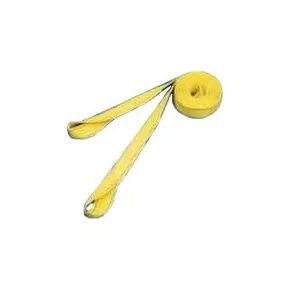
Recovery straps are for extraction. They are elastic. They have loops on the ends, not hooks. You slip the loop over your tow hook. When the pulling vehicle accelerates, the recovery strap stretches. This is the critical difference.
Think of a Slinky.
When it stretches, it stores kinetic energy. As it contracts back to its original length, it transfers that energy to the stuck vehicle. That smooth, progressive pull is what digs a car out of the bog without ripping the chassis apart.
Safety Considerations When Pulling
The physics are simple. The execution is not.
Before you start pulling, verify that your tow hooks are tight. Check the receiver. Ensure the recovery strap is not frayed. Keep people clear. If the strap snaps, it behaves like a high-tension cable. It does not miss.
Also, match the capacity. A 3-ton recovery strap on a 6-ton truck is a bad idea. You will break the strap, not free the vehicle. Use the right tool for the weight.
Why you should never pull from the bumper or axle
You want to attach the strap to the frame. That is the only structural component on a truck or SUV capable of handling thousands of pounds of static weight plus dynamic load. Modern bumpers are usually plastic or composite materials. They are not designed for recovery loads. If you hook a strap to a bumper and yank, you will bend the structure or rip the bracket off entirely.
Axles are tempting because they look strong. They are not. The geometry makes them vulnerable to bending or tearing if the force is applied at the wrong angle. Do not trust an axle point unless you have verified it is a dedicated recovery point rated for the load.
The danger of metal hooks on recovery straps
There is a specific reason recovery straps do not have metal hooks. Tow straps use rigid hooks. If a tow strap snaps under load, that hook becomes a projectile. It can travel at high speed and cause serious injury to anyone standing near either vehicle.
Recovery straps are made of elastic webbing. They stretch. This elasticity absorbs the shock load. If a recovery strap fails, it tends to recoil or snap back on the vehicle rather than launching a sharp object through the air. They are lighter and designed specifically for off-road recovery scenarios where mud, sand, or rocks are the obstacle.
Inspecting your gear before the pull
Check everything before you hook up. Rust eats through steel tow hooks. Grime can hide cracks. Inspect your tow hooks for any deformation or corrosion.
For the strap itself, run your hands over the webbing. Look for cuts, fraying, or embedded dirt that abrades the fibers. A frayed strap is a failed strap. If you see damage, do not use it. Replace it.
How to drive the pulling vehicle
The person doing the pulling needs to drive slowly. Not a crawl, but a controlled, steady pressure on the accelerator. Jerky movements are the enemy. A sudden lurch puts peak stress on the strap and the attachment points. It can snap the webbing or break a recovery point.
Keep the gas pedal light. Let the elasticity of the recovery strap take up the slack gradually. This smooths out the load spike.
Someone must be in the driver’s seat of the stuck vehicle. This is not optional. Once the vehicle starts moving, the driver needs to be ready to steer and brake. If they are standing outside, they cannot control the direction of travel, which increases the risk of swinging into obstacles or flipping.
The goal is to get the vehicle moving, not to rip it out.
Related recovery and towing equipment
If you are looking beyond basic strap recovery, these systems handle heavier or more complex towing scenarios:
- Towing Steering Stabilizers : Reduce trailer sway on long hauls.
- Brake Controllers : Manage trailer braking for safe stops.
- Breakaway Kits : Activate trailer brakes if the hitch disconnects.
- 5th Wheel Safety Systems : Secure heavy fifth-wheel hitches.
- Towing Locks : Prevent trailer theft.
- Safety Cables : Provide a secondary connection if the hitch fails.
Understanding how these components work helps you choose the right gear for your specific rig.


