Most people know the Ford Model T. Very cheap. It’s everywhere. But we may not know how it works. The 1908 Model T introduced a 2.9 liter inline four cylinder engine. It produced 22 horsepower. It is enough to move not only the car but also the piano. However, its 22 horsepower is significantly higher than the original Motorwagen patented by Benz. Prototype from 1885 – Equipped with a single cylinder engine. Produces about 0.67 horsepower. 1/3 horsepower.
The Model T’s engine wasn’t just bigger; Far better. This was the first really affordable car because the engine worked reliably. Very durable. It doesn’t break every time you turn the key. This reliability makes all the difference.
Since then, engines have continued to evolve. They are even stronger now. Quieter. cleaner. Less fuel is consumed. This did not happen by accident. Engineers have spent more than 150 years improving internal combustion engines. This is one of the few inventions that has improved continuously over such a long period of time. How many more can you say?
Let’s take a look at the 10 most important changes. It’s not a small adjustment. Truly a revolution. From fuel injection to hybrid. Let’s follow the trajectory of the engine. Maybe guess what happens next.
Basic information: 4-stroke cycle
Before you can understand modern engines, you need to understand the basics. The four-stroke engine cycle is the basis of almost every vehicle we drive today. Also called the Otto cycle. It’s very simple. Effective. It has been around since the late 19th century.
There are four stages in this cycle. intake. compression. power. exhaust.
- Intake: The piston moves down. The valve opens. The mixture of air and fuel enters the cylinder.
- Compression: The valve is closed. The piston moves upwards. Compressing the mixture. This causes pressure.
- Power: Spark plug. The mixture explodes. This force pushes the piston down. This causes the crankshaft to rotate. This is the only stroke that produces power.
- Exhaust: The valve opens again. The piston moves upwards. Exhaust gas exits.
This cycle works. This is as expected. it works. Most cars you drive today still follow this basic principle. Of course, improvements have been made. However, the core idea has not changed much since Nicolaus Otto introduced it in 1876.
The four-stroke cycle is the basis of automotive technology. Since 1876, all internal combustion engines have used these four stages to generate power.
Why is this important? Because it sets the standard. Early engines used the two-stroke cycle or steam. They are messy. they are inefficient. The four-stroke structure guarantees cleaner combustion. More powerful. It lasts much longer. This is a winning formula.
Without this cycle, there would be no Model T or Benz Motorwagen. This is the starting point. baseline. All the enhancements described below are based on this simple and elegant cycle.
But the four-stroke cycle is just a skeleton and muscle
Mercedes-Benz’s patent car is a single-cylinder two-stroke engine. Stroke is simply the distance the piston moves in the cylinder. In the early days, two-stroke models were common. They are simple. Very dirty.
Then 4-stroke engines appeared. The end of the 19th century brought this improvement. it changes everything. This cycle has four stages: intake, compression, power and exhaust. The piston moves up and down twice to complete.
A two-stroke engine does the same job in half. You can still see it. Lawnmowers use them. Scooters depend on them. Industrial engines depend on their operation. car? Almost none. Four-stroke cycles are the norm.
Fuel consumption and emissions
Why does the 4-stroke win? Burn cleaner fuel. It lasts a long time. Produces more power and torque. The advantages outweigh the disadvantages. The downside is the complexity. Manufacturing costs are higher. Requires a valve.
Valves control the flow of gas. Four-stroke models require them in the intake and exhaust. Parts are added now. Costs are increasing. From an engineer’s point of view, this adds to the headache. But the result is a cleaner engine. It also increases efficiency.
There is a reason this is the standard. You don’t see 2-strokes taking over the highways. The trade-in is worth it. We’ll look at these valves in a moment.
Forced induction
Next we move on to forced induction. It starts with the plane. It moved to cars. It changed the performance permanently.
Promotion Strategy: Why is forced induction dominant?
The engine requires three things to work. fuel. air. ignition. It’s simple enough. However, adding air to the combustion chamber increases the amount of air available to the piston. More air means more power. Period.
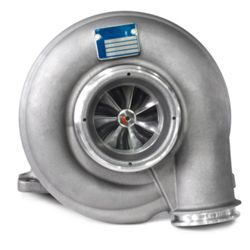
This is where forced induction comes into play. You probably know the names of turbocharger and supercharger parts. These are basically air compressors. Forces extra air into the engine at a higher pressure than air pressure. result? Higher compression ratio and significantly more power per stroke.
This is not a new technology. It was used in aircraft engines for decades before car manufacturers became interested in it in the 1920s. Why bring it back now? Because it’s the most efficient way to squeeze power out of a small displacement engine. No need for large blocks. Fuel economy doesn’t have to be significantly worse compared to the power you get.
** Consider the Turbo Mini Cooper S**. At its core is a small 1.6 liter engine. However, depending on trim and model year, it can exceed 200 horsepower. You can pack a lot of punch in a small box. The same logic applies to high-end machines. The Porsche 911 Turbo and Corvette ZR-1 rely on forced induction to achieve impressive power figures. No naturally aspirated engine of the same size can achieve this kind of power without being too big or heavy.
But there’s a problem. It’s important.
Turbocharged cars usually require high quality gasoline to avoid knocks. As the compression ratio increases and cylinder pressure increases, conventional fuel evaporates. Then there is the issue of turbo lag. The power cannot be used immediately. You have to wait until the exhaust gases turn the turbine. Until the turbo kicks in, you’re just driving a small car. This is a delay. There is a delay. Engineers have attempted to alleviate this problem by using smaller turbines and electrical assistance, but the problem remains a feature of the system.
Despite these drawbacks, this trend is irreversible. Emission standards are being tightened. Fuel efficiency regulations are getting stricter. Car manufacturers are moving away from large displacement engines in favor of smaller naturally aspirated engines. Check out the latest Hyundai Sonata. The top engine option is no longer a smooth V6. It is a 4-cylinder turbo engine. They chose more power and better efficiency over mechanical simplicity.
This is a barter. Performance comes at the cost of complexity. and increased size.
Now let’s see why fuel injection has almost made carburetors a thing of the past.
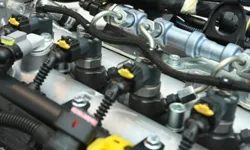
Carburetors have ruled the roads for decades. It’s very simple. Mechanical. When you press the gas, the butterfly valve opens and the fuel mixes with the air. Worked well for a long time. But in the late 1980s, the industry realized it was time to upgrade.
Fuel injection takes over. Replace the mechanical chaos of carbs with electronic precision. Instead of the injector drawing fuel through a vacuum into the nozzle, the injector injects gasoline directly into the intake manifold. The engine computer ECU controls everything. Calculates the exact air to fuel ratio needed for operation every millisecond.
Why fuel injection wins
This change is not just a trend. This is all about performance. Fuel injection provides excellent throttle response. When you press the pedal, the computer adjusts the fuel mixture almost instantly. There is a delay in the carburetor. They struggle with the onset of winter cold. Modern fuel injection makes cold mornings easy. The engine first tries to start.
Efficiency has also improved. The computer can fine-tune the mixture to save gas. Reduce emissions. Provides more power throughout the rev range. The result is a smoother and more sensitive driving experience.
The price of complexity
There is one downside. These systems are complex. Requires sensors, wiring and high pressure pump. When something breaks, you can’t just turn the screw. Diagnostic tools are needed. Maintenance costs are higher than with simple carburetors. A faulty injector or sensor can leave you stranded until a professional fixes it.
Despite the high price, fuel injection became the norm. The carburetor never came back on. They are relics of the past. But the engineers didn’t stop there. They are constantly looking to improve efficiency and effectiveness.
The next leap: Direct injection
The evolution didn’t end with port fuel injection. The industry has moved to a more proactive approach. The next step is called direct injection. It changes where the fuel enters the engine. The fuel goes directly into the combustion chamber instead of mixing in the intake manifold. This increases the compression ratio and allows for better combustion control.
Direct injection is a significant step forward in fuel distribution technology, which enables tighter combustion efficiency control.
This change changes the way you think about engine performance. It’s not just about mixing fuel and air. It’s all about time, pressure and precision. The benefits are huge. But so are the challenges. Carbon buildup can be a problem. These systems are expensive to maintain. However, the increase in performance justifies its complexity.
We are currently working on technologies that push internal combustion engines to their limits. Faster. It’s more beautiful. More demanding. It’s always there.
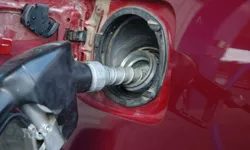
Direct injection is basically fuel injection and takes the technology to a new level. The name says it all. I skipped a step. The result is increased efficiency. You get more power. Improves fuel efficiency. This is a logical development.
In the standard system, fuel is injected into the intake manifold. It is mixed with air before it enters the cylinder. Direct injection completely changes the geometry. The fuel is injected directly into the combustion chamber. The engine computer controls it every millisecond. Ensures that the fuel burns exactly when and where it is needed. Drops of waste. Low-fat mixtures burn cleaner. Makes a gasoline engine more similar to a diesel engine. Diesel engines have used this method for decades. Gasoline engineers are also catching up.
The performance improvement is real. But there’s a problem.
Advantages: More power and better fuel economy
Disadvantages: High manufacturing costs and relatively new technology
This is not standard yet. This technology has only been on the market for about 10 years. Manufacturers are intensifying their efforts. But it’s not the default yet. It is still a “hot” new technology. We’ll probably start seeing it in more vehicles soon. This development cannot be stopped.
However, reliability cannot be guaranteed. Carbon buildup in the intake valve. Over time, this can cause problems. Tuners worked hard to modify these engines. Complexity increases costs. Production costs are high.
This is a barter. Improve efficiency and performance. Ease of maintenance has been lost. Industry bets on profits.
Aluminum vs. Steel: The Pressure Game
Now let’s look at the use of an aluminum engine block and an old-fashioned iron block.
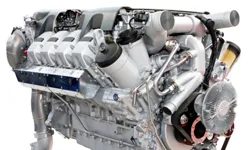
Changing aluminum: weight loss and calorie restriction
A lighter engine means better handling and efficiency. This is the basic equation. But there’s a problem. If the temperature is too high, the aluminum will deform.
Car manufacturers are interested in losing weight. Smaller mass means better fuel efficiency. It also means that the car turns faster. What is the solution? Replace the iron block with an aluminum block.
Steel was once the industry standard. Very durable. It is very heavy. Aluminum is used in most small new engines these days. Large V8 engines still often use iron blocks. Why? Cost and durability requirements. But for most teams, aluminum is king.
There is a big difference in weight. Aluminum engines usually weigh half of an iron engine. Cut the engine weight in half. The whole car becomes lighter. result? Handling has been improved. Miles better.
However, there are also disadvantages. Aluminum is not as strong as steel. Fight the extreme heat. Early aluminum blocks had problems with cylinder distortion. Then there were reliability issues.
These problems are now mostly solved. Better manufacturing technology. Improve cooling. Aluminum wins. This is the future of engine manufacturing. Weight loss cannot be ignored.
Next. camshaft. they changed everything.
Camshaft above
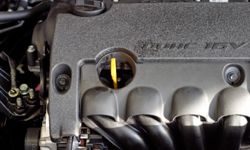
The term DOHC often appears in technical data. Short for double overhead camshaft. Most buyers naturally prefer it to older models. But what does this actually mean for your car?
It all depends on the placement. This term refers to the physical location of the camshaft relative to each cylinder. This component is the heart of the valve train. Controls the entry of fuel and air into the combustion chamber. And how are the exhaust gases removed?
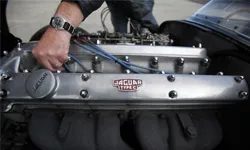
Overhead valves (OHV) have dominated the market for decades. These are called pushrod engines. The camshaft is located deep in the engine block. Move the valve by pushing the push rod upwards. This design significantly increases mass. The extra weight limits the engine speed.
Overhead camshafts change the geometry. The cam has become smaller. It is located directly above the cylinder head. Single overhead camshaft (SOHC) engines use one camshaft per cylinder bank. The DOHC configuration uses two.
Why is this important? More valves.
Overhead camshafts allow engineers to install more intake and exhaust valves per cylinder. This opens the flow path. Air and fuel flow faster. Exhaust gases are released faster. The engine breathes better. This adds power.
Pushrod advantages
Despite their increased efficiency, cams have not completely replaced pushrods. Large manufacturers still use them for certain applications.
Chrysler continued to use pushrods in its Hemi V8 engines. These engines produce significant torque at low speed. General Motors does the same thing with some of the latest high-tech V8 engines. The simplicity of the design still offers advantages in high displacement applications.
However, since the 1980s, DOHC and SOHC have become the standard. It is installed on most small engines. The alternative is clear.
Complexity costs
The overhead cam has one drawback. Complex.
More parts means more potential points of failure. Construction costs are higher. Repair costs are higher. You pay the price for breathing efficiency.
Have you noticed a pattern? As performance increases, complexity generally increases. And it costs more.
What next?
Valves are just the beginning. How to open and close at the right time is the next piece of the puzzle. Next we look at variable valve timing.

Production costs are higher. That’s the price of flexibility. But if you’re deeply interested in a Honda with VTEC, you’ll end up buying an engine that breathes better.
If you’ve ever spent time in a garage or read forums about Honda mods, you know this ritual. Everyone is waiting for the “VTEC launch”. The moment the cam profile changes and the lift increases, the car suddenly feels like it’s got a new personality. This is not magic. This is engineering work.
VTEC stands for Variable Valve Timing and Lift Electronic Control. This is a concrete implementation of variable valve timing (VVT). Conventional engines have fixed valve timing. The valve opens and closes in the same position each time the crankshaft rotates. This is very efficient at idle. You will fail completely. At high rpm, the air must flow through the engine faster than possible with a static design. VTEC solves this problem by physically changing the cam lobe profile. It switches from a flat low lift cam to an aggressive cam with high lift. This lets more air in. The more air, the more fuel can be burned. More combustion means more power.
Honda didn’t invent this concept. They just perfected it.
Toyota calls its version VVT-i. Intelligent adjustable valve timing. BMW uses Valvetronic and VANOS. Valvetronic electronically adjusts the valve lift and VANOS (Variable Nockenwellensteuerung) controls the camshaft timing. Everything looks different under the metal. They all have the same goal of maximizing volumetric efficiency across the entire rotation range.
The result is an engine that is at home both in the city and on the track. It is flexible. Fuel economy at cruising speeds improves because the engine does not pump air unnecessarily. The valves open wide for maximum performance at the red line. This is a barter. They are expensive because their design and construction is complicated. But for drivers, it’s worth the trade-off.
Most modern engines do not rely on mechanical clutches like the early VTECs. Adjust the timing to the millisecond using sensors and the on-board computer. The transition from mechanical to digital control has really changed the game.
Aircraft engine computer

Modern engines are essentially chaotic symphonies of moving metal. Dozens of parts ignite, squeeze and explode in perfect and terrifying synchrony. It’s a miracle that any of them made it to the end. Manufacturers rely on the engine control unit (ECU) to keep this chaos from turning into a disaster.
Think of the ECU as the brain of your operation. The entire performance is controlled by the on-board computer, which controls everything from ignition timing to the mixture. It also deals with fuel injection rate and idle speed. The problem is doing all this while performing millions of calculations per second. It’s not just about reading data. That’s not enough.
“It uses a series of sensors to monitor what’s going on inside the engine and performs millions of calculations every second to keep everything running properly.”
However, the ECU does not work alone. Your car is basically a rotating data center. Other computers control the electrical network, airbag deployment logic, cabin climate control, driving stability, anti-lock brakes and even automatic transmission shifting. The level of integration is amazing.
This computerization did not happen overnight. When the first on-board diagnostic (OBD) systems were introduced in the 1980s, they began to gain momentum. This is the technology behind the “check engine” light on the dashboard. Before OBD, spotting strange noises or hesitations was often a matter of guesswork. Mechanics can now plug scan tools into the OBD port and extract a wealth of information.
Let’s be clear about what OBD “cannot” do. It is not possible to say with 100% accuracy which part is damaged. A code will appear on the screen. Point out problem areas. This is the starting point, not the finish line. However, it is essential for diagnosing modern vehicles.
Trade-off: efficiency vs. accessibility
What is the use of it? Fuel Efficiency and Better Troubleshooting. These computers can get more miles per gallon from each tank by fine-tuning the combustion process. Catch problems before they become fatal failures.
What are the disadvantages? Cost and Complexity.
If it’s a weekend wrench with a socket set, you’re in trouble. Modern engines can be tricky, as software bugs and sensor errors can prevent simple mechanical fixes. The barrier to entry for DIY mechanics has never been higher. Mechanical skills aren’t the only thing you need. You need to understand the digital communication between the modules.
This complexity brings yet another big change to the automotive industry. We thought of diesel engines as smoky, noisy, low-power workhorses. Those days are over. The technology that made petrol engines more efficient now means that diesel engines are cleaner, quieter and incredibly efficient.
2: Clean diesel

While we spend a lot of time analyzing gasoline powertrains, it would be a mistake to ignore diesel engines. Diesel has always been a niche market in the US. Despite the performance of comparable gasoline engines in fuel economy statistics, many Americans still consider diesel to be a engine of the past. This is a noisy, smoky, smelly engine from the 1970s and 1980s. That picture is wrong.
Today’s diesels are different. It’s powerful. It is very beautiful. Consumes fuel. Modern engines run on low-sulphur diesel and use advanced filtration systems to remove particulates and reduce pollution to near zero.
Major manufacturers like Volkswagen, Mercedes-Benz, BMW and Volvo have reinvented these engines into someengine completely different. Turbocharged direct fuel injection. Accuracy with computer control. result? It delivers a torquey driving experience without compromising on efficiency.
Of course, there are also disadvantages. Diesel costs more per gallon. Also, these engines tend to run at lower RPMs, which some purists don’t like. But Consider this. If you can get more than 40 mpg on the highway, you will need to fill up a lot less often. The price of the vehicle and the fuel itself is higher, but it pays for itself in mileage.
performance? This cannot be denied. Let’s take a look at the 24 Hours of Le Mans. Audi has dominated the competition for years with prototypes powered by diesel engines. It’s not a tractor. This is engineering work.
Now let’s look at the current king of “green cars”. hybrid.
How hybrid engines balance power and efficiency
A hybrid system combines a traditional combustion engine with one or more electric motors. The goal is simple. The electric motor is used for slow, low-load driving where the gasoline engine is less efficient, leaving the gasoline engine in charge of highway driving and high-load situations.
There are different architectures, but the principles are the same. Normally, energy wasted during braking is recovered and stored in the battery. This “regenerative braking” increases the operating range of the electric motor.
Why choose a hybrid instead of pure electricity?
You might wonder why bother with a hybrid when there are plug-in electric vehicles (EVs). The answer lies in range tension and charging infrastructure. Hybrid cars do not need to be connected to a power source. It generates its own electricity using the motor and regenerative braking.
This makes it ideal for drivers who cannot install a home charger or who frequently drive long distances. You can the benefits of electric power around town without having to look for a charging station during a road trip.
Mixed technology compromises
Hybrids are not perfect. It’s more complicated than a regular gas car. More components mean more potential points of failure. The battery lasts longer than previous models, but degrades over time. Replacing a hybrid battery is expensive.
In addition, the driving experience can feel disjointed. The switch between electricity and gasoline is not always smooth. Sometimes it feels like the gasoline engine has suddenly kick in. It’s not as refined as a pure electric car or a fine-tuned turbodiesel.
Which hybrid system is best for you?
Not all hybrids are created equal.
- Full hybrid: Can travel short distances on electricity alone. Offers the best fuel efficiency but is more complex
Fuel prices are rising. Environmental concerns are at an all-time high. Regulations are being tightened. These three forces are pushing the automotive industry towards “green” design more than ever before. result? Hybrid technology has have gone from niche curiosity to mainstream necessity.
Ten years ago, hybrids were unknown. Today, these concepts are common sense. The electric motor works together with the gasoline engine. The goal is simple. The goal is to maximize fuel efficiency and at the same time eliminate the fear of range anxiety plagues all-electric vehicles. No need to think about where the next charge will come from.
Toyota Prius dominates the market
There’s a reason why the Toyota Prius is still America’s best-selling hybrid car. It is equipped with a 1.8-liter 4-cylinder engine and an electric motor that produces 134 horsepower. The system is smart. At low speeds, the electric motor takes over completely. Using zero fuel. The gasoline engine helps when driving at high speeds or under heavy load.
The efficiency figures are amazing. Fuel economy for the Prius is around 50 miles per gallon (21.3 km/L) in city and highway conditions. This consistency is unusual.
Green technology costs
Hybrid technology represents the latest development in combustion engine technology. But there’s a problem. The starting price is higher than the corresponding non-hybrid models. Some analysts believe gasoline prices will have to rise significantly to recoup the initial additional costs through fuel savings. This is a math problem that depends on where you live and how long you drive.
Burning future
Despite the proliferation of plug-in electric vehicles, the internal combustion engine is not dead. It is constantly evolving. Emissions are reduced Efficiency continues to improve. This trend has grown since the launch of the Model T. Engines are constantly adapting and getting better and cleaner with each generation.
How hybrid cars work regardless of range
When driving long distances with electric cars, drivers are often worried about running out of power. Hybrid cars solve this problem by using gasoline as a backup. Electric motors handle heavy lifting at stops, where efficiency is key. When the battery is low or more power is needed, the gas engine supplements the energy. These two approaches allow you to travel anywhere without having to plan for every charging station
Why the Toyota Prius is still popular
The Prius isn’t just the best-selling hybrid vehicle; This is a benchmark. The 1.8-liter engine and electric motor return a steady 50 mpg. This true efficiency is hard to beat. For many shoppers, it’s not about saving the planet, it’s about saving money on gas. This is a strong argument because gasoline prices fluctuate.
Does a hybrid fit your budget?
Hybrids have a higher initial cost. But over time, money is saved. If you drive often, fuel savings will increase. If you drive casually, it might not be worth the premium. Gas prices need to go up to make hybrid investments significantly more palatable to casual drivers. This is a personal calculation. But one thing is clear. This means that the trend towards efficiency continues. The engine changes. And it’s happening faster than most people think.