We keep hearing the same drumbeat. Save energy. Use less fuel. It is good for the air. It is good for the supply chain. It keeps more cash in your pocket at the pump. But the usual advice feels heavy. You have to buy a hybrid. Or trade your gas-guzzler for a compact. Those moves work. They also cost a fortune upfront. Or they change your life in ways you did not sign up for.
There is a middle ground.
Simple changes in driving habits can drastically increase the fuel economy of the car you already own. You do not need a new vehicle to save money. You just need to know what you are doing wrong. Right now.
The Problem with Average MPG
Most drivers rely on the average fuel economy display. It shows you the miles per gallon over a long trip. Over a week. Over a month. It smooths out the bad moments. It hides the truth.
You can stomp on the accelerator for five seconds. Burn a lot of gas. Then coast for ten minutes. The average looks okay. But you still wasted fuel. You just do not see it in real time.
This is where an instant miles per gallon (MPG) readout changes everything.
What Is an Instant MPG Display?
An instant miles per gallon (MPG) readout tells you exactly how many miles per gallon your car is getting at this very second. It is also called an instant fuel consumption display or an instant fuel economy gauge.
It is not an average. It is a snapshot.
When you press the gas pedal hard, the number drops. Fast. You see the waste. You see the cost. It is immediate feedback.
Hypermilers have used these tools for years. They are obsessed with efficiency. Many hybrid cars have an instant MPG display as standard equipment. It works well with regenerative braking and electric assist. The data is clear.
Now it is going mainstream.
It Is Going Mainstream
Automakers are adding these displays to regular cars. Not just hybrids. Not just expensive EVs. Standard sedans. Standard SUVs. They want drivers to save fuel. They want you to feel efficient.
There are also aftermarket options. If your car does not have one, you can buy a device. Plug it in. Watch the numbers.
The technology is simple. The car’s computer calculates fuel flow. It divides that by speed. It shows you the result. Seconds matter.
Why Real-Time Data Matters
You cannot fix what you cannot see.
Average MPG tells you what happened yesterday. Instant MPG tells you what is happening now. It changes your behavior.
You stop accelerating so hard. You brake earlier. You coast into stops. These are not big steps. They are small adjustments. But they add up.
The question is not whether you should use one. The question is how to use it correctly. Most people look at the number. They try to keep it high. That is wrong.
High MPG at idle is not efficient. You are not moving. You are just burning gas. You need to match the display to your speed. You need to understand the load.
We will break down exactly how to interpret the numbers. And how to use them to save gas. And how to install one if your car lacks the feature.
Keep reading.
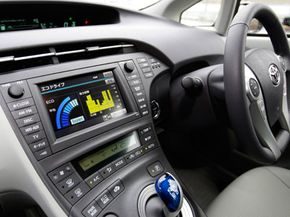

The number flashing on your dashboard right now has almost nothing to do with the EPA rating you see on the window sticker. That EPA figure is a lab-coated abstraction. It’s an average derived from two specific testing cycles: city and highway.
City mileage accounts for stop-and-go traffic. Idling. Low-speed cruising. Highway figures reflect steady-state cruising. Both are clean-room estimates. They ignore your foot. They ignore the wind. They ignore the fact that you’re accelerating like you stole the car.
Instant mpg is different. It doesn’t guess. It measures.
The Mechanics of Real-Time Calculation
These displays don’t rely on guesswork. They pull raw data directly from the engine control unit (ECU). The system monitors engine speed (RPM), fuel-flow rate, manifold absolute pressure (MAP), and throttle position.
The onboard computer processes this stream in real-time. It divides the distance traveled by the fuel consumed at that exact second. The result is a live number. If you slam the throttle, the MPG drops. If you coast in neutral or decelerate with the clutch depressed (in a manual), the reading might spike or drop to zero, depending on how the ECU handles fuel cutoff.
This is not an average. An average display smooths out your driving over 100 miles or 500 seconds. It tells you if your commute was efficient. An instant readout tells you if this right-hand turn just wasted a half-gallon of gas.
Accuracy and Adoption
Most experts consider these figures accurate. Why? Because they are based on actual sensor data, not standardized test tracks. The ECU knows exactly how much fuel the injectors are pumping. It knows the wheel speed. It knows the load.
This precision is why instant mpg displays are becoming standard equipment on new vehicles. Manufacturers know drivers want feedback. They want to know if their hybrid system is charging or discharging. They want to see the impact of eco-mode.
But what about the older models? The ones without this factory integration? If you drive a truck from 2005 or a sedan from 2010, you can’t just wait for an update. You need a hardware solution.
Where to Find Aftermarket Instant MPG Solutions
For older vehicles, the answer lies in aftermarket hardware. You can’t software-update a 1998 Camry to show live fuel flow. You have to tap into the data stream.
OBD-II Port Readers
The easiest entry point is the OBD-II port. Located under the dashboard on most cars built after 1996, this port provides access to the engine’s diagnostic computer. Simple Bluetooth adapters plug in here. They connect to a smartphone app. The app calculates MPG using the data the ECU already broadcasts.
It’s not always “instant” in the millisecond sense. Bluetooth has latency. But it’s close enough to show trends. It tells you when your fuel economy tanks on hills. It tells you when cruise control is saving you money.
Dedicated Dash Units
For a more direct experience, there are standalone units. These plug into the OBD-II port but have their own screens. No phone needed. They often provide richer data: voltage, RPM, air-fuel ratio, and yes, instant MPG. Some high-end models even track driving style, giving you a score for smooth acceleration and braking.
Hybrid-Specific Tools
Hybrids add complexity. Standard OBD data might not capture the electric motor’s contribution accurately. For Prius or Fusion Hybrid owners, specific aftermarket tools are required. These tools read the battery state of charge and the power flow between the engine and motors. Without this specific data, an instant MPG readout can be misleading, showing high MPG when the car is actually drawing from the battery.
The Limitations
Keep in mind that aftermarket solutions rely on the car’s existing sensors. If your mass airflow sensor is dirty, your instant MPG will lie. The system will think less air is entering, so it will calculate less fuel being burned. The number looks good. The engine is running rich. The check engine light might be on, but you’re too busy staring at your impressive 45 MPG on the highway.
The hardware exists. The data is there. The question is whether you care enough to watch it.
Factory gauges are getting flashy. It is not enough to just show you a number anymore. Manufacturers want you to feel the efficiency.
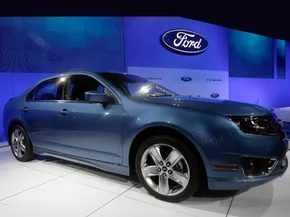
Ford did this first with the 2010 Fusion Hybrid. The digital screen sprouted vines. Leaves. A full botanical display. The more eco-friendly your driving, the more the screen grew lush and green. Other brands took a simpler route. Red means you are stomping on the gas. Blue or green means you are coasting like a saint.
It is a gamification of fuel economy.
But what if your car lacks these digital gardens? What if you are stuck with a blank analog dial or a boring digital readout that only shows average mileage? You are not out of luck. You just need an aftermarket instant mpg display.
The 1996 OBD-II Mandate
Here is the catch. You can only install these devices if your car is a 1996 model or newer.
Why 1996? That is when the U.S. government mandated the On-board Diagnostic system (OBD-II).
OBD systems have existed since the late 1970s. But before ’96, they were optional and inconsistent. The 1996 rule forced all cars sold in the States to report emissions data. This is the same system that triggers your check engine light when something goes wrong.
Since your car is already collecting fuel and engine data, the aftermarket device doesn’t need to install new sensors. It just hooks into the existing data stream.
“Since the car’s OBD-II system is continuously collecting the data anyway, all an aftermarket instant mpg readout has to do is collect it, compute it and display the results for you.”
Cost and Installation
Expect to pay around $150 for a basic unit. Prices vary by brand and features.
Is it worth it? If the device helps you save gas, it pays for itself. The math is simple. If you save $50 a month, the device covers itself in three months. After that? It is pure profit in your fuel economy.
Installation is straightforward for anyone with a screwdriver and a little patience.
- Plug the adapter into your OBD-II port (usually under the dashboard on the driver’s side).
- Route a wire to your display module.
- Mount the module where you can see it.
If you are not handy, do not guess. Take it to an automotive electronics shop. They install car stereos all day. This is the same skill set. A qualified mechanic can also handle it.
Using the Data
Knowing the number is only half the battle.
The goal is to change how you drive.
When you see the MPG drop in real-time, you adjust. Lift off the gas earlier. Brake less hard. Maintain a steady speed. The instant feedback loop trains your foot to be lighter.
Read the next page to find out how to actually change your habits.
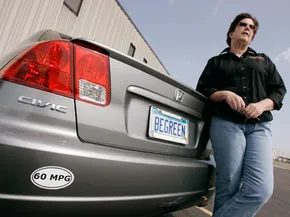
The Hypermiler Mindset
You see the numbers change in real time. That immediacy is the hook. It shows you exactly how your right foot is eating your fuel tank.
If your dashboard has an instant mpg readout, use it. Watch it. You’ll start tweaking your habits almost automatically. The goal isn’t to obsess over every decimal. It’s to build a rhythm that saves gas.
Take a stoplight. Slamming the gas to beat the red? That burns fuel. Lifting off early and rolling into the intersection? That saves it. Coasting to a stop uses far less energy than accelerating hard then braking hard. You’re wasting kinetic energy. That heat from braking is money flying out the window.
Training Your Foot
Hypermilers treat their cars like surgical instruments. They don’t just drive. They engineer the drive. These folks want every single drop of gasoline to go as far as possible. They use techniques like feather-light acceleration and engine-off idling.
The instant gauge is their coach. It tells them when they’re doing it wrong. A hypermiler might know the exact patch of asphalt where they should lift off the throttle on their commute. They know which lane shifts least. They know where traffic bleeds speed.
This isn’t about the final average at the end of the trip. It’s about the micro-decisions. The instant readout provides the feedback loop. You accelerate. You see the number drop. You adjust. You try again. It’s data-driven driving.
Daily Application
Is it worth the mental load? That’s the question for daily commuters.
Using instant mpg as a constant companion changes how you perceive distance. It turns a mundane drive into a strategy game. You aren’t just getting from A to B. You are optimizing the flow.
The average miles per gallon at the end of the tank is the score. But the instant readout is the practice. It trains your muscle memory. Over time, the efficient driving becomes instinct. You don’t think about it anymore. You just drive.
Can you maintain that focus for a forty-minute commute? Can you keep scanning the gauge while merging onto the highway? It’s a skill. And like any skill, it gets easier with repetition.
The Safety Line in Instant MPG Coaching
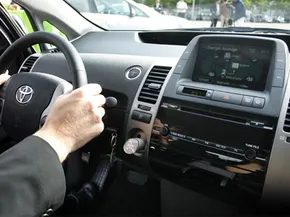
You have to be careful when using instant mpg readout to coach yourself and to refine your driving style for the best fuel economy. In fact, some hypermilers have been criticized for practices that can be unsafe. For example, following closely behind another car on the highway (drafting) might save some fuel since your car’s engine won’t have to work as hard to combat wind resistance. Following too close on the highway, especially at a high rate of speed, is a recipe for disaster. Similarly, since braking represents gas wasted through lost acceleration, some hypermilers might advocate not braking much before turns. Taking a turn too fast also increases your chance of losing control of the car.
Another point to consider is that it’s easy to get distracted by constantly staring at your instant mpg readout and not paying attention to the road in front of you. When coaching yourself with your instant mpg readout, try to keep your attention on the road ahead. When you first start working with it, you may find it easiest to focus on one maneuver at a time — like accelerating from a stop — to practice getting the best fuel economy while also paying attention to what’s around you. Avoiding an accident is definitely worth losing a few miles per gallon.
Some aftermarket devices also let you look very closely at your overall fuel economy, even allowing you to download data and graph your fuel consumption. Others track the data themselves and enter it into their computers, comparing routes to see which way home from work will help them net the best fuel economy.
On the other side, however, are people who install or use their car’s instant mpg readout for maybe a few weeks and then begin to ignore it, slowly going back to their old, less efficient manner of driving. This behavior actually defeats the purpose of the device. After all, the main benefit of instant mpg readout is that it can help you adjust your driving habits and assist in getting better fuel economy from your vehicle. Not just for a few weeks, but hopefully for a lifetime of fuel-efficient driving. As long as you aren’t so obsessed with good fuel economy that you’re ignoring safety, instant mpg readout is a handy tool that can help you save fuel (and money) at the pump.
For more information about instant mpg readouts, hybrid cars and other related topics, follow the links on the next page.
Lots More Information
Related HowStuffWorks Articles
-
5 Ways Hybrid Battery Packs are Being Improved
-
How Brake Assist Works
-
How Crash Testing Works
-
Have crash tests ever used human subjects?
Sources
-
Blanco, Sebastian. “GM engineers speak up for installing MPG displays in every vehicle.” Autoblog Green. May 18, 2008. (April 15, 2009) http://www.autobloggreen.com/2008/05/18/gm-engineers-speak-up-for-installing-every-vehic/
-
Datko, Karen. “Make it a game with instant mpg.” MSN Money. May 7, 2008. (April 15, 2009) http://blogs.moneycentral.msn.com/smartspending/archive/2008/05/07/make-it-game-with-instant-mpg.aspx
-
Dunleavy, MP. “Save gas: Learn from ‘hypermilers.'” MSN Money. Aug. 6, 2008. (April 15, 2009) http://articles.moneycentral.msn.com/SavingandDebt/SaveonaCar/SaveGasLearnFromHypermilers.aspx
-
Green Car Congress. “All New Nissan Models to Feature Fuel Efficiency Gauge.” Aug 21, 2007. (April 15, 2009) http://www.greencarcongress.com/2007/08/all-new-nissan-.html
-
Tundra Headquarters. “Toyota To Make Instant Fuel Economy Gauge Standard.” Jan. 10, 2008. (April 15, 2009) http://www.tundraheadquarters.com/blog/2008/01/10/toyota-to-make-instant-fuel-economy-gauge-standard/