


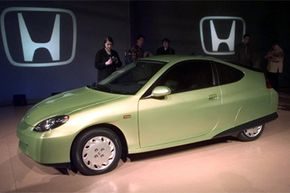
The term “hybrid car” has shifted meaning over time. Today, it almost exclusively refers to vehicles pairing a gas-powered internal combustion engine with an electric motor, a setup that defines the modern fuel-efficient segment. Before the 1990s, these gas-saving machines were rare curiosities. The Toyota Prius changed that landscape, sparking a wave of similar models from Honda and Ford that helped normalize green driving for the masses.
But the history of combining power sources runs much deeper than the Prius.
Early experiments in mixed-power driving
In the late 1800s and early 1900s, the automotive industry was a wild west of propulsion methods. Gasoline had not yet won the race against electricity, steam, or fossil fuels. Inventors experimented wildly. The specific lineage of the hybrid electric vehicle (HEV) kicked off just after the turn of the century.
- 1900: Ferdinand Porsche unveiled the Lohner-Porsche Elektromobil at the Paris Exposition. It started as a pure electric vehicle, but Porsche added an internal combustion engine to recharge the batteries. This made it the first hybrid car in history.
- 1916: The Woods Motor Vehicle Company released the Woods Dual Power. It featured a 4-cylinder ICE and hit a top speed of roughly 35 mph. It failed commercially.
- 1968: General Motors built the GM XP 512, an experimental rig that swapped between electric drive at low speeds and gasoline at high speeds.
- 1973: Electrical engineer Victor Wouk built a prototype HEV on a 1972 Buick Skylark chassis. The EPA declined to fund further development, and the project died from a lack of cash.
- 1989: Audi demonstrated the Audi Duo, pairing a 12-horsepower electric motor with a 139-horsepower internal combustion engine. Audi continued developing the Duo through the 1990s.
The modern era of hybrid adoption
The 1990s brought the first mass-market success stories.
- 1997: Toyota launched the Prius in Japan, a move driven by an internal challenge from Executive Vice President Akihiro Wadi to improve fuel efficiency.
- 1999: Honda entered the fray with the Insight.
- 2000: Toyota brought the Prius to the United States as a 2001 model.
- 2002: Hybrids became common. Honda introduced the Accord Hybrid, and other manufacturers followed suit.
- 2004: Ford released the 2005 Ford Escape, the first hybrid SUV.
The Lohner-Porsche Elektromobil remains the origin point. It proves that the desire for efficient, low-emission driving is not a new trend born from modern environmental anxiety. It is a century-old engineering pursuit that finally found its commercial footing in the 1990s. The early prototypes were clumsy and expensive, but the core idea remained: why rely on a single power source when you can leverage the strengths of both electricity and combustion?
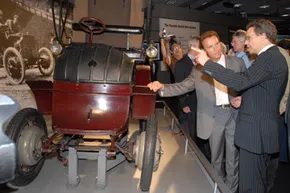

The Engineering Behind the Lohner-Porsche Hybrid
The transition from a purely electric rig to a hybrid wasn’t just a marketing pivot; it was a mechanical necessity. The Elektromobil suffered from a range anxiety problem that still haunts EV buyers today. Batteries back then were heavy and discharged quickly. Porsche didn’t want to carry massive brick batteries everywhere. Instead, he added a small internal combustion engine to spin a generator.
This setup allowed the car to recharge its storage while driving. It wasn’t a parallel hybrid where the gas engine directly drove the wheels. It was a series hybrid. The gasoline engine existed solely to produce electricity. The wheels were still turned by those 1896 in-hub electric motors. Top speed capped out at 23 mph (37 km/h), which was respectable for a city coach of that era.
Why did it work when others didn’t? Efficiency. By decoupling the engine from the drivetrain, Porsche could run the combustion unit at its most efficient RPM regardless of how fast the car was moving. The electric hub motors handled the torque delivery. It was a clever solution to the problem of battery capacity.
Who Bought the First Hybrid Cars?
You might expect the first buyers to be industrialists or nobility. The first documented purchase actually came from E.W. Hart of Luton, England. Hart had a specific request: he wanted drive on all four wheels. Porsche obliged. He installed motors in all four hubs.
This made the Elektromobil a dual pioneer. It wasn’t just the first gas-electric hybrid. It was one of the first production four-wheel-drive vehicles, decades before the concept became common in off-road trucks. Hart wasn’t buying a status symbol; he was buying utility. Four-wheel drive meant better traction on muddy roads. The combination of electric drive and AWD was, in hindsight, a brutalist form of traction control.
Production was modest. Lohner and Porsche managed to sell roughly 300 units. That’s it. Three hundred cars in a global market that was rapidly falling in love with the loud, smelly, but faster internal combustion engine. The Elektromobil faded out. The technology didn’t fail; the market did.
Why the Hybrid Idea Vanished for a Century
After the Lohner-Porsche run, the concept of using a small engine to charge batteries while driving disappeared from the mainstream. The early 20th century saw a massive shift toward gasoline-only vehicles. They were cheaper to refuel. They were faster. They were louder, yes, but the public didn’t care. The smell of exhaust became associated with progress.
For nearly 100 years, the series hybrid architecture sat in a technical graveyard. Engineers tried variations. There were patents, there were prototypes, but no mass-market viability. The infrastructure for gasoline was too entrenched. The cost of batteries was too high. The complexity of managing two power sources scared off manufacturers who wanted simple, repairable machines.
Did the Elektromobil fail? Technically, no. It did exactly what it was designed to do: move people quietly and efficiently. It just did it before the world was ready to pay for the privilege. The idea was nearly 100 years ahead of its time. It wasn’t a dead end; it was a dormant seed.
From Antique Curiosity to Toyota’s Million-Seller
The revival didn’t happen in a vacuum. It happened when environmental regulations and fuel prices made the old trade-offs untenable. Toyota looked back at the history of automotive propulsion. They saw the logic in the Lohner-Porsche setup. But they modernized it.
The Toyota Prius, launched in Japan in 1997 and globally in 2001, took the series hybrid concept and refined it into a scalable product. Where Porsche used a generator charged by a gas engine to power electric wheels, Toyota created a sophisticated powertrain that blended battery and engine output more dynamically. By 2008, Toyota had moved one million Priuses.
The contrast is stark. The Lohner-Porsche Elektromobil sits in museums or shows up at antique auto shows, a curiosity with a price tag that reflects its rarity. The Prius was a car you could buy at a local dealership. One was an experiment. The other was an industry.
Yet, without that Viennese coach builder and his young engineer partner, the path to the Prius might have been different, or longer. The foundational logic of using a thermal engine to support an electric drive system was proven in 1900. It was just forgotten. Now, it’s the default for millions of commuters who never heard of E.W. Hart or the Luton four-wheel drive request
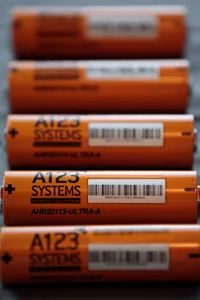

How hybrid car batteries are actually built inside the factory
The assembly line looks standard enough. Conveyor belts, elevators, robots, and humans moving parts into place. Nothing exotic about the chassis. The real complexity hides in the powertrain packaging, specifically the battery pack. These are large, rechargeable units that demand significant structural space, and they don’t come off the same line as your typical engine block. Specialty manufacturers, primarily Panasonic and Sanyo in Japan, produce them. You are looking at either nickel metal hydride (NiMH) or lithium-ion (Li-ion) chemistry.
Building a lithium-ion cell is a precise, high-stakes process. It starts with a lithium ingot, extruded under pressure into a sheet only .01 inches (0.254 millimeters) thick. Machinery winds these ultra-thin sheets into tightly coiled cells. Then comes the heat. The wound sheets are baked at high temperatures while automated equipment sprays molten metal onto the surfaces. That step is called metalizing. Once metalized, several cells are stacked into a module, forming the core of the hybrid’s energy storage.
Why the “carbon debt” myth about hybrids is wrong
There is a persistent argument that buying a hybrid, like the Toyota Prius, locks you into a massive carbon debt that you never pay off. The claim goes that the CO2 released during manufacture exceeds the CO2 saved during the car’s entire lifespan. It sounds plausible if you only look at the factory smokestacks. But the math does not hold up.
According to Toyota’s own figures, a Prius only has to be driven for about 13,000 miles (20,921 kilometers) for the CO2 savings to outweigh the manufacturing costs.
Thirteen thousand miles. That is less than a single year of average driving. After that point, the vehicle is purely a net reduction in emissions compared to a comparable gasoline sedan.
Another version of the myth focuses on the nickel in the NiMH batteries. Critics argue that shipping that nickel from mines to the factory burns so much energy that driving a Hummer instead of a Prius might be more efficient. It’s a catchy narrative, but analysts have dismantled it. The assumptions behind that calculation are faulty. The energy saved by the Prius’s high fuel economy over its life far outpaces the transportation and manufacturing energy costs of its components. The hybrid wins, even when you account for the raw material logistics.


