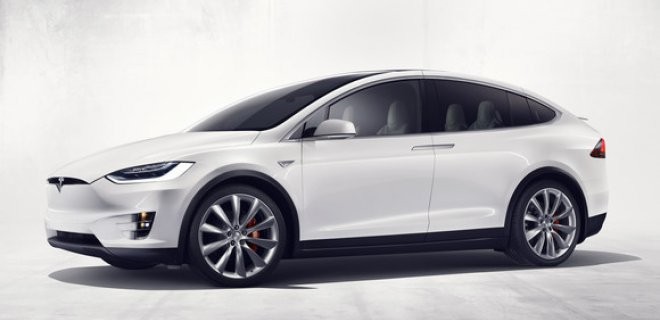
Elon Musk doesn’t just want to build a car that will save the planet. He wants an SUV. It is fully electric. And thus the Tesla Model X was born. It’s a bold entry into a segment dominated by gas-guzzling cars and hybrids. This is more than just a car. This is a statement.
Made for families and backed by a warranty
Let’s look at the practical side. The Model X is a seven-seat vehicle. high roofline. There is enough space. This is good if you have children or a lot of luggage. It’s not a sports coupe disguised as a utility vehicle. This is suitable for a family move.
Tesla did not bet on this car lightly. They offer a 7 year, 1 million mile warranty on the drivetrain and battery. That kind of confidence doesn’t come cheap. This shows that the company supports the design. There are no hidden tricks. Really long-term reliability.
The roots of design and the next generation
At first glance, the Model X looks like a taller Model S. And indeed it is. Tesla admits this too. The design DNA is shared. This is considered their second generation vehicle. Not the first. At first it was a roadster, but now few people remember it. The second is the Model S. The Model X followed.
But what next? The third generation.
According to rumors and reports, the next wave of Teslas will have more powerful motors. Longer battery life. Less energy consumption. This is more than just a facelift. This is a fundamental change in the way these cars store and use electricity.
“Model X is a family car through and through.” ——Tesla’s design philosophy
Why is this important? Because electric cars are no longer a niche market. These are mainstream. They will get better. Faster. Smarter. Model X started the conversation. The third generation answers these questions.
Where can I buy it? How does it compare?
If you don’t have charging, you can’t buy Model X. This is reality. But as the Supercharger network expands, that gap will close. Compare it to Rivian R1S and Audi e-tron. Tesla has range. Tesla has software. Tesla has a charging network that no other car can match.
perfection? No. Is it the best all-electric SUV? Maybe not yet. But the industry is being forced to take note.
The third generation doesn’t just increase efficiency. It changes expectations. Faster charging. Longer range. Low costs. It’s not a question of whether it will. It’s when. And how much will it change the market?
LED-First Lighting Strategy
The front fascia of electric vehicles do not require the large air intakes required by internal combustion engines. Radiators don’t need to breathe. However, designers often include a blacked-out grille area. This is a matter of habit. People expect a face.
The grille has been kept small in this model. It is very subtle. But it is there to fulfill visual requirements.
The real innovation is in the lighting. All of them. LED technology drives the entire lighting system. This is not just an about aesthetics. It’s all about efficiency. LEDs offer significantly higher light output. At the same time, they draw less power from the battery. That’s a double win for range and visibility.
Moving to the side, the silhouette of the Model S becomes clear. This is an elevation study. Tesla took the existing lines and made subtle height-based adjustments to the frame. As a result, it is not only functional but also good. It looks good.
Next is the door system. Falcon-wing doors. This isn’t some flimsy marketing ploy, it’s a patented Tesla innovation that has never appeared in any other production car. They solved the problem of cramped rear-seat access in an almost futuristic way. No other car does this. The design behind the lift is unique. The aesthetic effect is immediate. When you look at it, you know exactly what you’re looking at.
Achieving the Impossible: How Gullwing Door Systems Really Work
While most people think of gullwing doors as just a nice aesthetic choice, the design behind them solves real parking problems. Unlike standard top-opening doors, which are made in one piece, Shahin doors consist of two separate parts. Why is this important? This gives a lot of flexibility to the mechanism itself.
The result? You can open these doors even in the tightest of places. The minimum space requirement we are talking about is only 30 cm. The space is barely big enough for a person to fit in, let alone a full-sized door. But you don’t have to worry about the paint on your neighbor’s car crunching or bumping into the low ceiling of your garage. Sensors embedded in the door monitor the surrounding environment in real time. If an obstacle is detected, the system intervenes to prevent the door from crashing into an adjacent vehicle or the roof above. This is more than just style. This is a practical solution for a dense urban environment.
Aerodynamics that ignores physics
The attention to detail doesn’t stop when we move to the rear of the vehicle. The LED light cluster is a standout feature, while the chrome accents connecting the two taillights add to the sophistication. It pulls the look together without being too overpowering.
But the real story is what happens when you step on the gas. Şahin has an active aerodynamic spoiler that adjusts its angle according to speed. For vehicles of this size, airflow control can often be a nightmare. But the design here is very effective.
The coefficient of drag (Cd) to 0.24.
To put things in perspective, this is about 20% better than similar SUV competitors. Achieving such a low drag coefficient is almost perfect for a vehicle of this size. This means that despite its imposing presence, the car is surprisingly slices through the air, which means it has improved range and stability when driving on the road.
Central command: Why screens rule the machine
The first thing that comes to mind when you step inside is the size of the display. It’s big and takes up a lot of the dashboard, so you can tell right away that this isn’t your grandpa’s car. This is more than just a screen for displaying navigation maps and playing music. It is the central nervous system of the car. All functions from the HVAC system to the media player are transmitted through this glass slab.
Tesla’s design philosophy is simple and straightforward. Physical buttons have been removed to make room for software. The result is a minimalist aesthetic that prioritizes digital control over tactile feedback. There are no rows of temperature or volume controls. Instead, swipe, tap and scroll. It’s a design language that feels more like using a smartphone than driving a car.
This approach doesn’t just look futuristic; It will fundamentally change the way you use the functions of your car. By integrating all controls into one user interface, Tesla sets the standard. Other manufacturers are also watching closely. Do they follow suit? perhaps. But for now, this one screen is the primary way to communicate with your vehicle.
Drivers’ expectations are changing
For enthusiasts used to click of a physical dial, this may seem uncomfortable at first. There is a learning curve. You have to get used to navigating through the menus to adjust the basic settings. But when you do, its flexibility is undeniable. Screens are more than just static screens. Updated. It’s still evolving. Over time, cars get better and better with software updates, something mechanical buttons will never be able to do.
The integration is deep. When you adjust your air conditioning, you don’t just change the temperature. You can adjust the fan speed, the direction of the air flow and even the seat heating. Everything is on one screen. It is effective to some extent. But it’s also a statement about the future of the automotive industry. Physical buttons disappear. Digital interfaces are becoming more common. For better or worse, Tesla leads the way.
Trade-off: Simplicity vs. accessibility
Is it good? It depends on what you value. If you want a direct tactile experience, you may miss the old ways. However, if customization and connectivity are your priorities, the display will perform well. This is the tool for you. You can change the layout. You can hide features you don’t use. You can create your own user interface.
It’s not just about looks. It’s about how the car works. The screen is the gateway to all your car’s systems. This is the driver’s most important point of interaction. As technology develops, its importance only increases. The question is not whether screens will replace buttons. They already have. The question is: how much control are we willing to give them?
The first thing that strikes me is the size of the windshield. This is more than just an update. It is a complete re-imagining of the car’s front appearance. This largest passenger car windshield extends from the hood line to a certain part of the roof. The result is a panoramic view that blurs the line between driving and flying.
Most cars can experience tunnel vision. You look out, but metal pillars surround reality. This design removes this barrier. The glass extends upwards, creating a seamless visual flow and making the cabin feel more open. This is not just an aesthetic problem. It’s all about visibility. At first, the roads, the sky and the environment look almost unnatural.
Solving glare problems
With such a large windshield comes a legitimate concern: heat. And the glare. Imagine that you are sitting in a sauna and the sun hits your head and shoulders. Engineers know this. They don’t just attach the glass to the frames and hope for the best.
A special UV protective coating is applied on top of the roof glass. It is slightly tinted, but not too dark inside. The goal is accuracy. This coating blocks harmful UV rays while controlling the intensity of direct sunlight. This can prevent the feeling of oppressive, overheated feeling when you are parked in direct sun for hours This is a practical approach to solving very real physics problems.
Why this design matters to drivers
You may wonder why manufacturers want such a large glass area. The answer can be found in driving psychology. The feeling of openness reduces claustrophobia. This makes the cabin feel less like a box and more like a living space. On long trips, the difference is noticeable. You will feel less cramped. The light is diffused, soft and abundant.
“The upper part of the roof glass has a tinted UV protective coating that prevents excessive exposure to strong sunlight.”
This is not just a luxury accessory. This is a structural and functional change. The glass is laminated, just like the windshield, so it’s safe. Built-in Shatter resistance is built in. A larger glass surface area requires stronger adhesives and stronger seals to protect against water and noise. The design behind this size windshield is much more complex than the standard unit.
Comparison with a traditional windshield
Standard windshields are flat or slightly curved. Designed to direct air and prevent shocks. It’s practical. This new design is experiential. Light transmission and visual comfort are significantly increased in exchange for a small structural stiffness.
Where have you seen this? It is mainly used in vehicles that require a high-quality and open interior. This is common in EVs that require equally spacious interiors with flat floors and simple interiors. The contrast between the elegant exterior and the bright interior is wonderful.
Is it perfect? Glass requires a lot of maintenance. Cleaning the roof is troublesome. The wiper system must be efficient enough to effectively clear the lower portion effectively. However, in everyday driving, the trade-off favors this view. You can see more of the sky. You cannot see the structure of the car in your peripheral vision. Your view of the road ahead will change.
Configuring the third-row access and seating capacity
Slide back to reveal the first row of rear seating – a three-seat bench. There is another set of seats in the back. When these two items are added together, the total passenger capacity is 7.
Getting into those rearmost spots isn’t a crawl. Just pull the 3-seater bench forward. One button does the heavy lifting. But what if you don’t want to fight with a moving seat every time you need to access it from behind? The designers expected this. They added a special option to remove the middle seat completely from the 3 seater.
Remove the cushion in the middle to create a wide hallway. It’s cleaner. Easier. You can always walk backwards without having to put your feet up on the folded backrest.
The trade-off? The capacity has been reduced to 6 people.
Which setting makes sense for your weekly routine? Do you need the extra headroom of a 7-seater configuration, or is a 6-seater layout with a clear aisle more practical? Depending on how you value space and comfort, the hardware supports both.
The claim that an all-electric car reaches 100 km/h in 3.2 seconds is no longer just hype. That’s the reality of the Tesla Model X, especially when it’s equipped with a top-of-the-line powertrain. The SUV is available with three different engine configurations: standard 90D, performance-focused P90D and track-ready P90D Ludicrous mode.
All models have a dual motor that drives all four wheels. The acceleration data is very revealing. The basic model 90D accelerates from 0-100 km/h in just 4.8 seconds. Upgrading to P90D reduces the time to 3.8 seconds. But the Ludicrous package changes the physics of the drive, reducing the time to 3.2 seconds.
Despite the significant difference in acceleration, the top speed is still limited to 250 km/h. Range is another area where the Tesla is surprisingly consistent. No matter which engine you choose, you will have a range of 250 km on a full charge.
The Ludicrous mode isn’t just about speed. The decisive factor is how quickly electrical energy can be converted into forward motion.
Why does the range stay the same even though the power is different? This is likely due to the fact that the entire product line has the same battery size and efficiency management system. The trade-off is clear: You pay more for electronics and cooling systems to get a Ludicrous burst, but you don’t get less mileage.
Is 250 km/h enough? For most people, the 3.2-second launch is a real headline grabber. The rest are only secondary.
Biodefense and advanced security systems
This SUV claims to have state-of-the-art safety points that don’t just rely on crash areas. Its air filtration system is 10 times larger than a standard vehicle and is specially designed to protect against biological attacks. Clean air is ensured inside the vehicle, thanks to which the passengers can breathe and drive safely, even if harmful gases are released outside.
Crash tests reflected this design and the vehicle received top marks. The purposeful design of the front part absorbs the impact energy and minimizes damage in the event of a crash. The latest update adds road detection capabilities integrated with global GPS and navigation systems. This allows the car to navigate traffic independently and make decisions for you.
** How much does the Tesla Model X cost? **
Operating costs of future technology
Even if it is not yet possible to go to a Turkish showroom to sign documents, the numbers is already circulating on the Internet. The base price is $130,000, but we think it could go up to $190,000. This is a big gap. It isn’t arbitrary. It depends on what additional features you really need in your specification.
Do you want your door to open automatically when you approach? This is a feature. Do you want your car to recognize your face and open automatically? Another tier. The price tag reflects the maze of digital and mechanical luxuries to choose from.
Is the reward worth it?
The final cost of landing here is difficult to estimate. You have to factor in import taxes, VAT and the usual bureaucratic fees that make importing a car here feel like a tax on desire. But let’s see what you can get for that money.
This is more than just a car. This is a preview of where the industry is headed. It combines raw performance and efficiency that defies its power output. The technology you buy feels more like an evolution than a device.
“This car is clearly the car of the future with very high performance and economy.”
Affordability isn’t really the problem. It’s about whether you want to get into the next generation of driving technology sooner rather than later.