State-owned giants Ziraat Bankası, Vakıfbank and Halk Bankası have officially launched a new wave in car financing. The result? The opportunity to buy a domestically manufactured car at a clearly lower interest rate than the market standard. But the real question is, with these government subsidies, will these locally produced car models really be in your driveway, and at what cost?
Let’s examine the marketing fluff. Below is a breakdown of pricing, eligible local production automobile models and exact prices.
Eligibility List: Who Counts as “Local”?
According to the official explanations of various banks, the definition of “local production” in this case is clear. You can’t just buy a Turkish car and expect to get this price. The list includes models from Fiat, Honda, Hyundai, and Renault.
Yes, Honda is also on the list. Despite being a large Japanese company, certain models assembled in Bursa are eligible to benefit from these state banks. It’s not just national pride. This includes the physical location of assembly lines and certain tax incentives associated with those facilities.
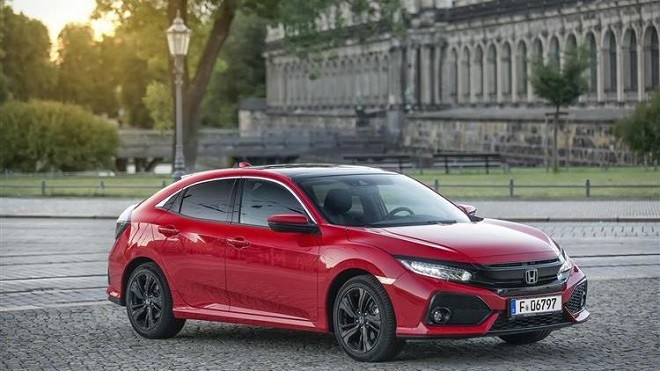
1. Honda Civic 1.6 Petrol version
This is the entry point for global icon, assembled locally.
Price of the vehicle: 129,500 TL
This is the foundation. Interest rates above that number vary depending on your credit score and the specific state bank you choose, but the playing field has changed. In the past, financing a Honda Civic meant competing with private bank rates, which could double your repayments over the life of the loan. Now state-run banks are offering a lifeline to this locally produced car model.
Is 129,500 Turkish lira a bargain? In the current economic situation, where inflation weakens purchasing power, it is a strategic move to locking in a rate below market average on a car that holds its value relatively well in the secondary market at a price below the market average. But don’t think that all cars assembled in Turkey are created equal. For example, a Hyundai Tucson may be assembled in the same country, but if it’s not on the approved list for this particular bank campaign, you’ll get the standard rates. The list is short. Fiat Egea, Honda Civic, Hyundai Tucson and Renault Megane are the main players here.
Civic is a sedan. Very reliable. it is efficient. state bank subsidy have suddenly made it more accessible than it has been for years. But is this the right car for you? It depends on whether you value brand, build quality, or just lower interest payments.
The campaign is ongoing. Prices are fixed during the contract period. Models are limited. Time is the only variable you cannot control.
The pricing of Hyundai’s current Turkish range tells a special story about its value proposition. They start small and then get expensive, but the differences between each stage can tell you where the brand thinks its money should be spent.
Entry level reality
The Hyundai i10 1.0 can be purchased for 89,720 Turkish liras. It’s the floor. It’s not that big of a car in absolute terms, but it’s the cheapest way to get Hyundai badge support and warranty. For many buyers, this figure is the deciding factor. It’s just a little short of the 90k mark, but this is more psychologically tighter than breaking 6 digits.
Aim for compactness
Moving on to the Hyundai i20 1.2, its price is 100,400 TL. Just over 100,000. This is psychological barrier. You have to justify paying the extra 10,680 lira for the i20. What do you get? More space? Bigger engine? Better materials? The price increase is small enough to make the i20 feel like a sensible choice for those who find the i10 too cramped, but the price increase is still significant.
Family car level
Then there is the Hyundai Elantra. The price is 115,368 Turkish lira. That’s 15,000 more than the i20. Why spend so much money? This is a bigger car. sedan. Offers more space for passengers. Expanding the trunk. If you need that kind of space, the Elantra is the answer. Otherwise, you will have to pay for dimensions you don’t use.
The spread is obvious.
- i10 1.0 : 89,720 TL
- i20 1.2 : 100,400 TL
- Elantra : 115,368 TL
Each stage requires larger funding. The increase from i10 to i20 is about 12%. The jump from the i20 to the Elantra is about 15%. Hyundai prices its cars based on size and value. The i10 is for budget-conscious city drivers. The i20 is suitable for small families or couples who need more space. The Elantra is for people who want a traditional sedan experience without stepping into the premium segment.
Does the extra cost of the Elantra make sense? For some, yes. Others think the versatility of the i20 hatchback is worth the savings. The market decides.
The entry-level Clio range is not limited to hatchbacks. Renault offers a practical option for those who need more space without breaking the bank. In this price range, two different versions stand out, each satisfying slightly different needs and staying firmly within the budget range.
Affordable hatchback
Starting with the base model, the Renault Clio Joy 0.9 TCe is perfect for those who prioritize value over luxury. The price is 92,900 TL.
This is not the brightest Clio. The Joy trim is basically the starting point, but the 0.9-litre turbocharged three-cylinder engine (TCe) keeps it from feeling sluggish. The small displacement engine improves fuel efficiency in city driving. If you’re wondering how the little Turbo feels, it’s surprisingly peppy for its size, but can get a little noisy under hard acceleration.
Get the essentials for around 93,000 TL. You get climate control, basic infotainment and reliability. If your main goal is just to get from point A to point B without worrying about finances, this is a smart choice.
Practical transport options
If you think a standard hatchback is too cramped for weekly shopping or weekend trips, Renault Clio Sport Tourer Joy 1.2 is an option. What is the price? 93,300 TL.
That’s just 400TL more than the hatchback, making the Sports Wagon an interesting value proposition. You trade a little agility for more cargo space. The 1.2 liter naturally aspirated engine is different from the turbo engine in the hatch. It’s less impressive, but softer and definitely more durable in the long run if you don’t push it too hard.
The “Sports Tourer” badge is Renault’s term for “station wagon”. Despite its name, it is not a high-performance car. It’s all about practicality. The rear seats fold down and the trunk is flat, so you can load up a stroller and a few bags of pet food without having to play Tetris.
Why choose one over the other?
The decision depends on your lifestyle.
- If you choose the Clio Joy 0.9 TCe: You live in a city where parking is tight, you rarely carry more than 2 passengers, and you need the torque of a turbo for fast passing on the highway.
- When to choose Clio Sport Tourer Joy 1.2: If you have a dog, a family with children or just need extra storage space. Naturally aspirated engines are less stressful when driving at high speeds for long distances and can provide a smoother ride.
The price of both cars is slightly below the psychological threshold of 100,000 TL. In a market where prices seem to be rising every month, staying below that line is important. The Clio range proves that you don’t have to spend a fortune to own a modern and efficient European car. The 0.9 TCe is the efficient city runner. The 1.2 Sport Tourer is a quiet workhorse. Neither is a masterpiece, but neither tries to be. they are
Cheap sedans: Renault Symbol, Megane and Fiat Egea technical data
If you’re looking for a practical sedan on a budget in Turkey, the entry-level trim levels speak specifically to the value. I have considered mid-level candidates. Now let’s move on to the basic model, where the price is more important than the features.
Renault Symbol Joy 1.0 SCe
Renault Symbol Joy 1.0 SCe is at the end of the Renault Sedan series. It uses a small displacement engine designed for city traffic rather than highway power.
Price: 84,900 TL
This is not the most efficient option, but it is simple. The Joy trim strips away extras to hit a specific price point. This engine choice makes sense for drivers who value low running costs over acceleration. Although the 1.0-liter three-cylinder engine lacks torque, it is known for its good fuel economy. Here you get what you pay for. No more, no less.
Renault Megane Sedan Joy 1.6
As you move up the food chain, the Renault Megane Sedan Joy 1.6 costs more but offers more. This is more than just a badge-engineered Symbol. The Megane platform offers a different driving experience with better insulation and a more advanced platform.
Price: 116,550 Turkish lira
The leap from Symbol to Megane is significant. You will pay around 31,650 lira for the larger frame and 1.6 liter engine. Is it worth it? For many it is. The Joy trim’s 1.6-liter engine offers plenty of power for everyday use without complicated turbocharging. This is a conservative choice for those who want the Renault badge and sedan practicality without completely breaking the bank.
Fiat Igea 1.4 Fire
Fiat Egea also participated in the discussion, cheaper than both Renault cars. The Fiat Egea 1.4 Fire is set to be a direct competitor to the base Symbol, if not the Megane.
Price: 73,900 TL
This is the cheapest sedan on this list. The 1.4-liter Fire engine is one of Fiat’s range. It’s not fast, but it’s proven. Priced at 73,900 TL, it offers the lowest entry price for buyers looking for a four-door car. It’s always a question of what to sacrifice. Some of the refinement and sophistication of the Megane has been lost. You get a basic and functional machine.
For a buyer who compares the prices of the base model Renault Megane and Fiat Egea, the difference is obvious. Megane costs about 42,650 TL more. This is a big difference. This way you get a bigger car, better materials and probably a better resale value. But if budget is your main constraint, you can’t ignore the Fiat Egea 1.4 Fire.
Each of these options caters to different buyers. The Symbol is for people on a tight budget. The Megane are recommended for people who want to improve their quality. Fiat Egea is for the ultimate value seeker.
The list of budget-minded shoppers doesn’t end with the Panda. This is closely followed by the Fiat Panda 1.2, whose price is around 69,900 TL. It’s small. It is very cheap. You can get from point A to point B without asking too much. If you need more space or cargo space without folding the seats, consider the Fiat Fiorino 1.3 Diesel engine. It is about 100,400 lira. This is our flagship product. A van disguised as a passenger car. Useful for contractors who need to move tools without spending too much money.
But buying a car is only half the equation. The payment method is more important than the sticker price.
Local car loans from Ziraat, Halk and Vakıfbank
Turkey’s three largest state-owned banks are competing for your business. They reached an agreement with the manufacturer to offer locally produced cars at a fixed rate of 0.49%. This is not a typo. This is a very low interest rate for a car loan. The catch? Cars must be assembled locally.
These terms and conditions are the same in all respects. Ziraat Bankası, Halk Bankası and Vakıfbank all offer the same package. There are no hidden fees. No variable rates creeping in later. Eligible models can receive the full 0.49% APR.
Who is eligible? The list is short, but precise. If the car of your dreams is not on these lists, you will have to pay the market price.
Eligible passenger cars
For personal use, the list is strict. You aren’t getting a BMW. You aren’t getting a Mercedes. These options are limited to brands that have factories in Turkey.
- Fiat : the dominant player here. Panda and Fiorino are involved.
- Honda : Local assembly allows model approval.
- Hyundai : Another major manufacturer with local production lines.
- Renault : Specifically the Renault Mais. No Megane. Not the Clio. The Mais.
Why the Mais? This is a compact MPV designed for family use and practicality. Meets the criteria of “local production”. Other models of these brands may not qualify for the 0.49% discount as they may be imported or assembled differently.
List of commercial vehicles
If you are buying a van or a light truck, the list expands a bit. The passenger car brand remains unchanged, but commercial vehicle experts have also been added.
Anschluß commercial vehicles:
- Fiat : Fiorino leads again.
- Ford : Applies to local vans.
- Isuzu : Known for its durability. Suitable for heavy work.
- Karsan : Turkish manufacturer. This includes electric and diesel vans.
- Temsal : Another local brand. This applies to large trucks and buses.
Notice the pattern? This has nothing to do with luxury. It’s all about practicality. The 0.49% rate is intended to support local industry. It encourages buyers to choose domestic cars over imported cars.
Why this matters
Savings in a high inflation environment