


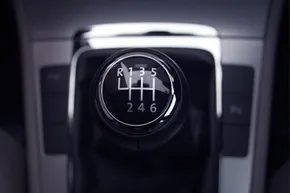
There is a sacred rule in car culture. If you drive a stick shift, you are not just commuting. You are piloting a machine with your own two hands. It is visceral. It is engaging. The left foot works the clutch while the right hand hunts for gears, making gridlock traffic a full-body workout. And sure, your calf will cramp in a bumper-to-bumper crawl. But on a winding backroad, that mechanical connection feels like racing. It feels authentic.
Budget-conscious buyers also love stick shifts for different reasons. Historically, manual transmissions were cheaper to buy. They were also cheaper to run. Or so the lore says.
That second belief is dead.
For decades, the assumption was that a manual gearbox offered superior fuel economy. Modern engineering has flipped that script. While manual cars still often carry a lower sticker price, the gas tank does not reward you for rowing through the gears. In fact, automatics now regularly win the efficiency battle.
Why Manuals Used to Be More Efficient
The old logic was simple and rooted in physics. When you stop a manual car, you must disengage the engine from the wheels. You shift to neutral or depress the clutch. If you do not, the engine stalls. Everyone in the car behind you hears the sputter and sees the stall lights. It is embarrassing.
An automatic transmission does not require this step. The torque converter allows the engine to idle while the vehicle is stationary. The engine is still turning. It is burning fuel. Yes, this idling waste hurts city mileage. But at highway speeds, that idle inefficiency becomes irrelevant. The automatic shifts smoothly and keeps the engine in its sweet spot.
Modern Automatics Take the Lead
Today’s automatic transmissions are not the clumsy slab of metal they were in the 1990s. They have more gears. Where a manual might have five or six ratios, a modern automatic can boast eight, nine, or even ten.
More gears mean the engine does not have to spin as fast to maintain highway speed. The power delivery is constant. The revolutions per minute stay low. This reduces friction and drag. The result is better fuel economy.
“More gears means that the engine can send the same amount of power to the wheels while doing fewer revolutions. That saves gas.”
This is not a marginal gain. It is a significant advantage for the commuter who prioritizes mileage over the feel of the clutch pedal.
The CVT Revolution
Then there is the Continuously Variable Transmission. To the driver, it feels like an automatic. You put it in drive. You go. No clutch pedal. No shifting.
But inside, it is a different beast. A CVT does not have fixed gears. It uses a pulley system that provides infinite gear ratios. It can keep the engine at its peak efficiency point at all times. It does not hunt for the “best” gear. It just stays in it.
This technology is why some modern economy cars with automatic or CVT setups outperform their manual counterparts in EPA testing. The math is undeniable. The CVT eliminates the inefficiency of gear changes entirely.
The Decline of the Stick
The data is clear. The myth that manuals are always more fuel-efficient has been shattered. This shift has accelerated the decline of the stick shift in the United States. It was never a mainstream choice here anyway. Most Americans prefer convenience.
Enthusiasts lament the loss. They argue that driving skill matters more than MPG. They are right. But for the average buyer looking to save on gas and money, the manual option is no longer the smart economic choice. It is a hobbyist’s choice. And as automatics and CVTs continue to close the gap in performance and efficiency, the stick shift becomes rarer. Not because it is obsolete. But because the market has moved on.
The open road will still call to those who want to row their own gears. But they will likely pay a little more in gas to do it.


