Nineteen ninety-nine was a monster year for Ford. Profits hit a record $7.2 billion. The stock market was surging, consumer confidence was high, and people were buying new vehicles at a pace that had never been seen in that kind of boom economy.
Ford Division held the crown as America’s number-one-selling nameplate. They owned five of the country’s top-10 favorites. The full-size F-Series pickup was the anchor, but the Mustang was pulling its weight in the sporty segment.
Why the 1999 Ford Mustang mattered in the late 90s
The 1999 model year landed right in the middle of a transition. You had the legacy of the original pony car, the near-death experience of the mid-90s, and the upcoming design shift that would define the next decade.
Ford had considered putting the Mustang out to pasture. It actually looked like the 1994 model might be the last one. But demand kept the line alive. The 1994-1998 era was about survival, about proving the nameplate still had teeth.
By 1999, the car was settled. It was a familiar shape, a reliable engine, and a badge that meant something.
How the 1999 Ford Mustang compared to the competition
The Mustang wasn’t fighting alone. It was up against the Camaro, the Challenger, and the late-model sports cars. But Ford had something the others didn’t: scale. The F-Series kept the brand relevant in the truck market, and that muscle carried over into the car market.
The Special Vehicle Team (SVT), headed by John Plant, took over the role of making hot, limited-edition street cars. Previously, that job belonged to Special Vehicle Operations (SVO). The change signaled a shift in how Ford handled performance variants.
“Words and pictures tell only part of the Mustang story.”
That quote captures the reality of the era. You could read the specs, look at the photos, and still miss the feeling. The 1999 Mustang was a specific thing. A specific weight, a specific torque curve, a specific sound coming out of the exhaust.
Which 1999 Ford Mustang options were worth buying
You had choices. The base model was the entry point. Then there was the GT. The GT was the one most enthusiasts wanted. More power, better brakes, a more aggressive stance.
If you were looking at the 1999 Ford Mustang specifications, you’d see dimensions, engine data, annual sales figures, and prices. Those numbers mattered. They told you exactly where the car stood in the market.
The 1999 model was part of a run that included the 2000, 2001, 2002, 2003, and 2004 generations. Each year had subtle tweaks. Each year had its own quirks. But the 1999 was the bridge. It was the last of the “old” look before the big change.
The 2005 Mustang’s shape was decided by a superstar stylist with a European pedigree. That was a different beast.

Why the 1999 Ford Mustang Redesign Felt Like a Rebirth
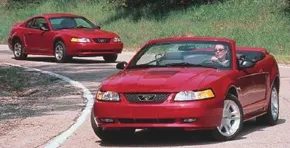
The late 90s were brutal for Ford. Profits dipped. Brand image suffered. But the Mustang team didn’t blink. They pushed forward to mark the pony car’s 35th anniversary with a model that felt urgent and alive.
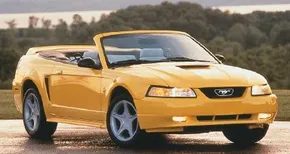
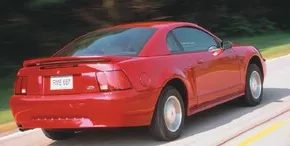
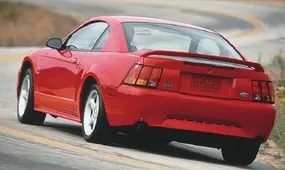
The visual shift was immediate. You couldn’t miss it. The 1999 Ford Mustang shed the soft, flowing lines of the previous era. In came the “New Edge” look. Sharp. Angular. Deliberately harsh.
Jack Telnack started this design language before he left in 1997. He wanted to kill the “jellybean” trend. That smooth, aerodynamic blob styling had been everywhere. Buyers were tired of it. New Edge was the antidote. It used crisp geometry and graphic contrast against rounded forms.
Did it fit the Fox-4 platform well? Not really. AutoWeek called the restyled coupe “akin to putting a baseball cap on a shoebox.” The geometry felt forced on the older body structure. Yet, the designers under Ken Grant pulled it off. They managed to make it look fresh, retro, and fun.
How the Front End Defined the 1999 Mustang Look
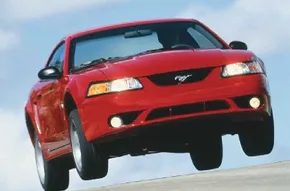
The front fascia changed dramatically. The grille became a narrowed, deeper trapezoid. The galloping horse mascot stayed, corralled in chrome on base and GT models.
Above that, the hood looked more visibly domed. A large dummy scoop sat in the center. It did nothing for airflow. It looked like it did. On either side, wider wraparound headlamp clusters flared out. The stance was wider than before. The sides were pulled out. Wheel openings got new flares.
The side profile carried over the old C-shape graphic and the simulated rear air scoop. Both were enlarged. But the sheetmetal underneath changed. It was flat now, not “pre-dented” like the previous generation. A subtle but noticeable textural shift.
What Changed at the Rear of the 1999 Ford Mustang
The tail end got modernized. Taillamps grew larger and squared up. They became vertical stacks. The trunk lid switched to sheet molding compound. It was lightweight. It looked plastic. It fit the utilitarian vibe of the era.
Bumpers bulked up. They looked heavier, sturdier. The coupe roofline revised its rear section. The quarter-window “kink” disappeared. The line flowed straighter into the rear glass.
Was it beautiful? Subjective. Was it distinct? Absolutely. The 1999 Ford Mustang looked different from the cars around it. It looked like it belonged to a new decade. The hardware was old, but the skin was new. That tension defined the era.
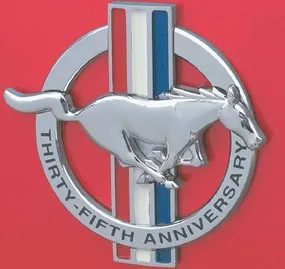

The 35th anniversary didn’t just bring a badge; it brought a specific $2,695 premium package for GT buyers. While every 1999 Mustang wore the chrome-circled pony tricolor emblem on the front fender, only about 5,000 GTs received the full 35th Anniversary trim. That package included 17-inch five-spoke wheels, applied side scoops, a raised hood scoop with black striping, unique rocker moldings, a rear spoiler, and taillamp appliques. Inside, you got a black-and-silver interior with leather upholstery, an aluminum shift knob, and logo floormats.
Why 1999 Ford Mustang Sales Fell Despite Anniversary Hype
Mid-April saw birthday bashes in Charlotte and Southern California, and the U.S. Postal Service even issued a special stamp late in the year featuring a red ’65 convertible to honor the Mustang as one of 15 American icons of the 1960s.
The sales office, however, stayed quiet. Model-year volume dropped by nearly a quarter to 133,637 units. The “dot-bomb” economic hangover hurt, but so did sticker prices. Base V-6 models jumped $500, and GTs rose $900, pushing the price range to $16,500-$25,000.
How Paul Giltinan Improved 1999 Mustang Handling and Refinement
Mustang engineers focused on better handling and refinement for the ’99 lineup. Paul Giltinan and his team addressed those concerns directly.
- Chassis Engineering Focus: Improved handling metrics were a primary target for the 1999 model year.
- Refinement Updates: Noise, vibration, and harshness (NVH) levels were reduced to elevate the driving experience.
- Performance Balance: The team worked to maintain the sporty character while making the car more comfortable for daily use.
For context, the 1999 model year marked a transition period. Before that, the 1994-1998 era saw the Mustang recover from near-discontinuation. The 2005 model, designed by a European stylist, would later redefine the brand’s modern shape. But in 1999, the focus was squarely on engineering credibility after the 1998 updates.
The anniversary package was a nice touch, but the real story was the engineering work under the skin. The price hikes stung, yet the chassis improvements set the stage for the next generation.

Chassis Changes: Quieting Things Down and Widening the Stance
The 1999 Ford Mustang “New Edge” looked sharp, but buyers had questions about the engineering underneath. Paul Giltinan’s team tackled handling and refinement with specific structural changes. They fully boxed the side rails and packed insulating foam into the rocker panels. Better floorpan sealing did the heavy lifting for road noise reduction.
Convertibles got a different fix. Engineers added underbody “rail extenders” to cut down on structural shudder.
Agility improved through geometry tweaks. The rear track widened by 1.4 inches on every model, matching the front dimension exactly. A 1.5-inch taller transmission tunnel allowed wheels more upward travel.
- Springs: Firmer across the board
- Antiroll bars: Smaller diameter to improve ride compliance
- Shocks: Retuned to handle the stiffer suspension
- GT Specifics: Switched from variable-rate to linear-rate coil springs
Steering and Braking: Lighter, Tighter, More Responsive
The steering feel changed noticeably. Less power assist meant better on-center feedback. The turning circle tightened by three feet, a useful gain for city driving or tight corners.
Braking got a weight reduction and a feel upgrade. Front discs now used aluminum twin-piston calipers. Each one saved 10 pounds of unsprung weight compared to the old setup. New pad material and a larger master cylinder made braking more positive. Pedal effort dropped, but feedback increased.
The goal was less unsprung weight and a more direct connection between driver input and tire response.
3.8L V-6: The Split-Port Induction Upgrade
Bill Koche led the powertrain team with a clear mandate: make more power. The 3.8-liter pushrod V-6 got the biggest internal overhaul.
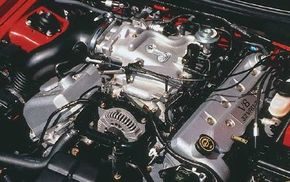
The headline feature was split-port induction. New cylinder heads paired with a freer-breathing intake manifold that used two runners per cylinder. This design helped flow air more efficiently into the combustion chambers.
Engineers also swapped to new aluminum main and thrust bearings. Pistons got high-tech coatings that reduced friction. The result was a smoother, more responsive engine without changing displacement.
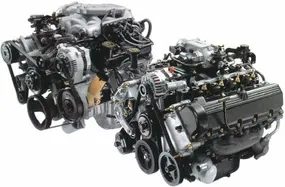

The 3.8-liter engine got a 40-horsepower bump, landing at 190 hp, with torque climbing five pound-feet to 215. A new contra-rotating balancer shaft didn’t add power, but it did kill second-order vibrations, making the engine run noticeably smoother.
The 4.6-liter single-cam V-8 in the GT received even more attention. Bigger valves, reshaped combustion chambers, and straighter manifold runners improved airflow. A new higher-lift, longer-duration camshaft joined upgraded crankshaft, conrod, and thrust bearings. Power jumped 35 hp to 250, while torque rose 10 lb-ft to 302. Both engines now came standard with the former 3.27:1 “performance” axle ratio, sharpening the initial launch.
Safety tech followed. Anti-lock brakes (ABS) remained standard on GTs and cost $500 for base models. Traction control, priced at an extra $230, marked the Mustang’s first foray into active safety. Chief project engineer Janine Bay spearheaded the system, which repurposed ABS wheel-speed sensors to detect slippage. When wheels spun, the electronics retarded spark and reduced throttle opening until traction returned.
Above 62 mph, the system could also brake individual rear wheels, earning the “all-speed traction control” label. A dashboard “off” switch let drivers disable it entirely, trusting their own skills and conditions to manage the rear end.
Mustang fans welcomed the ’99 Mustang SVT Cobra just months after the broader lineup launched. This model brought distinct performance upgrades, most notably the Mustang’s first independent rear suspension (IRS).

1999 SVT Cobra Independent Rear Suspension Explained
The 1999 SVT Cobra arrived a few months after the standard Mustangs, bringing a package of upgrades that set it apart. It shared the standard ABS and traction control systems with the rest of the lineup, but the engine and suspension received significant attention. SVT tuned the 4.6-liter V-8 with new “tumble-port” cylinder heads, adding 15 horsepower to reach a total of 320. That output matched the top-tier Chevrolet Camaro and Pontiac Firebird of the era.
Braking power saw a major jump with large Brembo discs. The front rotors measured 13 inches in diameter, while the rear units were 11.65 inches.
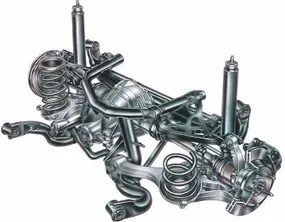
The headline feature, however, was the independent rear suspension (IRS). This was the first time a Mustang featured this technology. The setup utilized unequal-length lower control arms, upper toe-control links, and high-rate coil springs. A 26mm antiroll bar kept the body level. All components attached to a welded tubular subframe.
SVT sourced an aluminum differential housing from the late Lincoln Mark VIII coupe, paired with Cobra-specific halfshafts.
How the 1999 SVT Cobra IRS Replaced the Solid Axle
Designing this system presented a unique engineering challenge. SVT wanted a solution that could be integrated without a complete redesign of the chassis. They engineered the IRS as a direct bolt-in replacement for the standard solid axle.
Installation required drilling two holes into the SN95 body structure and adding weld nuts. This simple modification meant the IRS could be installed on the regular Mustang assembly line. It also allowed owners to retrofit the system on regular Mustangs after purchase, though that was likely rare.
Benteler, an outside contractor, supplied the IRS as a preassembled module. This approach streamlined manufacturing and ensured consistency across the production run.
The independent rear suspension marked a departure from the traditional solid axle design, improving handling precision and ride quality for the 1999 SVT Cobra.
This configuration allowed the rear wheels to move independently, reducing cross-coupling and improving grip during cornering. The 1999 model year thus represented a significant evolution in Mustang performance technology.

The 1999 SVT Cobra Power Problem
The good news stopped at the SVT Cobra. Performance figures fell short of expectations, creating a disconnect between marketing claims and real-world output. This discrepancy traced back to a specific manufacturing error. Ford had to recall every 1999 SVT Cobra built.
The issue wasn’t subtle. It affected the engine’s core function. Reviewers expected more power than they got. The recall confirmed a systematic flaw in the production line.
How the Manufacturing Error Affected Performance
The error impacted the exhaust system components. Specifically, the catalytic converters were improperly manufactured. They restricted airflow more than intended.
This restriction choked the 4.6-liter V-8. Instead of flowing freely, exhaust gases backed up. The engine worked harder to push out spent gases. Result: less horsepower and sluggish acceleration.
Ford initially claimed the Cobras produced 305 horsepower. Real-world tests showed lower numbers. The restriction effectively turned a high-performance engine into a compromised one. Owners noticed the lack of top-end punch immediately.
Why Ford Recalled All 1999 SVT Cobras
The recall was mandatory and comprehensive. Ford identified the batch of faulty converters. They replaced the components to restore intended performance levels.
This wasn’t a minor tweak. It was a fix for a genuine defect. The company acknowledged the error and corrected it. Drivers received updated parts that allowed the V-8 to breathe properly.
The incident highlighted a risk in high-performance manufacturing. Small deviations in component tolerance can have outsized effects on output. For the 1999 Cobra, the deviation was costly in both performance and reputation.
Comparing the 1999 Cobra to the GT
The GT, by contrast, performed as promised. Its 4.6-liter V-8 with the Active Management Variable Valve Timing (AMVVT) system delivered consistent results.
Road & Track praised the GT’s drivetrain. The five-speed manual gearbox worked well. The car felt planted and predictable.
The SVT Cobra, with its forced induction and higher power output, should have felt significantly different. The manufacturing error blurred that distinction. Drivers expected a step up in performance that never fully materialized.
The recall fixed the hardware issue. It didn’t erase the initial disappointment. But it did ensure that post-recall Cobras matched their specs.
Long-Term Impact on Mustang Enthusiasts
The 1999 SVT Cobra saga added a layer of complexity to the model’s history. It reminded buyers that even flagship models can suffer from production quirks.
For collectors, pre-recall Cobras require verification. Checking the recall status and part numbers is essential. The fix was effective, but documentation matters.
The episode also influenced how Ford handled subsequent performance models. Quality control tightened. Testing became more rigorous.
The 1999 Cobra remains a notable part of Mustang lore. Not just for its design or power, but for the hiccup in its production. It serves as a reminder that engineering excellence requires consistent execution.
The legacy of the 1999 model is mixed. The base cars earned praise for refinement. The GT delivered strong performance. The SVT Cobra hit a snag. But the recall resolved the core issue. The car, once fixed, did what it was built to do.

Why the 1999 Ford Mustang SVT Cobra struggled despite independent rear suspension
The 1999 SVT Cobra arrived with a new independent rear suspension, a change that promised better handling and weight distribution. It also carried a price tag that made enthusiasts blink. The coupe started at $27,470. The convertible hit $31,470. For that extra $7,000 over the standard GT, the return on investment was questionable from a pure performance standpoint.
Motor Trend ran the numbers. They found the GT’s slalom speed at 67.8 mph and skidpad grip at 0.88g. The SVT Cobra managed 66.8 mph and 0.88g. The gap was negligible. Given the solid axle and smaller tires on the GT, the SVT’s advantage vanished in the data. As Motor Trend put it, the “SVT super pony seems hardly worth the extra $7000.”
The handling feel told a different story, though. Car and Driver’s Barry Winfield noted that the IRS erased 125 pounds of unsprung weight. The assembly itself weighed 80 pounds more than the solid axle, but the overall curb weight dropped by 110 pounds. That weight came off in a way that balanced the car better front to rear.
Winfield found the ’99 Cobra “more supple and thus more readable in corners.” The rear end resisted bump-steer far better. Off-center steering response improved. The car felt more neutral at the limit. That was the real upgrade. The IRS made the Mustang drive like a car, not a heavy, axle-bound pony.
But the straight-line numbers did not match the chassis improvements. Winfield expected a 0-60 mph time near five seconds flat. The car delivered 5.5 seconds. That was 0.1 seconds slower than the previous model. Top speed fell from 153 mph to 149 mph. Something was holding the engine back.
The test car had low miles. It wasn’t broken, exactly. It was just not making a full head of steam. The culprit turned out to be manufacturing debris. Internal aluminum residue, or “flash,” clogged the intake runners and some exhaust components. That blockage restricted airflow and cost the 4.6-liter V8 more than 30 horsepower.
Drag racers were the first to complain. They felt the loss immediately. Ford fielded a few dozen reports before acting. The company recalled all 1999 SVT Cobras on the ground. Technicians replaced the manifold or reamed out the existing one to clear the debris. Ford also replaced restrictive mufflers at no cost. They recalibrated the engine computer and swapped in a more durable accessory-belt tensioner. A decal in the engine bay certified the work once the fixes were complete.
The 1999 Cobra was a flawed first year for the IRS-equipped pony. The chassis was genuinely better. The engine was held back by a production oversight. Once Ford fixed the manifold and exhaust restrictions, the car delivered on its promise. The price remained steep, but the handling and power finally aligned with the badge.

Ford and SVT cut their losses. No 2000 Cobra. The 1999 recall was a mess, and they needed time to fix it. They weren’t going to rush a new batch of cars into production just to hit a calendar year.
The SVT website said it plainly. They were focusing on the 2001 versions. Quality over quantity. Or at least, reliability over volume.
Sales dropped, sure. But the “AWOL horsepower” scandal didn’t kill the breed. The convertible actually outsold the coupe for the first time in 1999. 4,055 tops against 4,040 hardtops. A narrow margin, but a signal. People wanted the open-air experience, even with the drama hanging over the hood.
So, what replaced the Cobra?
The 2000 Mustang Cobra R: Built for the Track, Legal for the Street
The gap left by the missing Cobra was filled by something wilder. The 2000 Ford Mustang Cobra R.
This wasn’t a luxury cruiser. It was a stripped-down, racing-oriented speed machine. A street-legal racer.
Think of it as the anti-Cobra. Where the regular Cobra was a fast, comfortable weekend toy, the Cobra R was a weapon. It was designed to lap a circuit, not to cruise the interstate.
The engine? A 4.6-liter V8, tuned to produce 305 horsepower and 315 lb-ft of torque. That sounds modest by modern standards, but back in 2000, it was a solid, reliable output. The real trick was the weight savings.
They cut everything non-essential. No air conditioning. No rear seats. No power windows. No fancy stereo. The interior was bare bones. Buckle up, turn the key, go.
The suspension was stiffer, tuned for grip, not comfort. The brakes were upgraded. The tires were stickier. Every part served the same purpose: keeping the car planted at high speed.
Why build it this way? Because Ford knew the Cobra name had credibility in the track scene. The Cobra R was meant to compete with other high-performance machines, not just to look good in a driveway.
It was a niche product. Not everyone wanted a car with no rear seats. But for the enthusiasts who did, it was a dream. A pure, unadulterated driving experience.
The 2000 Cobra R wasn’t a replacement for the 1999 Cobra. It was a different animal. One built for the track, the other for the road. Both fast, both loud, both Ford. But the Cobra R had a sharper edge.
Did it sell well? Not in the same numbers as a standard Mustang. But it didn’t need to. It needed to be respected. And it was.
The absence of a 2000 Cobra gave the Cobra R a spotlight. It became the flagship of the 2000 lineup. The car that showed what Ford could do when they stopped worrying about comfort and started worrying about performance.
Why the Cobra R Mattered in the 2000 Lineup
The 2000 model year was a transition. The 1999 Cobra was being fixed. The

2000 Ford Mustang Cobra R: The Turn-Key Racing Machine
The 1999 model year left a bad taste in Ford’s mouth. Performance hiccups on the Cobra became a public relations headache, and the Mustang team felt the heat. They needed to regain trust. The 2000 lineup was their answer.
Prices barely moved. Incremental hikes of $50 to $150 were almost negligible. The macro economy was souring, and mainstream rivals weren’t doing much to shake things up. Yet, sales climbed. A 4.1 percent increase brought calendar-year units to 173,676. That was a win, but it wasn’t the headline.
The headline was the new Cobra R.
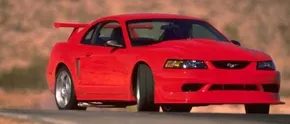
It followed the lineage of the ’95 R-model. Street-legal? Yes. Track-oriented? Absolutely. Road & Track called it a “turn-key racing machine.” That description stuck.
Under the hood sat the 5.4-liter DOHC V-8. It shared DNA with the Lincoln Navigator, but SVT (Special Vehicle Engineering) took that truck engine and made it sing. John Coletti led the charge. The goal was simple: make it breathe better.
The new intake manifold featured large, curved “air trumpets.” Exhaust ports got bigger. Tubular headers connected to X-pipes, feeding into Borla mufflers and twin side-exit pipes. The sound was aggressive. The power was real.
How the 2000 Cobra R Achieved Track Performance
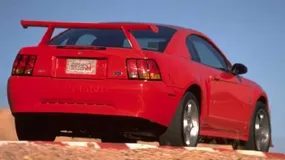
You couldn’t hide the engine. The 5.4 was tall. Ford had to bulge the hood significantly. Functional vents on a rear-facing scoop handled the heat. Downforce mattered. A high-riding spoiler kept the rear planted. An aerodynamic front-fascia “air splitter” managed the front end.
The suspension setup was serious. Ultra-stiff Eibach springs replaced soft comfort coils. Hard bushings eliminated play. Premium Bilstein shock absorbers slammed the ride height down. The front dropped 1.5 inches. The rear dropped an inch.
Grip followed. Heavy-duty halfshafts handled the torque. Brembo disc brakes with four-piston calipers provided the stopping power. The tires were purpose-built: 265/40ZR Goodrich “g-Force KD” rubber on 9.5×18 forged-aluminum wheels.
This wasn’t a daily driver with a badge. It was a homologation special, built to race, built to be driven hard on the street. The specs told the story. The price tag was a footnote.

The Transmission, Weight, and Why the Cobra R Was the Fastest Mustang Yet
The drivetrain was the finishing touch. Tremec supplied a short-throw six-speed manual, the first six-cog gearbox ever fitted to a Mustang. It mated to a stock Cobra clutch and drove through a special Gerodisc hydromechanical differential with 3.55:1 gearing.
Weight wasn’t feather-light, but it was sufficient. SVT dropped the back seat, air conditioning, sound system, and most sound insulation. Curb weight settled between 3580 and 3610 pounds. Against the R-model’s 385 horsepower and 385 pound-feet of torque, that ratio produced the fastest factory Mustang at the time.
Car and Driver recorded a 0-60 mph time of 4.7 seconds and a standing quarter-mile in 13.2 seconds at 110 mph. Road & Track measured 4.8 seconds and 13.2 seconds at 109.1 mph. These figures beat Ford’s claims slightly, but the real story was the competition. The Cobra R outperformed top Camaro and Firebird variants, at least matching the Chevy Corvette.
Grip levels justified the standard Recaro racing front buckets. Road & Track measured 0.99g on the skidpad; Car and Driver hit an impressive 1.01g.
“Handling is dead-solid predictable up to the considerable limits, [when] gentle understeer suggests you back off a bit,” Car and Driver noted, “but there is not a hint of tail-happiness. The brakes…are superb, with stunningly little fade even over extended periods of hard use.”
Road & Track was surprised by the civility. “Out on the street, the Cobra R…doesn’t inflict the same kind of body punches you’d expect from a race car,” they wrote. “Despite the heft of the suspension and the absolute lack of body roll, there is enough fore-and-aft compliance to make the ride bearable.”
Must finally claimed the top spot on the performance hill. The downsides? Price and availability. $54,995, plus luxury and gas-guzzler taxes, for just 300 copies, all red coupes. They sold out quickly. Road & Track was sympathetic: “The Cobra R is a nice start — now let’s see some real numbers, as in volume, out on the street.”
2001 Ford Mustang Cobra and Bullitt: Making Up Lost Ground
The 2001 model did a lot to recover face. Reviewers were thrilled by the power and precision.
The legacy continues.
- Saddle up for the complete story of America’s best-loved sporty car. How the Ford Mustang Works chronicles the legend from its inception in the early 1960s to today’s all-new Mustang.
- It’s hard to imagine Ford actually considered putting the Mustang out to pasture instead of producing a 1994 model. Learn how Mustang came back from the brink in 1994-1998 Ford Mustang.
- The 2005 Mustang’s shape was ordained by a superstar stylist with a European pedigree. Learn how the original pony car was reborn in 2005 Ford Mustang.
- For a full report on the 2007 Ford Mustang, check out Consumer Guide New Car Reviews. Here you’ll find road test results, photos, specifications, and prices for hundreds of cars, trucks, minivans, and SUVs.
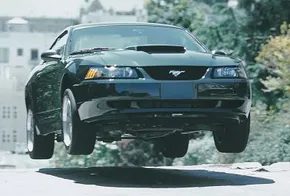

2001 Mustang Cobra dyno results and 0-60 performance
Ford didn’t just promise more power for the 2001 model year; they delivered it, and they proved it. The regular Cobra returned with all 320 horsepower under the hood. Car and Driver didn’t take Ford’s word for it. They put two cars on a dynamometer. The results were consistent.
0-60 mph in 4.8 seconds.
Quarter-mile in 13.5 seconds at 105 mph.
Those numbers weren’t just fast; they signaled a shift in how the car handled. Larry Webster, the tester, noted that the Cobra had shed its “crude pony car roots.” It wasn’t a track toy anymore. It was a competent sports coupe. You could point it somewhere, and it would actually go there. Webster called the 2001 version a “superb all-arounder.” The transformation was real. The chassis work and tuning made the extra horsepower feel usable, not just loud.
How the 2001 Mustang Bullitt differed from the standard GT
The base and GT models didn’t get the same power bump, but they did get a visual overhaul. Ford pulled styling cues from the 35th Anniversary package.
- Raised hood scoop (non-functioning)
- Special side scoops
- Reshaped trunklid spoiler
- Black headlamp surrounds
The interior saw a new console. GT models finally got standard 17-inch wheels. Then, mid-season, Ford dropped the Mustang Bullitt.
This wasn’t a standard trim. It was a specific GT coupe with special equipment. J Mays, the styling chief who had succeeded Jack Telnack, drove the project. He was known for his work on the ultra-clean Audi TT. Mays wasn’t happy with the 1999 Mustang’s styling. He used the Bullitt to fix what he saw as flaws.
The key changes were subtractive and specific:
- No rear spoiler
- Unique hood scoop
- Rear-roof-pillar trim
- Rocker moldings
- Brushed-aluminum fuel-filler door
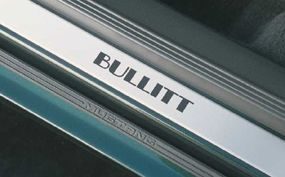
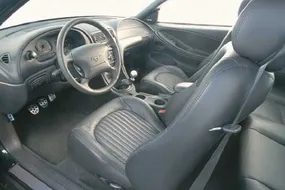
The interior matched the exterior’s retro-lean approach. Special seats, leather upholstery, an aluminum shift knob, and pedal trim. The gauges had Sixties-style graphics. Chrome doorsill plates featured the word “Bullitt” in Art Deco type.
Mays lowered the ride height by 0.75 inches. It helped the stance. Red-painted brake calipers peeked out from five-spoke 17-inch American Racing “Torq Thrust” wheels. Those wheels mimicked the ones on Steve McQueen’s ride in the 1968 film. The car was a direct nod to that movie, but the engineering and styling choices made it distinct from the standard GT.

Tuning the hardware without the horsepower
Ford didn’t just slap a badge on the Bullitt. They reworked the underpinnings. The Tokico shock and strut units got a fresh tune, specific antiroll bars went in, and the engineers added frame-rail connectors to kill body shake. Under the hood, the 4.6L V-8 picked up a larger throttle body, a cast-aluminum intake manifold, smaller accessory-drive pulleys, and a freer-flow exhaust system.
You’d expect a jump in power. You don’t get one. The result was a mere five extra horses and three lb-ft of torque. That’s it. The Bullitt wasn’t usefully faster than a stock GT coupe.
So why pay $3,500 more?
Because it wasn’t about the stopwatch. The price tag started at $26,230. Ford planned to build 6,500 units and moved them all. Most rolled out in Dark Highland Park Green, a direct nod to the car Steve McQueen drove in Bullitt. Black and dark blue were options, but the green was the money shot for collectors.
“The first in a series of short-term specials designed to bring extra excitement and collectibility into the current [Mustang line].”
— Motor Trend
That excitement was necessary. The broader 2001 Mustang line saw sales dip by 2.6 percent, landing at 169,198 units for the calendar year. The Bullitt wasn’t a performance package; it was a marketing lifeline for a model that needed a halo effect to keep the numbers from sliding further.

2003 Ford Mustang SVT Cobra Returns with Familiar Power
Ford must have been sweating in 2002. Sales dipped 18.2 percent to 138,356 units. That’s a bad look when zero-percent financing is pumping the rest of the market. The base cars didn’t change much. No drama. Just steady, safe, boring.
Then the structure shifted. Ford stopped selling option packages. They became model lines instead. Base Standard. Deluxe. Premium. All got 16-inch wheels as standard. The GT variants got the same treatment. It simplified things. But it also felt like a retreat from personality.
How the SVT Cobra Got Back
The real news came in spring 2003. The SVT Cobra was back. Not just back. Back with power.
This wasn’t the mild version from the late 90s. The 2003 SVT Cobra matched the 2000 Cobra’s output. That means 340 horsepower from the 4.6-liter V8. 330 lb-ft of torque. 0-60 in 4.8 seconds. Top speed hit 154 mph. The gearbox was a five-speed manual or a four-speed automatic.
It looked different too. The front end had a new hood with functional vents. The side scoops were real, not fake. The rear bumper had a diffuser. Black wheels. Red brake calipers. It didn’t try to be subtle.
Why the Price Drop Mattered
The 2000 Cobra cost around $40,000. By 2003, the SVT Cobra came in near $30,000. That’s a huge gap. Ford dropped the price to make the muscle accessible again. The 2002 GT Premium was already close in power, but it lacked the handling setup.
The SVT got a lowered suspension. Stiffer springs. Better anti-roll bars. The brakes were bigger. The steering was quicker. It drove like a sports car, not a muscle car pretending to be one.
What Changed Under the Hood
The engine was the same 4.6L SOHC V8, but with a higher-revving camshaft. The intake manifold was reshaped. The exhaust headers were better. The fuel system ran at 3500 rpm minimum to avoid lean conditions.
The transmission got a lighter flywheel. The clutch was a dual-disc unit. The differential was 3.55:1. All of it worked together to keep the car responsive.
Where It Fits in the Lineup
The SVT Cobra sat between the GT and the discontinued 2000 Cobra. It was the bridge. The GT was for daily driving. The SVT was for weekends. The 2000 Cobra was the halo. The SVT kept the halo alive without the price tag.
“The SVT Cobra wasn’t the fastest Mustang ever. It was the most fun.”
That’s the sentiment. Speed numbers are easy to chase. Feel is harder. The SVT had it. The steering connected. The pedals were clear. The seat held you.
Comparing It to the 2000 Cobra
The 200

Why 2002 Mustang owners got the 2003 SVT Cobra early
Ford’s 2002 model year was rough. Sales dropped 18.2 percent. That’s a significant bleed for a brand name as heavy as the pony car. The usual SVT Cobra was missing from the lineup during that low period. Then spring hit. The 2003 SVT Mustang Cobra arrived early, and it arrived loud.
How the supercharged V-8 got 390 hp and 390 lb-ft
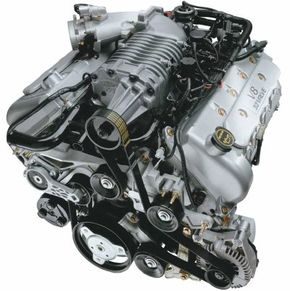
SVT took the twincam V-8 and bolted an Eaton M112 Roots-type centrifugal supercharger on top. It wasn’t just a bolt-on accessory. The engine had to change to survive the pressure.
- Iron block replaced aluminum for durability.
- New cylinder heads.
- Pistons with lower compression, set at 8.5:1.
- Water-to-air intercooler to manage intake temperatures.
The result: 390 horsepower and 390 pound-feet of torque.
Which transmission and suspension setup did the 2003 SVT Cobra use?
No automatic options. Only the Tremec six-speed manual, the same unit from the 2000 Cobra R. You had to drive it.
Suspension was recalibrated, but not generically. SVT used individual damping rates for the coupe and the convertible. The two bodies flex differently, so the setup had to account for that.
Where the 2003 SVT Cobra differs from the 2000 Cobra R
The 2000 Cobra R was a track-focused beast with a dry-sump system and a lighter, less comfortable setup. The 2003 SVT Cobra traded some of that extreme track purity for daily usability, but kept the thrust.
Rolling stock:
– Five-spoke cast-alloy rims, one inch wider than the standard Mustang.
– 275/40ZR Goodyear Eagle F1 tires.
Exterior changes were functional:
– Vented hood. Necessary. The blower made the engine bay hot.
– Revised front fascia.
– Rocker-panel skirts.
– Rear air diffuser.
– New low-profile decklid spoiler.
How fast is the 2003 SVT Cobra really?
The numbers:
– 0-60 mph in 4.5 to 4.9 seconds.
– Quarter-mile ETs around 13 seconds.
– 0.90g skidpad grip.
It delivered near 2000 Cobra R thrust. But the starting price was $33,460, much friendlier than the track-focused R.
This is the car you could drive to work. Day in and day out. The supercharger whine, the six-speed, the 275s. It didn’t ask you to treat it like a museum piece. You just had to keep your foot where you wanted it.
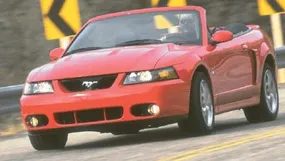

Ford didn’t exactly polish the Mach 1 into a luxury cruiser. Doug Kott from Road & Track called it out as something that prioritized raw performance and low price tags over “ultimate sophistication.” That’s a fair take. But the Special Vehicle Team at Ford managed to inject genuine excitement back into a platform most folks just viewed as a corporate workhorse. It’s not refined. It’s useful. And for the people who actually care about horsepower per dollar, that’s exactly what they wanted.
The name “Mach 1” sat in a museum for a quarter of a century before Ford pulled it out of the crate for the 2003 model year. This wasn’t a standalone car. It was a specific package applied to the GT coupe. If you bought a 2003 Ford Mustang Mach 1, you were buying a tuned-up version of the standard GT, not a completely different chassis.
What made the 2003 Mustang Mach 1 different from a regular GT?
The core difference wasn’t the body. It was what happened under the hood and how the car handled. The Mach 1 setup took the existing GT hardware and tweaked it for a more aggressive driving experience. Ford’s SVT team handled the modifications, focusing on performance and value rather than luxury trim.
The car was designed for drivers who wanted the Mustang’s identity without paying the premium for high-end materials or complex electronics. It kept things simple. It kept things fast. And it kept the price in check.
How did the 2004 lineup expand on this foundation?
The 2004 model year brought a broader selection to the Mustang family. While the Mach 1 remained a key performance offering, the 2004 lineup included updates to the other variants. This was a transitional period for the model, bridging the gap between the classic muscle era and the upcoming stylistic overhaul that would come later.
The 2004 Mustangs continued to offer a range of engines and body styles, but the Mach 1 badge remained the marker for the enthusiast-focused variant. It was the car for people who read specs before they read brochures.
Why did Ford revive a 25-year-old nameplate?
Nostalgia is a powerful sales tool, but Ford likely had a more practical reason. The “Mach 1” name carried weight with older buyers and serious enthusiasts. It signaled a specific type of performance tuning. By reviving it, Ford created a clear distinction between the standard GT and the performance package. It gave buyers a reason to choose the Mach 1 over a base GT without having to justify a massive price increase.
The strategy worked. The car sold well to its target audience. It wasn’t the most sophisticated Mustang ever built. But it was one of the most accessible ways to get a high-performance American muscle car in the early 2000s.
Where does this fit in the Mustang history?
This era sits right before the major redesign. The 2005 Mustang introduced a completely new shape, designed by a stylist with European roots. The 2003 and 2004 models represent the end of an era. They are the last of the classic body style before the car was reborn with a new look and new technology.
If you are looking for a Mustang
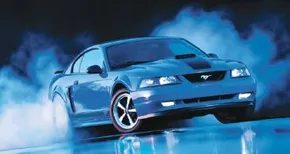
Reviving the Mach 1 nameplate after a quiet decade
Ford needed a win. The 2001 generation had stumbled into performance confusion, but by 2003, the brand had stabilized. The Mustang Mach 1 returned, twenty-five years after the original nameplate vanished. It served as a direct answer to the 2001 Bullitt, that awkward, mid-cycle “boomermobile” that tried to be retro but felt out of place.
This time, the execution was cleaner.
What actually made the 2003 Mustang Mach 1 different
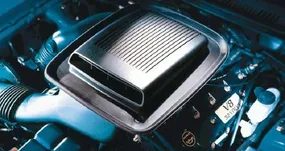
The core mechanical change was significant. The car ran a naturally aspirated twin-cam Cobra V-8. It produced 300 horsepower. Under the hood sat a functional shaker scoop. It wasn’t a decoration. It was straight out of the 1960s, designed to work.
The price tag landed at $28,370. That was $3,715 more than the GT Premium coupe. The premium bought real hardware, not just badges.
- Brembo brakes
- Lowered suspension
- Black hood stripe
- Comfort-weave styled leather upholstery
It was a focused package for people who wanted performance without the electronic complexity of a supercharger.
How the Mach 1 compared to Japanese rivals
Car and Driver tested the reborn Mach 1 against three high-tech foreign imports in December 2002. The field included the newly reborn Nissan 350Z. The Mach 1 took second place.
The Nissan Z-car held the top spot. But the Mach 1 had a distinct advantage in raw, unrefined acceleration.
“The Mach 1 earns its silver medal because it is brute fun,” the editors wrote. “Drop the hammer, and with no especially refined technique, 60 mph is yours in a scalding 5.2 seconds…the fastest time in this test by a full half-second.”
That half-second lead in the 0-60 dash mattered. The Mach 1 didn’t need fancy launch control or complex traction management to post the quickest time in the group. It just needed you to stomp the pedal. The twin-cam V-8 delivered immediate, tangible thrust.
The comparison highlighted a different philosophy. The Japanese competitors offered refinement and high-tech assistance. The Ford offered mechanical directness. For enthusiasts who preferred a car that felt like a tool rather than a computer, that distinction was enough to justify the silver medal.

The 2003 Wrap-Up and the 2004 Anniversary
Complaints about the solid-axle setup and the aging interior layout never really went away. Car and Driver acknowledged these flaws but landed on a positive note, claiming the Mach 1 “generates more grins than grimaces” and calling it an “ode to the past.” They even tossed in a jab at Henry Ford, suggesting history is “a hoot” rather than bunk.
Between the Mach 1 and the supercharged 2003 Ford Mustang SVT Cobra, 2003 felt like a genuine vintage year for the brand. The only other tweak was a $595 Pony appearance package aimed at V-6 models. Sales ticked up slightly, gaining a bit over 2,000 units for the calendar year.
The 2004 model year was effectively a holding pattern. Everyone in the industry knew a major overhaul was imminent for 2005, a transition previewed by concept cars at the January 2003 Los Angeles and Detroit Auto Shows. With the new generation on the horizon, Ford kept updates minimal for the 40th anniversary year.
What Changed in the 2004 Ford Mustang?
Mechanical changes were sparse. The Mach 1 gained 10 horsepower, while V-6 models picked up three. Ford did offer a $895 “40th Anniversary” package for Premium V-6, GT coupes, and convertibles. This kit bundled the $295 Interior Upgrade Package with unique wheels, special badging, trim, and fold-in mirrors. Strangely, the package removed the standard rear spoiler.
It was a modest gift for such a milestone, but the marketing machine understood the timing. The real celebration was still around the corner.
Tracing the Mustang Legacy
- How the Ford Mustang Works : This resource covers the entire lineage, from the 1960s debut to the modern era.
- The 1994-1998 Revival : It is hard to believe Ford nearly killed the nameplate in the early 90s. This section details how the Mustang survived the brink to return in 1994.
- The 2005 Rebirth : The shape of the S197 platform was dictated by a European-styled design team. This link explains how the original pony car was reborn.
- 2007 Ford Mustang Reviews : For later model years, Consumer Guide New Car Reviews provides road test data, specs, and pricing.