


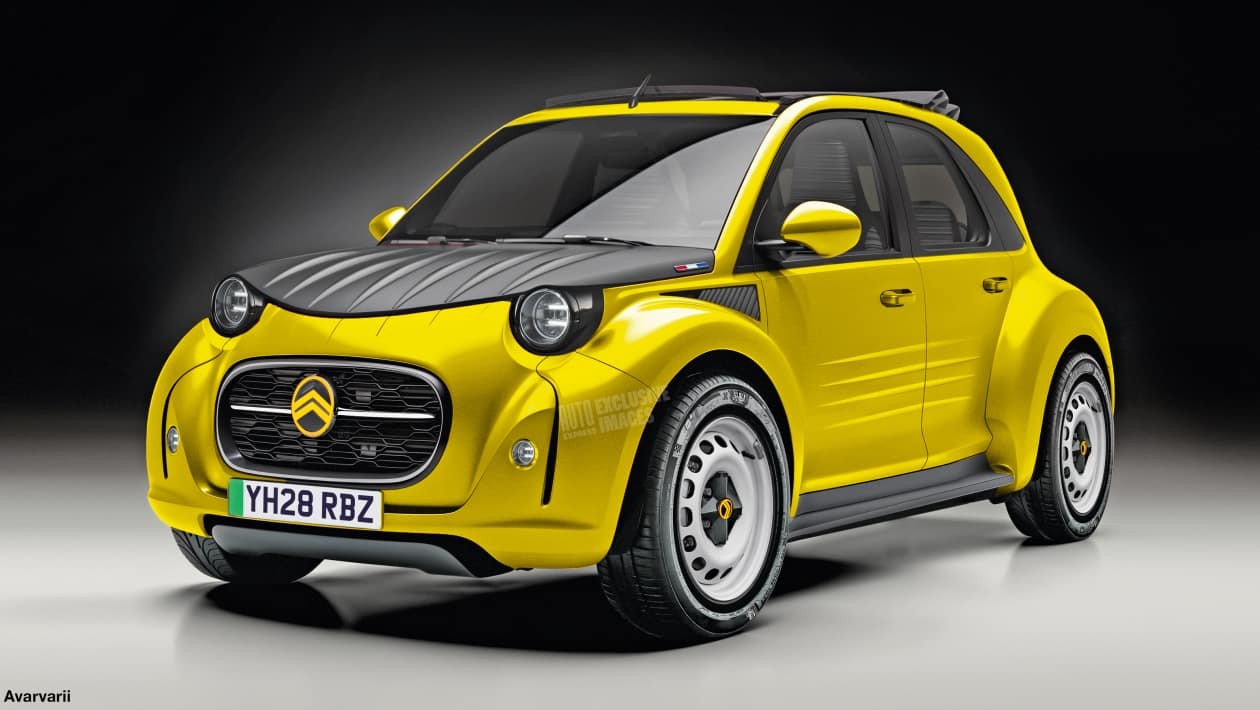
Citroen is moving to reclaim the budget-friendly segment of the European market with a new electric city car inspired by its most legendary model: the 2CV. Aiming to provide “mobility to the masses,” the project targets a price point below €15,000 (£13,100), positioning it as a direct response to the shrinking availability of affordable vehicles in Europe.
The new concept is slated to make its official debut at the 2026 Paris Motor Show.
Beyond Nostalgia: A Mission of Utility
While the car will draw heavily on Citroen’s rich heritage, leadership is emphasizing function over mere aesthetics. CEO Xavier Chardon has made it clear that this is not simply a “retro reboot” for the sake of sentimentality.
“Nostalgia for nostalgia is not a silver bullet,” Chardon noted. “What is more important is to understand the purpose of the car at that time.”
The original 2CV was a tool for democratization—a simple, rugged vehicle designed to transport farmers and their goods across rural France. Citroen intends to replicate this philosophy for the modern era, replacing the “farmer” with the urban professional or service worker, providing an accessible electric solution for a new generation of drivers.
The “Neo-Retro” Design Strategy
The design direction, led by Pierre Leclercq, follows a “neo-retro” approach. This strategy has recently proven successful for competitors; the reborn Renault 5 has seen massive interest, securing 120,000 orders.
Rather than creating a parody of the original 2CV, Citroen’s design team is focusing on translating the brand’s historical values—affordability, spaciousness, comfort, and efficiency —into a contemporary electric package. Key considerations include:
– Platform Integration: The car may utilize Citroen’s “Smart Car” architecture, which already supports the C3 and Fiat Grande Panda.
– Signature Features: Engineers are exploring whether the structure can support a rollback canvas roof, a classic 2CV hallmark.
– Market Positioning: The vehicle is expected to sit between the entry-level Ami quadricycle and the larger C3.
Navigating the European EV Landscape
The timing of this launch is strategic, coinciding with shifting regulatory landscapes in the European Union. The European Commission is currently working on new frameworks (such as the proposed ‘M1E’ category) to incentivize the production of homegrown, affordable electric vehicles.
This move is critical because a significant “EV void” has emerged in the market. According to Chardon, Europe has seen a massive drop in new car sales since the pandemic, largely because 60% of that lost demand is driven by the lack of electric cars priced below €15,000.
Competitive Pressures and Scale
Citroen’s parent company, Stellantis, is looking to leverage this project across multiple brands to achieve economies of scale. This creates an internal competitive landscape:
– Shared Platforms: The technology could be used by various Stellantis brands, including Fiat.
– Battery Supply: To keep costs low and comply with EU manufacturing goals, Stellantis has invested €4.1 billion in a Spanish joint venture with CATL to produce battery packs by late 2026.
– Market Benchmarks: The project faces stiff competition from Renault’s upcoming Twingo EV, which is expected to offer a similar small-scale, high-efficiency profile.
Looking Ahead
If the European regulatory framework is finalized by the end of this year, Citroen aims to have the new electric 2CV in full production by 2029.
Conclusion: By combining historical brand identity with a strict focus on low-cost electric mobility, Citroen is attempting to fill a critical gap in the European market and provide an affordable entry point for the next wave of EV adopters.


