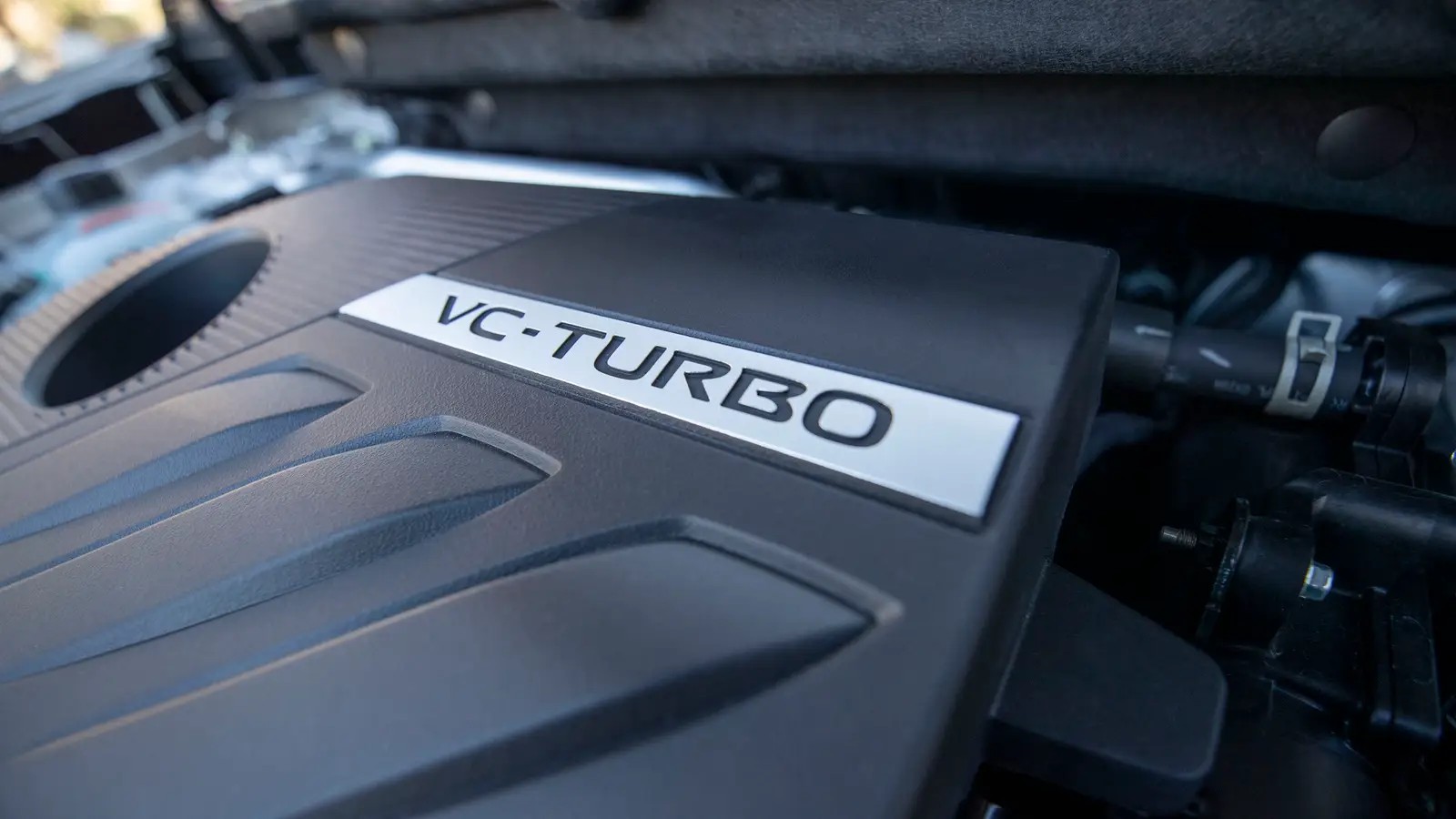
For decades, automotive engineers have chased a “holy grail”: an engine that can provide high performance without sacrificing fuel efficiency. In 1919, Sir Harry Ricardo theorized a way to do this through variable compression, but the mechanical complexity proved insurmountable for nearly a century.
Nissan spent twenty years and secured over 300 patents to finally bring this dream to the mass market with the VC-Turbo engine. Now, as the technology finds its way into the 2025 Nissan Rogue, it is time to ask: Has this mechanical breakthrough actually delivered on its promises, or has it been outpaced by the hybrid revolution?
The Science of Variable Compression
To understand why the VC-Turbo is significant, one must understand the fundamental conflict in internal combustion engines.
In a standard engine, the compression ratio —the ratio of how much the air-fuel mixture is compressed before ignition—is fixed.
– High compression improves fuel efficiency but increases the risk of “knocking” (premature detonation), which can destroy an engine.
– Low compression is safer for high-performance, turbocharged driving but wastes fuel.
Nissan’s solution is a sophisticated multi-link system. Instead of a simple connection between the piston and the crankshaft, Nissan uses an actuator motor to physically change the piston’s stroke. This allows the engine to “shift gears” mechanically:
– At cruising speeds: The engine moves to a high compression ratio (up to 14.0:1) to maximize fuel economy.
– Under heavy acceleration: The system adjusts to a lower compression ratio (as low as 8.0:1) to provide power and prevent engine damage.
Real-World Performance: The Verdict
While the engineering is undeniably impressive, the real-world results have been a mixed bag for consumers.
1. The Efficiency Gap
The primary goal of the VC-Turbo was to compete with high-efficiency rivals. However, data suggests it has struggled to gain a significant edge. When the technology debuted in the 2019 Infiniti QX50, it offered better fuel economy than its V6 predecessor, but it barely edged out non-hybrid competitors like the Audi Q5 and BMW X3.
In the 2025 Nissan Rogue, the 1.5-liter, 3-cylinder VC-Turbo produces 201 horsepower. While it is a competent engine for daily commuting, it faces a massive hurdle in the form of the Toyota RAV4.
– The Rogue’s gas-only variant offers roughly 32 MPG combined.
– The Toyota RAV4 hybrid achieves between 37 and 39 MPG (with newer models reaching up to 43 MPG).
The Trend: Nissan bet heavily on perfecting the internal combustion engine (ICE) to meet emissions standards, while competitors like Toyota pivoted toward hybrid electrification. As a result, Nissan’s mechanical masterpiece is fighting an uphill battle against much simpler, highly efficient hybrid systems.
2. Reliability and Safety Concerns
Innovation often comes with growing pains. In 2023, the NHTSA opened an investigation into reports of engine failures in the Rogue, Altima, and QX50. The issue centered on bearing failures —specifically in the crankshaft and connecting links.
While Nissan noted that the failure rate is statistically low (roughly 899 claims across 450,000 vehicles) and that failures often provide audible warnings before occurring, the investigation highlights the inherent risks of such a complex mechanical system. The very complexity that makes the engine unique also makes it a potential point of failure.
Conclusion
The VC-Turbo is a triumph of mechanical engineering, representing a century of solved problems. However, in the current automotive landscape, being “clever” isn’t enough. While the 2025 Nissan Rogue remains a comfortable and well-equipped SUV, the VC-Turbo engine serves as a reminder that even the most brilliant mechanical innovations can be overshadowed by the rapid shift toward hybrid and electric powertrains.