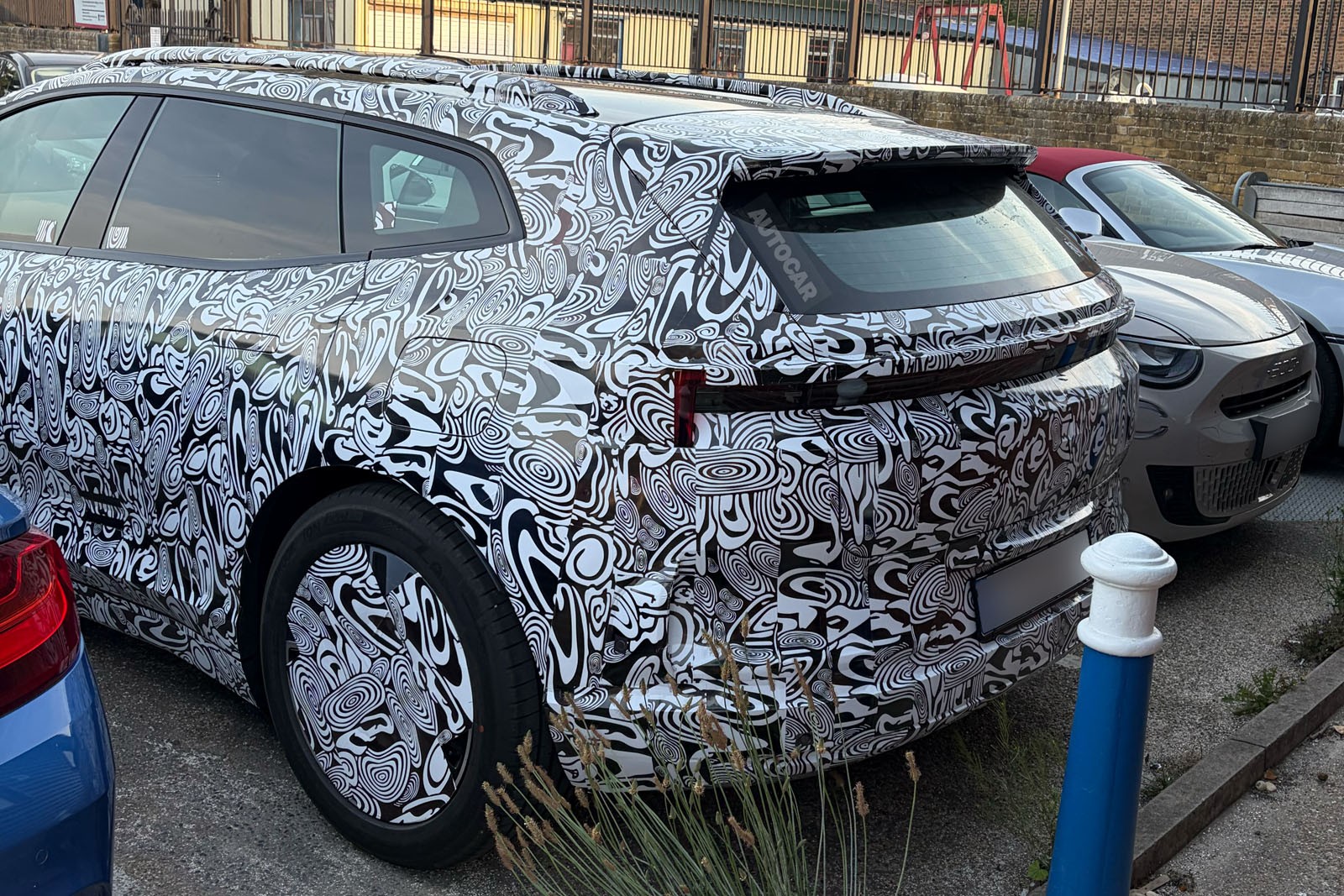
The camo is half-off. Or maybe just off in the right places. A reader sent photos to Autocar. They show a Polestar 4 testing on UK roads, but something feels… different. Longer, perhaps? Not longer, exactly. Just wider at the back. More traditional.
This isn’t the coupé you see every day.
Practicality over rakish flair
Look at the rear glass.
There it is. Conventional, flat, boringly usable window space. The current 4 throws this out, relying instead on a rear-view video feed—a gimmick that looks cool until you drop a screwdriver between your back seat and the door. Now? Glass. Real glass. It makes the car look like a standard SUV again, shedding the aggressive, wedge-shaped roofline for something more sedate.
Does it matter? Maybe not to the design team. It matters to the people buying into this space. BMW has the iX3. Mercedes has the GLC Electric. Both are practical beasts. Polestar needs to fight fire with fire.
Michael Lohscheller, Polestar’s CEO, didn’t beat around the bush:
“The Polestar 4 is a losing model if you ignore practicality: some people have dogs.”
Wait. He said winning. But the logic is sound. The current car is beautiful. This one is usable. It keeps the engine, the battery, the soul—but adds trunk space where humans can actually stuff groceries.
Naming games
Later this year, the split becomes official. The new SUV-estate keeps the name Polestar 4. The original? It gets bumped aside as the Polestar 4 Coupé. Simple rebranding to separate the toy from the tool.
The front ends will remain identical. Indistinguishable, even. So don’t bother checking the grille. Check the roofline.
The tariff trap
Here’s the messy part. Originally, Polestar wanted these built in Busan, South Korea. Why? To dodge massive US tariffs on anything manufactured in China. A smart workaround. Necessary, even.
But the door slammed shut anyway.
Last week, the US barred Polestar. The reason? Cybersecurity concerns linked to Chinese-made electronics. A technicality used as a shield, perhaps, but a wall nonetheless. Polestar is out of the US market for now. Period.
So what’s next?
Lohscheller pivots the conversation entirely. The US is lost. Focus shifts hard to Europe. Maybe Asia. Maybe Canada. The narrative changes from global conquest to regional survival.
“The automotive industry is entering a phase defined by borders,” he notes.
He doesn’t say if the Busan plant stays open for European cars. Or if the Korea build will happen at all. We’ll wait and see. For now, the dog-owning public just wants to know when their SUV arrives.