


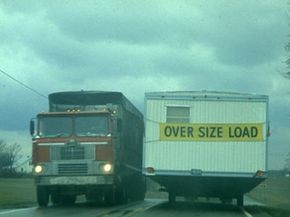
You know the scene. You’re cruising down a U.S. interstate, stuck behind a massive flatbed tractor-trailer. On the bed sits a full-sized house, or maybe a giant piece of construction equipment. Flashing amber lights. Orange flags. And right behind the rig, a compact car with a tiny yellow beacon on the roof inches along, keeping a respectful distance from any curious sedan that tries to squeeze past.
That compact car is a pilot car. And the rig is hauling an oversize load.
Defining the Oversize Load
So, what exactly qualifies? An oversize load is any cargo that exceeds standard legal dimensions for road transport. We’re talking mobile homes, heavy machinery, or materials that physically cannot be dismantled for transit.
If the object is too wide, tall, or long for the right-of-way, it’s oversize. The key factor here is immutability. You can’t shrink it. You can’t fold it. It has to go as is.
This isn’t a niche hobby. It’s a massive industrial sector. Dozens of specialized firms operate across the United States, handling everything from the logistics to the safety protocols. Some companies focus strictly on providing pilot cars, staffed by drivers who understand clearance issues and traffic management. Others sell the necessary flags and signage. It’s a complex ecosystem.
Why Permits Are Non-Negotiable
Here is where it gets tricky for operators. There is no single federal standard for what constitutes “oversize.”
State definitions vary wildly. Even within a state, city limits often have their own thresholds. This fragmentation creates a strict permit regime.
- State Permits: Required for travel on state highways.
- City Permits: Required if the route exits the highway for local delivery.
- Interstate Travel: Crossing state lines demands valid permits for each jurisdiction.
You cannot drive from Point A to Point B without the correct paperwork. State highways fall under state DOT jurisdiction. Local roads are under municipal authority. It is the same administrative divide you see when highway patrol writes tickets on the interstate and local police handle violations in town.
How to Tow an Oversize Load Safely
Towing these rigs requires more than just a big truck. It requires precision.
First, you need the pilot car. This is not a suggestion. It is a safety mechanism. The pilot driver monitors clearance, watches for overhead hazards like low bridges, and manages traffic flow around the oversized payload. They ensure nobody gets too close.
Second, you need the right flagging and signage. These aren’t decorative. They are legal requirements that alert other drivers to the unique dimensions of the load.
Third, route planning is critical. You must know your clearance limits. You must have the permits in hand before you roll. Miss a city permit because you exited the interstate for a delivery, and you’re in violation.
“The common denominator for oversized loads is that they can’t be made smaller for transport.”
This immutability drives the entire operation. You can’t change the object. So you change the logistics. You get the permits. You hire the pilot. You flag the truck. You go slow. And you hope the next driver on the interstate understands why that little yellow light in the
What the hauler needs from you before the truck rolls out
The moving company isn’t guessing. They need hard numbers. Height, width, length, weight. Get these exact dimensions down to the inch or the pound. That data drives every logistical decision that follows.
It tells them which truck bed fits. It maps the legal route. It dictates the ratchets, chains, and tie-downs required to keep that Berber carpeted box from becoming a roadside hazard. It determines the permit stack you need to clear state DOTs. And yes, it sets the price.
Signage is part of the equation, too. Oversize loads often require specific warning signs. Pilot vehicles? They might be mandatory. Or they might be optional, depending on state law. If pilots are required, the cost adds up fast. Some hauling companies force you to use their own fleet of escort cars and drivers. Others let you source a third-party service. Ask if they will price-match a competitor. It saves you time and maybe some cash.
How escort vehicle rules vary by state
There is no universal standard for oversize loads. Each state defines “oversize” differently. Each state has its own rules on whether pilot cars are needed, how many, and where they must be positioned.
Do your homework before signing a contract. Research your state’s specific regulations on pilot car usage and load dimensions. Know the rules before the hauler tells you the rules. It changes your negotiating power.
Securing the load without drama
The specialized equipment isn’t optional. It’s the reason the trailer doesn’t drift into a utility pole. The company will select the right rigging based on the specs you provided. If you underreport the weight, they might under-rig it. If you overreport the height, they might route you through tunnels that won’t clear. Accuracy matters.
“The move isn’t just driving from point A to point B. It’s managing a chain of variables that only work if the data is right.”
You’re not just renting a truck. You’re renting a logistics solution. The pilot car, the permits, the route, the tie-downs. It all hinges on the initial spec sheet. Get it right, and the desert quiet becomes your reality. Get it wrong, and you’re stuck explaining to a state trooper why your wood-paneled abode is blocking two lanes of traffic.
When to Move That Rig Without Getting Stopped
Timing matters as much as the load itself. Most jurisdictions ban wide or heavy hauling during morning and evening rush hours, and many forbid nighttime driving entirely. Sundays and public holidays often get the same treatment. If you schedule a move for 6 AM on a Saturday in a state that restricts weekend travel, you’re already in trouble. Signage requirements also shift by location. You need specific flag sizes, colors, and quantities based on how wide or tall the cargo sits.
Check local and state statutes before you book anything. This prevents surprises in the final invoice. The bill covers the escort vehicle company, including the driver, rig, and fuel. On top of that, you pay for the primary truck, its operator, and its fuel costs.
Starting Your Own Pilot Car Service
Got a clean license record and an appetite for the open road? Running your own pilot car business is an option. It is not for everyone. You will be away from home for extended stretches. If that sounds like a dealbreaker, skip it. You are also supplying your own vehicle, so maintenance costs and wear and tear land on your shoulders, not a fleet manager’s.
The industry is seasonal. Warmer months bring more shipping volume. Cold weather slows things down. Each state has distinct pilot car guidelines, so research your specific territory before buying a single light bar.
The Financial Reality of Independent Hauling
You invest upfront in signage, lights, and equipment. Then you hunt for clients. As a sole proprietor, you handle your own marketing. That costs money. It often takes several months to secure regular work. Plan your cash flow accordingly.
Payment is usually invoiced. That means a gap between the day you drive and the day the check clears. You will be tired, far from family, and waiting on payment. But you are the boss. For those who thrive on autonomy and the unpredictability of the highway, that trade-off holds up.


