


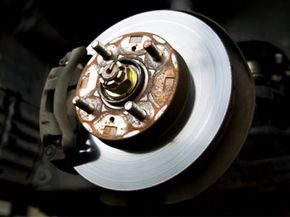
You hit the pedal. The car slows. The car stops. It’s a contract we sign with every machine we drive. We trust the friction material to bite the rotor and kill our momentum. But when that contract is breached? It’s pure, unadulterated terror. Brake failure isn’t just an inconvenience. It’s a life-threatening emergency.
Whether you’re cruising in a daily driver with disc brakes or hauling a heavy load with drums, you expect the system to respond. It shouldn’t be a gamble. Yet, brakes are often the first things to degrade because they’re under immense thermal stress every time you stop.
Listen to the Noise
Brakes don’t have a dashboard light for every specific issue. They don’t have a voice. But they do have a language. If you’re not blasting music or arguing with a passenger, you can hear them.
Squealing means wear indicators are touching the rotor. It’s a high-pitched warning that your pads are thin. Clicking? That’s usually debris or a loose component. Squeaking often points to a lack of lubrication on the hardware. Grinding is the sound of metal-on-metal. Your calipers or shoes are eating through the rotors or drums. That’s not a “check it soon” noise. That’s a “stop driving immediately” noise.
“Brakes have their own language; they squeal, click, squeak and grind. You need to listen carefully to their noises rather than ignore them and hope the sounds will magically disappear.”
Ignoring these signals is how you end up in a ditch. Or worse. Regular maintenance is the best defense, but even with perfect care, things can go wrong. Brake lines corrode. Master cylinders leak. Fluid boils under hard use. The system is complex, spanning the length of the vehicle, with dozens of moving parts that can fail independently.
The Danger of Failure
So, what happens when the pedal goes to the floor? Or worse, when it feels spongy and unresponsive? The physics don’t care about your intentions. Momentum is a cruel mistress.
If you’re driving a standard passenger car, you have options, but they’re limited. You can pump the brakes if there’s residual fluid pressure. You can downshift to use engine braking. You can grab the parking brake, but you have to do it carefully. Slamming it can lock the rear wheels, sending you into a spin.
Towing a trailer changes the equation entirely. You’re dealing with more mass, more inertia, and potentially a separate braking system on the trailer that might not be engaging. If your tow vehicle’s brakes fail, you’re steering a multi-ton projectile with no stopping power. The trailer can push you. It can jackknife. It can crush you against a barrier.
The Runaway Truck Ramp
For heavy vehicles, there’s a specialized escape route. Runaway truck ramps. These are paved areas, often filled with gravel or sand, placed on steep downgrades. They’re designed to catch vehicles that have lost braking power. The soft surface creates massive rolling resistance, slowing the vehicle to a halt without requiring driver input beyond steering into it.
But what about us? The rest of us? We don’t have ramps. We have guardrails, trees, and embankments.


