


Modern motorcycles are drowning in sensors. We want cornering ABS, ride modes, and Bluetooth that connects to our phones. But here’s the thing: complexity breaks.
There’s a certain kind of machine that earns trust not because it’s fancy, but because it refuses to stop working. It doesn’t care about your riding style. It doesn’t need a dealer to decipher its error codes. It just works.
This is why certain Japanese dual-sports have earned a legendary reputation for dependability. They aren’t winning spec-sheet awards. They are too simple for that. Instead, they prioritize durability. Fewer components means fewer ways for things to go wrong.
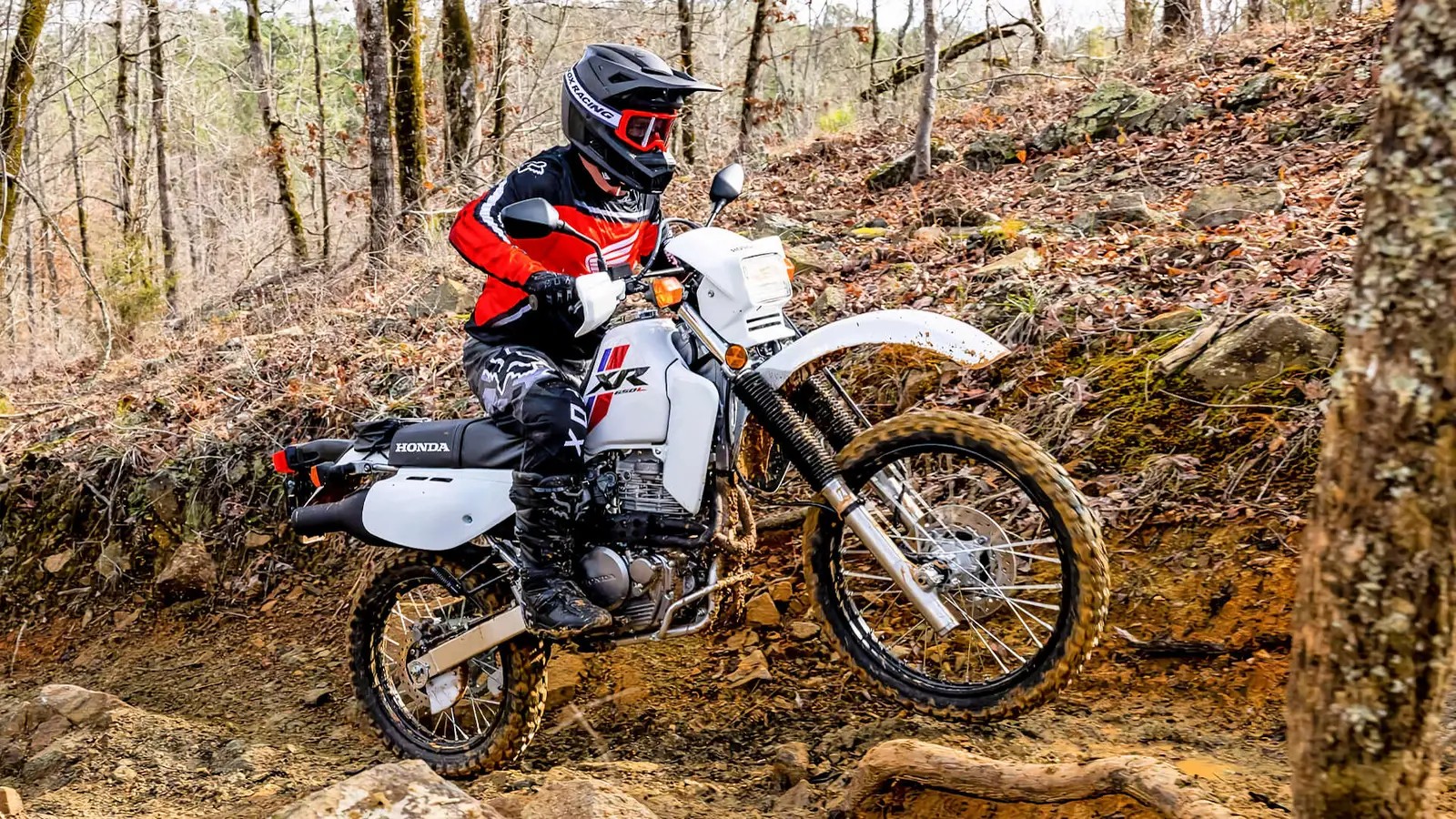
One machine stands above the rest. The Honda XR650L.
It has been in production since the early 90s. It looks almost the same as it did thirty years ago. And that is exactly why mechanics rarely see it with major problems.
The Engineering of “Good Enough”
Why do some bikes never visit the workshop?
Because they aren’t fragile.
Reliability isn’t an accident. It’s a result of conservative engineering. Engineers choose proven architectures over cutting-edge innovation. They pick components that have already survived thousands of hours in real-world conditions. No experiments. Just consistency.
Simple mechanical honesty beats layered electronics every time.
When you strip away the sensors, you remove the points of failure. You remove the expensive diagnostics. You remove the stress.
Is that boring? Maybe. Is it practical? Absolutely.
Reliability is the real luxury. A bike that starts when you turn the key, every time, is worth more than one loaded with features that cost hundreds to replace. This philosophy defines the dual-sport segment. And Honda’s XR650L proves it.
The Honda XR650L: A Time-Tested Workhorse
MSRP: $6,999 (+$600 destination)
Let’s talk numbers. $6,999. That’s the base price for a machine that defies time.
The XR650L is Honda’s no-nonsense answer to the dual-sport market. It’s street-legal, yes. But its soul belongs to dirt trails. It handles city commuting with ease, then switches modes without breaking a sweat.
Honda resisted the urge to “modernize” this bike. That’s its greatest strength.
No radiator. No coolant hoses. No thermostat to fail. No traction control to toggle. Just an air-cooled single cylinder and a steel frame that laughs at abuse. This continuity builds a reputation that new, tech-heavy bikes can’t touch.
For the cost of a mid-range commuter car’s maintenance over five years, you get a proven powerhouse. That’s value.
Under the Hood: Air-Cooled Simplicity
The heart of the XR650L is a 644cc single-cylinder four-stroke engine. It pushes out roughly 43.6 horsepower at 6,000 RPM. Torque hits 38.2 lb-ft at 5,000.
On paper, those numbers look modest. Don’t let them fool you.
This engine earns confidence through repetition. It has a wide, usable powerband. It doesn’t need frequent maintenance. It runs cool. And cool runs reliably.
Air cooling is the key. By eliminating the liquid cooling system, Honda removes potential failure points. Radiators get clogged with mud. Coolant hoses burst. Thermostats stick. The XR650L doesn’t have these issues.
Mechanics call this “under-stressed” engineering. The components aren’t pushed to their limit. They sit comfortably within their tolerance. That leads to longevity.
I’ve seen these engines survive daily commuting, cross-country trips, and aggressive trail riding. They don’t care. They just keep going.
Built to Take a Beating
The XR650L doesn’t just survive abuse. It tolerates it.
The frame is a rugged semi-double-cradle design. It’s meant to absorb punishment, not fight it. Up front, you get heavy-duty 43mm Showa cartridge forks. Rear travel is handled by a Pro-Link Showa shock. Both offer over 11 inches of travel.
That’s significant.
Ground clearance sits at a massive 13 inches. You’re running full-size dirt wheels: 21-inch up front, 18-inch in the back. Smaller-wheeled adventure bikes get hung up on rocks. The XR650L rolls right over them.
It’s affectionately nicknamed the “Big Red Pig.” Fans use that term because of its bulk and its appetite for being ridden hard. Factory handguards come standard. The instrument cluster is minimalist. Utility over vanity.
Whether you’re stuck in urban gridlock or sliding across a desert trail, the XR650L handles it. It’s engineered to bounce and slide without complaint.
Maintenance: Why Mechanics Are Friends
Here is the strongest reason mechanics rarely find major issues with these bikes.
Owners actually maintain them.
The XR650L isn’t a specialist’s job. It’s easy to work on. If you have basic tools and a service manual, you’re set. This ease of maintenance encourages regular servicing. Owners don’t procrastinate. They don’t ignore the noise. They fix it because they can.
And parts?
With over 30 years of continuous production, spare parts are virtually infinite. You can find OEM parts, aftermarket mods, or used components. It doesn’t matter if your bike is from 1993 or 2024. The parts interchange.
This simplicity also makes long-distance travel stress-free. A small tool kit and a spare tire plug are often all you need. You don’t need a decoder tool. You don’t need to diagnose a CAN bus error. You need a wrench and a bit of mechanical sympathy.
The Ultimate Luxury: Old-School Reliability
Simplicity is rare today.
Most dual-sports are packed with electronics. ABS is great. Traction control saves lives. But they add weight. They add cost. They add complexity.
Let’s look at the Japanese rivals.
The Suzuki DR650S shares a similar philosophy. It’s reliable. But it offers less suspension travel and a harder ride. It’s less focused on off-road capability than the XR.
The Kawasaki KLR650? Better wind protection. More touring-ready. But it’s liquid-cooled. Heavier. Different maintenance schedule. It’s a different machine entirely.
Honda’s own CRF450L (and its sibling the 450RL) delivers serious power. Modern tech. Higher performance. But that comes at a price. Higher purchase cost. More frequent maintenance. Higher complexity.
The XR650L sits in the sweet spot.
It balances durability, off-road competence, and minimal maintenance. It’s not the fastest. It’s not the prettiest. But it is the smartest buy in its class for those who want a bike that works.
In a world of planned obsolescence and planned repairs, that’s a radical idea.
Maybe we’re chasing tech when we should be chasing peace of mind.


