


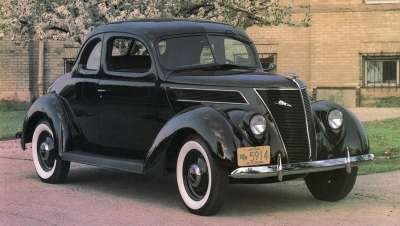
Detroit rarely saw a spectacle like the one that erupted with the debut of the 1937 Ford lineup. The date was November 6, 1936. Sales Manager William C. Cowling didn’t just launch the cars; he orchestrated a full-blown extravaganza to ensure the new models hit the market with maximum momentum.
Ford had been working in secret. The company had spent months developing a new design that would redefine the affordable automobile segment. Cowling knew that a standard press release wouldn’t cut it. He needed a spectacle. A massive event was staged to unveil the 1937 models, drawing attention from across the automotive industry.
The response was immediate and overwhelming. Reporters and enthusiasts flocked to see the updated V-8 engines, improved chassis, and sleeker body styles. Cowling’s aggressive marketing strategy paid off instantly. The 1937 Fords became the talk of the town, setting a new standard for automotive launches that Detroit had never seen before.
The Detroit Coliseum Spectacle
You have to respect the theatrics. While most auto launches today feel like press releases with engines attached, the 1937 Ford rollout was pure spectacle. Eight thousand dealers rolled into the Detroit Coliseum on forty-one special trains, representing every corner of the US and Canada. The venue itself was fresh off a makeover by Walter Dorwin Teague, the industrial design legend who gave the space a sleek, modern vibe. The air buzzed with the sound of Fred Waring and his Pennsylvanians, who were at the peak of their fame.
Then the lights went down.
A single beam cut through the darkness, locking onto center stage. On a hydraulic elevator, a massive V-8 emblem rose into view. It wasn’t just a logo. It was the star. As the spotlight widened, a twelve-year-old girl with golden curls stepped out of the emblem’s shadow. She moved with practiced grace, summoning a crowd of sprites, elves, and gnomes from the wings.
Then came the cauldron.
A huge, steaming pot rose at the center. One by one, giant replicas of 1937 Ford components were hoisted into the glare and tossed into the brew. Front fenders. Instrument panels. Engine blocks. Radiator grilles. Seat cushions. The imagery was clear: they were melting down the old to forge the new.
When the colored lights hit, the steam vanished. The elves retreated. What remained was a shiny new Club Coupe. It was a first for the 1937 lineup. The car rose on a platform, circled the stage, and glided down a ramp to the floor. It was flashy. It was revolutionary. It was necessary.
Why Flash Was Needed
Ford didn’t do this for fun. They did it because 1936 had been a disaster.
Despite cranking out more units than ever, the company lost ground to General Motors. Chevrolet had beaten Ford handily in 1935. In 1936, that gap widened. Sales slipped by more than 23 percent. The public was drifting toward Chevy. Ford needed to shake them awake.
The 1937 Model 74 wasn’t just a refresh. It was a statement. By using merchandising concepts that hadn’t been seen before, Ford forced the industry to pay attention. The presentation wasn’t just about showing off a car. It was about reasserting dominance through sheer spectacle.
“Ford needed a flashy presentation if it wanted to capture the public’s attention.”
The Club Coupe that descended from the stage was the physical proof of that strategy. It looked different. It felt new. And for a brief moment, the 23 percent gap didn’t matter. The spotlight had returned to Dearborn.
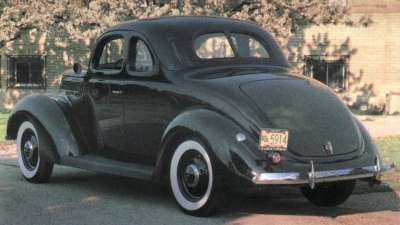

Look at the rear of the 1937 Ford Model 74. That trunk lid slopes down like a cliff. To modern hobbyists, this looks weird. The 1936 Fords are treasures. The open bodies and three-window coupes sell for half again what comparable 1936 Chevrolets bring. Collectors pay the premium. Yet here is the 1937 Ford. It has to change.
Ford was falling behind. The reasons were specific. Chevrolet offered a seamless steel “Turret Top” on almost every 1936 model. The Standard cabriolet was the only exception. The Chevrolet Master series also had independent front suspension. Ford called it “Knee-Action.” It came free. Ford kept the old solid I-beam axle. It used a transverse leaf spring. It was the same setup as the Model T days.
Knee-Action was not new in 1936. Chevrolet introduced it in 1934. The Turret Top arrived in 1935. The new feature that year was brakes.
Plymouth advertised hard. Sales rose. The public learned about hydraulic “juice” brakes. By 1936, nearly every American maker adopted them. Pierce-Arrow. Willys. Lincoln. Ford was the exception. Along with Chevrolet.
1937 Ford Lineup Strategy
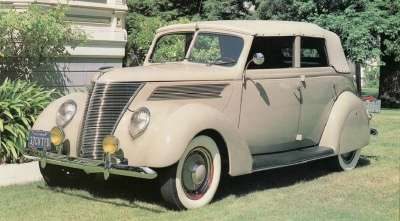
Ford wanted the sales lead back. This time for real. The 1937 lineup got a “New all-steel top.” It sweeps back. There is no break in the line. It wasn’t a “turret.” Copyright laws likely forbade it. The styling was fully revised. Ford bragged about a “Brilliant new design.” It struck the modern note. Streamlined beauty. The car was wide. Roomy. Low center of gravity. Curves flowed fast from front to back. And side to side.
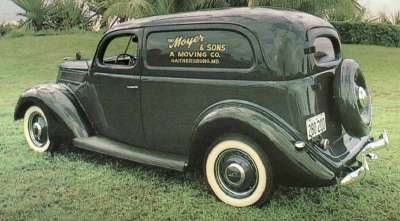

The 1937 Ford delivery sedan arrived with a face-lift that signaled a shift away from the company’s previous industrial aesthetic. The most visible change was the slanting two-piece “V-type” windshield, a feature available on all closed body styles. This replaced the flat, single-pane glass of earlier years. Headlights were no longer freestanding posts. Instead, almond-shaped units were integrated directly into the front fender aprons. This move anticipated industry trends. Chevrolet kept separate lamps until 1940. Plymouth didn’t adopt the same integrated approach until 1939.
The front grille was sharply vee’d. It was a direct visual callback to the Lincoln Zephyr, which had debuted just a year prior. The hood opened rearward in an “alligator” style, hinged at the back rather than the front.
Steering and Brake Mechanics
Under the skin, the 1937 Ford saw mechanical revisions. Engineers lowered the steering ratio. This made the car easier to turn but required more wheel rotation to achieve the same angle. Brakes were also updated.
Henry Ford was 74 years old at the time. He was stubborn about hydraulic systems. He refused to abandon mechanical brakes, insisting on steel from pedal to wheel. The solution was self-energizing mechanical binders. These used the car’s momentum to help apply braking force. Ford claimed this reduced the required pedal pressure by about one-third.
The system used steel cables housed in flexible conduits. This wasn’t without flaws. The cables could squeak and judder. In harsh weather, they were prone to corrosion, leading to potential failure. However, when maintained, these cable brakes offered significantly better stopping power than the rod-controlled systems used in the 1936 models.
The 85-Horsepower V-8
The 85-horsepower V-8 engine remained Ford’s exclusive advantage in the low-price segment. Several key improvements were made. Water-pump capacity increased by nearly one-third, reaching 45 gallons per minute. The pump was moved to the upper front of the block. This change allowed it to push coolant through the jacketing rather than sucking it, improving circulation.
Main bearings were enlarged to 2.4 inches. Insert bearings replaced the older poured-babbitt type, offering greater durability.
Ford also pushed “creature comforts” heavily. Marketing materials promised a quiet ride, citing pressure-lubricated springs and new engine and body mounting methods. Improvements to the rear axle, drive shaft, and exhaust piping were all credited to the reduced noise. The center-poise ride was smoothed out by long-tapering springs.
The instrument panel was redesigned. Gauges were grouped for rapid reading. The starter button moved to the panel itself. The parking brake lever sat to the left, under the dash. The driver’s seat became adjustable, rising as it slid forward or back.
Ford urged buyers to examine the details. They positioned the vehicle as “The Quality Car in the Low-Price Field” and “The Universal Car.”
Model Lineup and Trim Levels
Seventeen distinct models were available. Ford continued its two-tier trim strategy.
The base series, which would officially become known as the “Standard” line in 1938, included:
– A three-passenger coupe
– Tudor and Fordor “flatback” sedans
– Tudor and Fordor Touring Sedans with built-in trunks
The DeLuxe series expanded this range. It added:
– A new Club Coupe
– A woody station wagon
– Five open body styles: Cabriolet, Club Cabriolet, four-door Convertible Sedan, Phaeton, and Roadster
The Roadster disappeared after the 1937 season. The Phaeton followed suit in 1938.
DeLuxe models came with more equipment. Features included dual tail-lamps, dual wipers, and chrome-plated grille and windshield frames. Walnut woodgraining appeared on window moldings and the dashboard. Other touches included rear armrests, twin electric air horns, a “banjo” steering wheel, a locking glove compartment, and a clock.
Interior materials varied by body style. Closed models offered mohair or broadcloth. Convertible buyers could choose between Bedford cord and antique-finished leather. The phaeton and roadster used leather. Rumble seats across the line were upholstered in imitation leather.
Design Credits
Bob Gregorie is often credited with the 1937 Ford design. Gregorie himself disputed this. He was busy preparing the 1938 Lincoln-Zephyr at the time. The actual design work came from the Briggs Manufacturing Company staff. John Tjaarda led the team. The crew included Alex Tremulis, Bob Koto, and Phil Wright. All three went on to become significant figures in automotive styling.

Proportions and Profit Margins
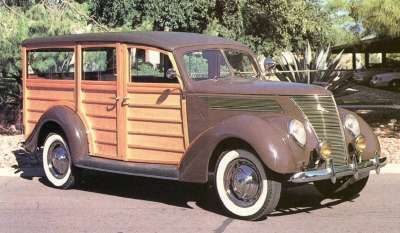
The 1937 Ford Model 78 station wagon managed to keep the design language alive, but the rest of the lineup sparked a war among historians. David L. Lewis, Mike McCarville, and Lorin Sorensen argue that this was one of the most beautiful Fords of the decade. Others disagree entirely, grouping the 1937 and 1938 models together as the ugliest cars Henry Ford ever sold.
Henry Ford didn’t trust his stylists to get it right. He personally ordered the overall length cut from 182.75 inches down to 179.5. It sounds like a negligible number. It wasn’t.
The shorter wheelbase ruined the proportions. The flatback sedans ended up looking stubby. Gordon Buehrig, who defined elegance at Duesenberg, used to say that good design is almost entirely about proportion. The 1937 Ford failed that test.
Economic conditions helped sales, at least on paper. The American economy had stumbled out of the deep Depression hangover in 1936 and kept recovering through 1937. Ford capitalized on the optimism. By the end of the year, they had produced nearly 57,000 more units than in 1936. That is a 7.2 percent jump in volume.
You would expect that kind of sales growth to fill the coffers. It didn’t. Profits landed at $6.76 million. That figure was barely one-third of what the company made the previous year.
Why the disconnect between volume and value? The 1937 Ford came with expensive new toys. Tooling for the seamless steel roof took a massive chunk of cash. Developing the new 60-horsepower engine also drained the budget. Innovation has a price tag, and in 1937, Ford paid it in full.
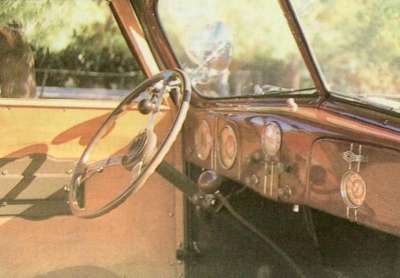

The interior of the 1937 Ford Model 74 station wagon wasn’t just about hauling gear. It offered genuine comfort features for the occupants. But comfort inside the cabin didn’t stop Ford from spending heavily on engineering infrastructure. They opened a new dynamometer room. They bought an axle-testing machine. The wind tunnel, constructed just the year before, got upgraded with hot and cold air capabilities for the 1937 model year.
Chevrolet took a hit. Production dropped roughly 11 percent for the year. Ford came within 20,000 units of matching Chevy’s numbers. Not bad for a catch-up season. The real winners in the medium-price segment were surprising. Buick sales jumped 26 percent. Pontiac surged 32 percent. Chrysler climbed 51 percent. Nash led the pack with a massive 62 percent increase.
Then the bottom fell out. Late summer arrived. The nation slipped into a sharp recession. Auto sales tumbled. Dealerships were drowning in used cars taken in trade during the spring inventory glut. The market was flooded.
Ford’s own sales suffered. The 1937 Ford DeLuxes and other models struggled. Dealerships were overcrowded. Supply far exceeded demand in the secondary market. Fortunately, a turnaround was brewing.
The DeLuxes model strategy
The 1937 Ford DeLuxes represented a shift in how Ford marketed its vehicles. They weren’t just base models anymore. They came with more amenities. More chrome. Better finishes. The goal was to keep buyers within the Ford fold rather than letting them drift toward the rising mid-tier brands.
But macroeconomics doesn’t care about marketing strategies. The recession hit hard. Used car prices crashed. New car prices followed. Dealers held massive inventories. Cash flow dried up. Ford’s DeLuxes, despite their added features, couldn’t overcome the broader economic headwinds.
Still, the engineering improvements mattered. The dynamometer tests ensured engines met performance standards. The wind tunnel data refined aerodynamics. The axle tests guaranteed durability. These investments would pay off later. Not in 1937. But in the years ahead.
The DeLuxes line would eventually help Ford recover. Not immediately. But steadily. The recession was a shock. A necessary correction. The auto industry would adapt. Ford would adapt. The 1938 models would be ready.
The Jack Davis Era and the Used Car Crisis
The shift in Ford’s leadership happened quietly on the calendar but loud in the dealership lot. On December 22, 1937, Edsel Ford made a move that actually mattered to the people selling the metal. William Cowling, the outgoing general sales manager, was a fine face for the company. He handled public relations with grace. But he wasn’t built for the grind. His replacement was John R. “Jack” Davis.
Davis was different. Dealers called him a “salesman’s salesman.” He didn’t just want them to smile for photos; he wanted them to move volume. And there was a massive problem to solve.
Every dealer in America was drowning.
The lots were clogged with a surplus of used cars. This wasn’t just a Ford issue. It was an industry-wide chokehold. Used inventory sat rotting while new production lines hummed for an audience of one. Davis saw the bottleneck. He didn’t try to fix it alone. He went to Alvan Macauley, the president of Packard and head of the Automobile Manufacturers Association.
Davis pitched a coordinated purge.
The result was Used Car Week in March 1937. It was a spectacle designed to clear the pipes. The strategy was brutal but effective. The worst of the clunkers were burned. Yes, burned. These conflagrations weren’t just waste disposal; they were marketing theater. They drew crowds. They created a sense of urgency and renewal.
The numbers told the story. Ford’s dealers cleared more than 57,000 used vehicles. That was a lead over every other manufacturer. They shed 22,804 units from their stock. It was a salutary result, according to historians Nevins and Hill. Did it save the year? No. 1938 was still a lean time for automakers. Production for Ford and its rivals was cut by more than half. But the used car glut? Gone.
Styling the Two-Track Approach
With the inventory cleared, Ford turned its attention to the new models for 1938. Mechanically, there was little to shout about. The engineers kept the proven parts bin simple. But the stylists had a mandate: broaden the appeal. Ford adopted a two-track policy. They weren’t just building cars anymore; they were building distinct personalities under one badge.
The base model, now officially called the Standard (formerly the “base” series), kept the bones of the 1937 body. But the face changed. The grille was revised. The horizontal bars of the upper grille now swept back, merging into the hood side-vents. It was a subtle shift, but it softened the front end.
At the rear, the free-standing taillights of the previous year were replaced. They were swapped for neat, teardrop-shaped units. Inside, the dashboard got a mahogany-look finish. It was an attempt to add a touch of warmth to a utilitarian package.
The Standard was spartan. You got one windshield wiper. One taillight on each side. Inside, a single sun visor and a lone armrest. It was stripped down to the chassis.
Was it too stripped?
Ford seemed to think so. By January, they added chrome bars to the grille. A small touch. It broke up the monotony. It signaled that even the entry-level car had a bit of shine.
The DeLuxe Difference
If the Standard was a tool, the DeLuxe was a statement. The brochure didn’t mince words. These cars were “entirely new in appearance.” They didn’t just look different; they felt different.
The DeLuxe looked big. It was big. The closed sedans offered significantly more room for passengers. The luggage space was much larger. It was a comfort play. While the Standard focused on getting you from A to B, the DeLuxe focused on how you felt doing it.
The front end was refreshed with a longer hood. This gave the

The 1937 DeLuxe Profile and Value Proposition
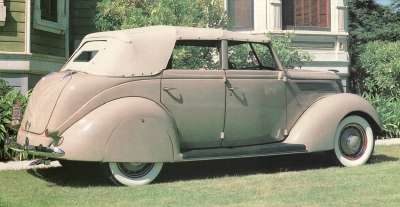
The side profile of the 1937 Ford DeLuxe convertible sedan defined the era’s shifting aesthetic. It wasn’t just a car; it was a statement in sheet metal. The front end featured a softer, heart-shaped grille with horizontal bars. It looked heavier and more imposing than the Standard series grille. On the sedan versions, the roofline curved smoothly all the way down to the rear bumper. This design choice killed the stubby look that plagued the previous year’s models.
Step inside, and the upgrade was immediate. You got fine mohair or broadcloth upholstery. Big rear armrests came standard, each with its own ashtray. The dashboard was a handsome new instrument panel finished in walnut with ivory plastic fittings. It felt substantial.
Then there was the price. The DeLuxe Ford offered sheer dollar value that was hard to ignore. Spending just $60 more than the Standard model got you a roomier, more impressive ride. It was better equipped. Better trimmed. The result? The DeLuxe outsold the cheaper Standard by a three-to-one margin. People saw the difference. They paid for it.
1938 Ford Lineup Updates
The 1938 Ford lineup saw significant changes, particularly with the station wagon. This year, sliding glass in the rear doors and rear quarters became standard equipment. Back in 1937, that feature cost an extra $20. Ford dropped the price to move units. The screen-side variation with side curtains was deleted entirely.
Storage got smarter too. The spare tire moved off the tailgate and inside, into a special area behind the driver’s seat. Wood paneling received a refresh as well. Production logistics shifted, too. The Iron Mountain, Michigan plant now produced the wood bodies directly. They shipped them to various Ford assembly plants. Previously, the Upper Peninsula facility cut and trimmed the wood components. Then they shipped those parts to the Murray Body Company’s Detroit plant for final assembly. That extra step was gone.

The 1938 Ford Trim Shift and Accessory Upgrades
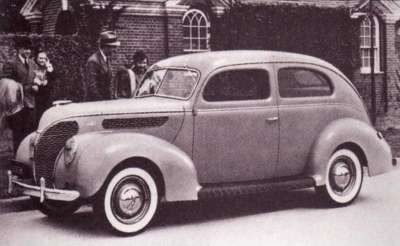
The 1938 Ford Tudor sedan was no longer offered in a DeLuxe model. That change stripped away some of the prettier trim options, forcing buyers to look elsewhere if they wanted a little extra flair.
For those willing to spend a few bucks, Ford offered authorized accessories that actually made sense. Two stood out. The rear fender shields—often called skirts—cost nine dollars for the pair. They kept mud off the paint. Simple. Practical. Then there were the rustless-steel wheel hub and spoke covers. Fifteen bucks for a set of four. They turned dull, functional steel wheels into something with a bit of shine. A small upgrade, but it caught the eye.
Comfort wasn’t ignored. The Kool Kushion ran three dollars. It was designed to keep drivers cool in the summer heat. Not exactly a luxury item. Just a basic necessity for anyone driving without A/C.
Other items filled out the catalog. A radiator cover? One dollar and twenty-five cents. Center bumper guard? One dollar and seventy-five cents. Road light for five dollars. If you wanted to upgrade the interior, the DeLuxe steering wheel set you back seven dollars and fifty cents.
Maintenance parts were cheap by today’s standards. An oil filter cost three dollars and twenty-five cents. Air cleaner went for three dollars and seventy-five cents. Fix a flat? The tire repair kit was just twenty cents. Twenty cents.
Safety and appearance items rounded out the list. Ford knew their customers wanted cars that lasted. And looked good doing it.
The 1938 model year forced choices. You could stick with the base Tudor. Or you could spend extra on the right accessories. Either way, the core machine remained the same. Reliable. Affordable. Built to last.
Did people actually buy these items? Most likely. Ford didn’t offer accessories for fun. They offered them because drivers wanted options. And they were willing to pay for them.
The result was a fleet of Fords that varied slightly in appearance. Some had skirts. Some had shiny hubcaps. Some had new steering wheels. But they all shared the same underpinnings. The same engine. The same frame.
That’s the thing about 1938 Fords. They weren’t just cars. They were platforms. And drivers made them their own.
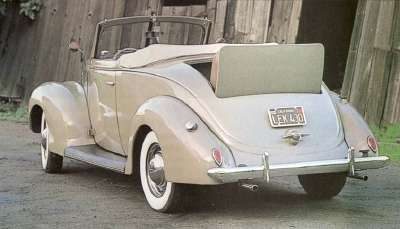

The 1938 Ford DeLuxe Convertible Coupe: A Slimmed-Down Lineup
By 1938, the 1938 Ford DeLuxe convertible coupe was sitting alone at the top of a significantly thinned hierarchy. Ford had axed three body styles for the year, a strategic retreat that saw the unpopular flatback Tudor and Fordor sedans vanish from both the Standard and DeLuxe lines. The DeLuxe trim suffered more than its sibling; the stylish Roadster was dropped entirely due to sluggish sales. This was just the beginning of the purge. By 1939, the Club Coupe, Club Convertible, and Phaeton would join them in history, followed the next year by the Convertible Sedan.
Engineering Stagnation vs. Market Reality
The cars that survived the cull were products of a corporate tug-of-war. Edsel Ford, the nominal president, had been pushing for modernity for years. He wanted hydraulic brakes, independent front suspension, and the Hotchkiss Drive to replace the heavy, cumbersome torque tube. Henry Ford, the patriarch, refused to budge. The result was a lineup that felt anachronistic even as it rolled off the assembly line.
Had Edsel’s vision prevailed, the 1937 and 1938 Fords might have looked like the competition. Instead, Henry’s intransigence sent the company toward a precarious future. But did it matter?
There is little doubt that despite their outdated engineering, these Fords were serviceable and long-lived. Powered by the reliable 85-horsepower V-8, they remained the performance champions of their era. Ford produced its five-millionth V-8 in May 1938, and by November, the 26-millionth Ford had rolled off the line.
The 1938 Ford DeLuxe convertible coupe represented the end of an era for the brand’s diverse body styles.
1937-1938 Ford Models, Price, and Production
The 1937 Ford lineup debuted with fanfare but failed to make a deep enough impact to rescue the struggling giant from its own inertia. Yet, looking back, both the 1937 and 1938 models are highly sought after by collectors. The data below details the weight, price, and production numbers for this transitional period.
1937 Model 74 (Standard)
| Body Style | Weight (lbs) | Price | Production |
|---|---|---|---|
| Coupe, 5W, 2P | 2,275 | $529 | 43,866 |
| Tudor sedan, 5P | 2,405 | $579 | 148,467 |
| Tudor T/B sedan, 5P | 2,415 | $604 | 51,322 |
| Fordor sedan, 5P | 2,435 | $639 | 18,541 |
| Fordor T/B sedan, 5P | 2,445 | $664 | 13,976 |
| 4d wagon, side curtains | 2,691 | $744 | 193 |
| 4d wagon, glass windows | 2,776 | $764 | 193 |
| Total | 276,365 |
1937 Model 78 Standard
| Body Style | Weight (lbs) | Price | Production |
|---|---|---|---|
| Coupe, 5W, 2P | 2,496 | $586 | 46,481 |
| Tudor sedan, 5P | 2,616 | $611 | 147,794 |
| Tudor T/B sedan, 5P | 2,648 | $638 | 78,895 |
| Fordor sedan, 5P | 2,649 | $671 | 30,521 |
| Fordor T/B sedan, 5P | 2,666 | $696 | 31,555 |
| Total | 335,246 |
1937 Model 78 DeLuxe
| Body Style | Weight (lbs) | Price | Production |
|---|---|---|---|
| Roadster, 2/4P | 2,576 | $694 | 1,250 |
| Phaeton, 5P | 2,691 | $749 | 3,723 |
| Coupe, 5W, 2P | 2,506 | $659 | 26,738 |
| Club Coupe, 5W, 5P | 2,616 | $719 | 16,992 |
| Cabriolet, 2/4P | 2,616 | $719 | 10,148 |
| Club Cabriolet, 4P | 2,636 | $759 | 8,001 |
| Tudor sedan, 5P | 2,656 | $674 | 33,683 |
| Tudor T/B sedan, 5P | 2,679 | $699 | 73,690 |
| Fordor sedan, 5P | 2,671 | $734 | 22,885 |
| Fordor T/B sedan, 5P | 2,696 | $759 | 98,687 |
| Convertible Sedan, 5P | 2,861 | $859 | 4,378 |
| 4d wagon, side curtains | 2,906 | $754 | 9,111 |
| 4d wagon, glass windows | 2,991 | $775 | 9,111 |
| 4d sedan, 7P | — | — | 521 |
| Total | 309,807 |
Total 1937 Ford Production: 921,418 units.


