


Reliability isn’t just a buzzword. It’s the main thing driving American car buyers in 2026.
The era of flashy tech gimmicks is over. People want cars that don’t break. They are moving away from high-maintenance, stressed turbocharged gas engines. Why? Because modern combustion engines are complex. They have over 2,000 moving parts. They break. Often. And fixing them costs a fortune.
Electric drivetrains are different.
They have roughly 20 moving parts. That’s it. Fewer parts mean fewer things going wrong. Newer EVs break down 2.5 times less often than their gas counterparts. Their first two to four years are surprisingly trouble-free. Advanced liquid thermal management keeps battery health intact for decades. No fuel injection systems to fail. No transmissions to slip. No exhaust assemblies to rust.
This is the engineering promise of electrification. Predictability.
Why EV Sales Are Cooling Down (But Reliability Isn’t)
Despite the mechanical sense, EV adoption stalled in early 2026.
New registrations dipped below 9.6 percent. Why? A perfect storm. Federal tax credits expired in late 2025. That pulled demand forward. It left a gap. EV-curious buyers suddenly realized the upfront cost is still steep.
Charging infrastructure is another issue. Rural and non-coastal areas are still underserved. Federal spending hasn’t materialized fast enough. Range anxiety is real. As a result, hybrids are surging. Americans are cautious. They are shy about EV ownership because of steep depreciation on early models. Trade tariffs are making affordable options scarce.
But don’t let the sales dips fool you. The engineering advantage remains. For those who can make the switch, the long-term reliability payoff is massive.
Hyundai’s EV-First Bet Pays Off
Hyundai isn’t hedging its bets.
While rivals use multi-energy architectures, Hyundai doubled down on dedicated electric platforms. The Electric Global Modular Platform (E-GMP) is their secret weapon. It allows for faster 800-volt charging. It maximizes interior space. This strategy is anchored by their Metaplant in Georgia. Full-scale production of popular EV SUVs hit the line there in early 2026.
The result? Resilience.
Electrified models now make up one-third of Hyundai’s U.S. sales. They use their N-division to build halo performance cars. They are expanding their IONNA charging network. This positions Hyundai as the primary technical rival to Tesla. For non-luxury buyers seeking premium EV engineering, Hyundai is the benchmark.
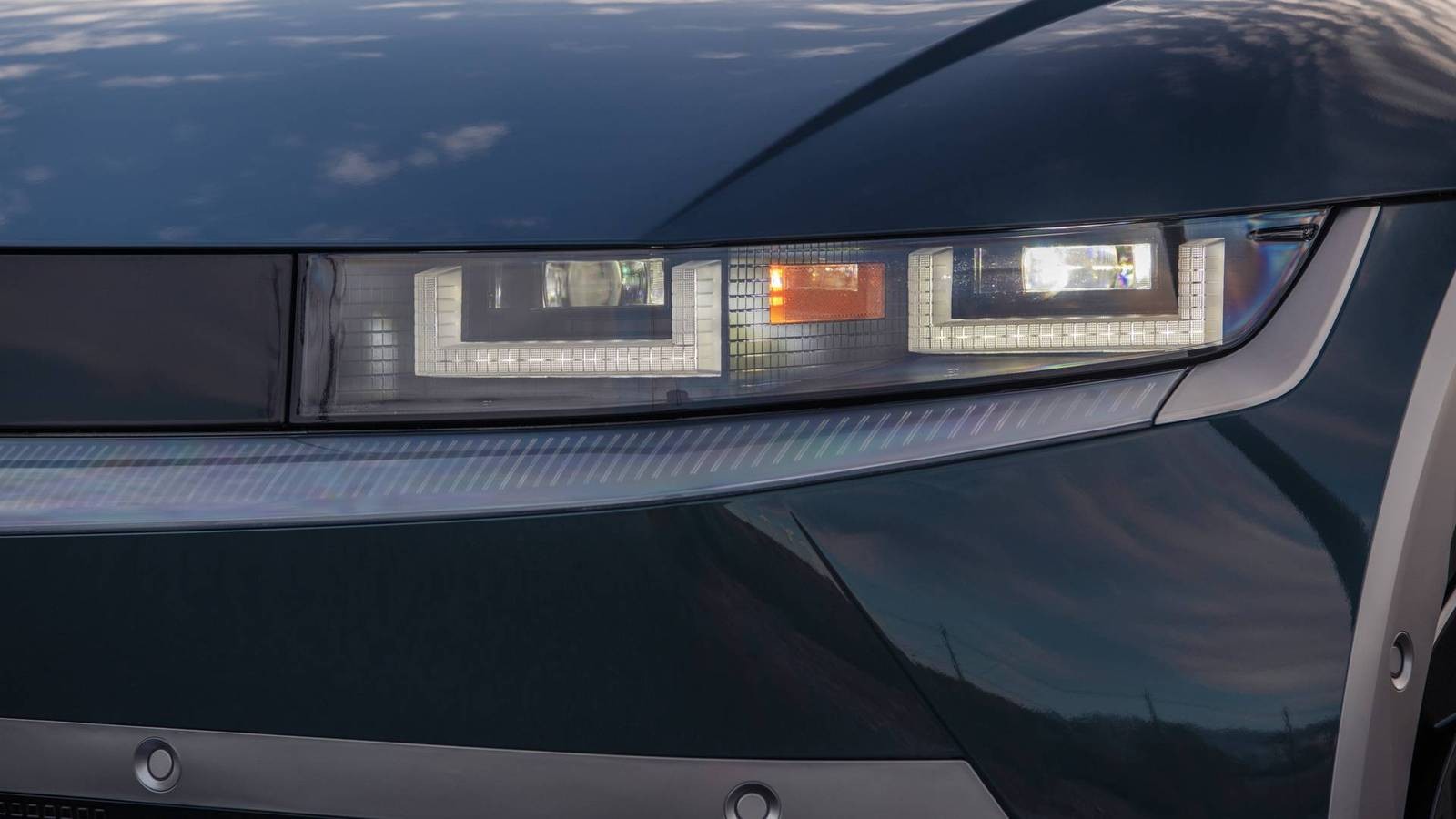
The 2026 Ioniqi 5: Reliability King
The first-generation Ioniq 5 had a rocky start. The 2026 model fixes most of those kinks.
If you value reliability above all else, this is the EV SUV to consider. J.D. Power gives it a 75/100 overall score. Quality and reliability metrics match at 75/100. Edmunds users rate it 4.6 out of 5 stars. Some owners still mention minor glitches, largely stemming from early model year teething issues. But the trajectory is upward.
There were two recalls earlier in 2026. One involved a high-voltage battery fire risk due to an improperly tightened bus bar. This affects a small batch of 2022025/2026 models. Dealers tighten the bolts or replace the assembly. The other recall covers early 2026 software where the instrument cluster might go blank.
Importantly, the long-running Integrated Charging Control Unit (ICCU) failure is gone. That plagued 2022–2024 models with sudden power loss. Hyundai optimized the ICCU design after April 2024. They are still managing fallout through extended warranties. It’s part of growing pains.
Warranty: The Safety Net
You aren’t flying solo with this car.
The 2026 IoniQ 5 comes with a 10-year/100,00-mile powertrain and EV battery warranty. It guarantees battery capacity won’t drop below 70 percent. That’s a solid promise.
You also get:
– Five-year/60,000-mile limited warranty.
– Five years of unlimited roadside assistance.
Maintenance is minimal compared to ICE cars. Tire rotations, multipoint inspections, and brake checks happen every 7,500 miles. Cabin air filters change every 15,000. Low-conductivity battery coolant is replaced at 40,000 miles. Reduction gear fluid changes at 60,000 miles.
Hyundai cut back its three-year complimentary maintenance for 2026. Many dealers still bundle basics like rotations into the purchase price. They know how to keep customers happy long-term.
Pricing and Trims: What You Actually Get
The 2026 lineup starts at a competitive $35,000.
Here is how the trims break down:
-
SE (Standard Range): $35,000
Dual 12.3-inch displays. Navigation. Standard wireless Apple CarPlay/Android Auto. Surprisingly well-equipped for a base model. -
SE (Long Range): $37,500
The larger battery. Better range for the same tech suite. -
SEL: $39,800
Adds a wireless charging pad, hands-free liftgate, H-Tex synthetic leather, rear air vents, and a heated steering wheel. -
XRT: $46,275
Off-road-inspired look. XRT interior pattern. Standard all-wheel drive. Keeps the same entertainment tech as the SEL. -
Limited: $45,075
Focuses on comfort. Bose eight-speaker audio. Ventilated seats. Vision Roof panoramic sunroof. Driver seat reclines fully during charging. Full-color head-up display. Vehicle-to-Load (110-volt outlet) to power household devices.
Note the pricing quirk. The Limited trim is actually cheaper than the XRT. Why? Maybe it’s an incentive to move inventory. Or maybe the tech package justifies the lower price tag. It’s a bargain if you want the premium audio and V2L.
Efficiency and Range: The Numbers
E-GMP platform shines here. The efficiency numbers are class-leading.
SE Standard Range:
– Battery: 58 kWh lithium-ion.
– Range: 245 miles.
– MPGe: 131 city / 100 highway / 115 combined.
– Energy use: 29 kWh/100 miles.
SE Long Range:
– Battery: 77.4 kWh.
– Range: 318 miles.
– MPGe: 129 city / 100 highway /114 combined.
– Energy use: 30 kWh/100 miles.
Wait, it gets better. The larger battery is more efficient in city driving. And the highway numbers hold up.
Long Range Dual Motor:
– Range: 269 miles.
– MPGe: 108 city / 88 highway / 98 combined.
– Energy use: 34 kWh/100 miles.
You trade range and efficiency for AWD. That’s the physics penalty. But 269 miles of range with AWD is still plenty for most people. The efficiency rating adds to the longevity appeal. Less stress on the battery over time.
The Bottom Line
The market is cooling. Prices are fluctuating. Charging infrastructure is uneven.
But for the buyer who wants a car that lasts? The 2026 Hyundai IoniQ 5 stands out. It avoids the complexity of gas engines. It leverages a dedicated electric platform. It backs it up with a warranty that actually matters.
It’s not the sexiest car on the market. It doesn’t have the autopilot hype of Tesla. It’s reliable. Simple. Efficient.
In a world of planned obsolescence, that might be the most radical feature of all.


