


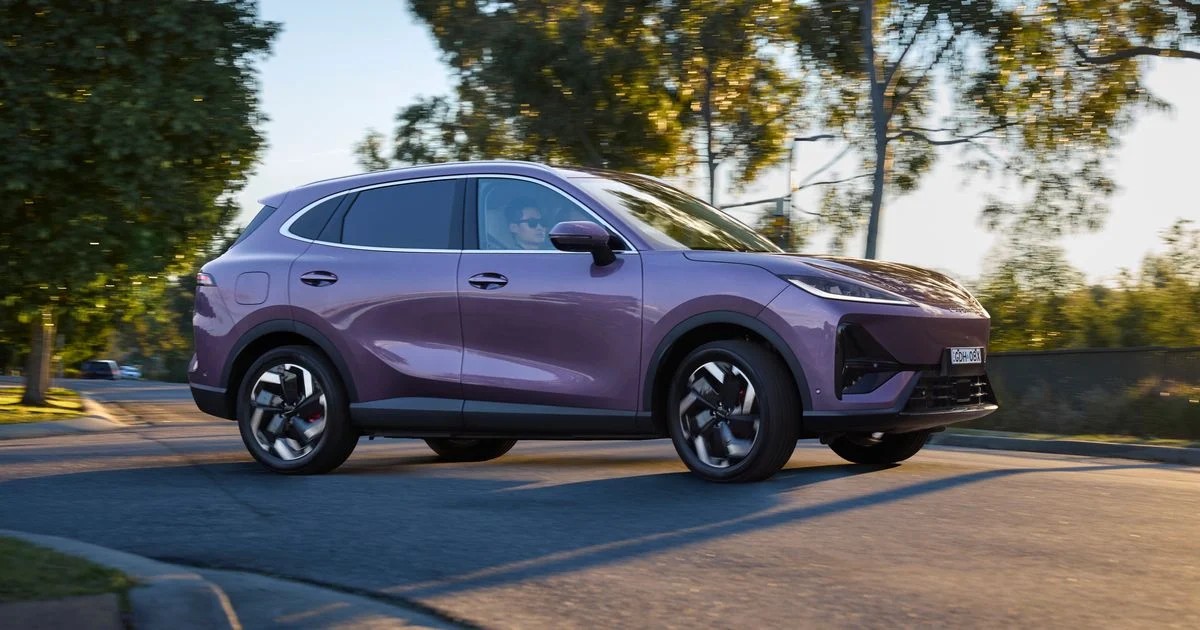
Chery isn’t just dropping one new car. It is dropping an entire ecosystem of brands into Australia’s crowded automotive landscape. The first wave hits in November 2026. And the name? Lepas.
Yes, Lepas.
It’s a genus of goose barnacles. But Chery claims it is also a portmanteau of “leopard” and “passion”. Whatever you want to call it, the Chinese automaker is treating this as its premium export vehicle for Down Under. And it is taking its time getting the details right. Or at least, that’s what the press release says.
The core message is simple: these cars have been beaten up. Extensively.
Testing for Aussie Conditions
You can’t just ship a global vehicle to Australia and hope for the best. The roads here are harsh. The distances are punishing. The summers are brutal.
Chery assembled a team of local engineers. They paired them with specialists from the Chinese head office. Then they took prototypes out on some of Australia’s toughest roads. Urban. Regional. Rural. Thousands of kilometers of asphalt, gravel, and heat.
The goal? Tuning.
Specifically, they adjusted active safety systems. Driver assist features had to learn to read Australian road markings. They had to recognize our signage. They had to operate within our driving culture. Not the Chinese one. Not the European one. Ours.
They also tweaked the software. Refined the ride. Tested the air-conditioning under extreme heat. Because if the AC can’t handle a July in Queensland or a January in Perth, you aren’t selling anything.
“Australia presents some of the toughest vehicle conditions,” says Lucas Harris, the Lepas Australia chief operating officer. He argues that they didn’t just import a car. They validated and tuned it. For us.
“Rather than simply bringing a global vehicle to the market, we’ve invested significant time validating Lepas for Australian conditions.”
This level of adaptation is becoming the new normal. But it raises questions. Why does it take this long? And is it enough?
The Electric L6: A Direct Challenger
So, what is actually hitting the market?
Just one model for now. The electric L6.
It’s a compact crossover SUV. Small enough to park easily. Medium enough to haul gear. It straddles two segments. Which makes it a direct threat to established players.
The BYD Atto 3 is the obvious rival. So is the Geely EX5 (or Emgrand, depending on which market map you look at). The L6 slots right into the gap between these options.
Specs and Range
Under the metal, the L6 packs a single electric motor. Output is 160kW. Torque is 275Nm. The battery? A 65kWh unit.
Chery claims a range of 450km.
Here’s the catch: they don’t specify the test cycle. Is it WLTP? Is it ECE? In Australia, the testing standards are shifting. Without a clear label, that 450km figure is a bit of a guess. Buyers should expect real-world range to be lower, likely in the high 300s or low 400s depending on driving style.
There is also a combustion-powered version of the L6 sold elsewhere. It looks different up front. But for Australia, it’s all-electric.
A Brand Explosion Strategy
Lepas is the tip of the spear. But it is not the whole army.
Chey is deploying brands like artillery. They already have Chery itself. And Omoda Jaecoo, which is also export-only. Now comes Lepas.
And the list doesn’t stop there.
- iCaur : Expected in 2027. Boxy electrified SUVs.
- Freelander : Mid-to-late 2027 also boxy and electrified.
- Jetour : Already confirmed for Australia. Operating separately from the rest.
- Soueast : Acquired in 2024. Eyeing right-hand drive markets. Australia likely on the list.
- Luxeed : Premium partnership with Huawei. No AU date yet.
- Exeed : Premium SUVs. Exports to the Middle East. The Exeed RX is already here as the Omoda 9, which is a confusing move given the branding overlap.
- Rely : Revived for light commercials. Unlikely in Australia since Chery is selling the Stockman ute under its own badge.
This is bewildering. For a consumer walking into a showroom, the clutter is palpable. Why buy a Lepas if a Chery or Jaecoo does almost the same thing?
Retail Strategy and Overlap
Chery hasn’t said how Lepas will be sold.
Will it have its own dealerships? Will it live alongside Chery and Omoda in the same lot? The lack of clarity is notable.
The risk of cannibalization is high. Lepas plans to launch the L4 and L8 in Australia too. Smaller than the L6. Larger. The lineup overlaps heavily with existing Chery models.
- Jaecoo J5
- Chery C5/E5
- Tiggo 4
These are small SUVs. Lepas L4 will likely compete with them.
- Jaecoo J7
- Chery Tiggo 7
- Tiggo 8
Medium SUVs. The Lepas L8 will fight these.
Is this intentional? A strategy to capture every price point and segment simultaneously? Or a chaotic scramble to secure market share before competitors react?
The Verdict?
Lepas arrives with a lot of hype and very little concrete pricing. The electric L6 looks competitive on paper. The adaptation work sounds genuine. The safety tuning for local roads is a necessary step, not just a box-ticking exercise.
But will it resonate?
Australian buyers are skeptical of new Chinese brands. We’ve seen them rise and fall. MG, Haval, Great Wall—they all promised the moon. Most delivered decent cars. But loyalty is hard to earn.
Chery needs Lepas to work. Not just for its own sales targets (exports hit a record 1.3 million units last year), but for brand survival in a shifting market.
The L6 debut is set for November 2026. That’s a long time to wait. Expect rumors to swirl. Expect price leaks. Expect comparisons with the Atto 3 to intensify.
Will Lepas survive?
Probably.
Chery has the money. The engineering is improving. The strategy is bold. But boldness isn’t always enough.
We’ll see.


