Hybrids usually call to mind small, whisper-quiet sedans. Think Prius. Think efficiency. Think lightweight engineering designed to sip fuel rather than guzzle it. Most automakers stick to this formula because less mass equals easier movement for electric motors and gas engines working in tandem. It’s basic physics.
So, when you hear “hybrid truck,” your brain likely rejects it. It feels like an oxymoron. Big metal boxes fighting gravity? That’s not what hybrid tech was built for. General Motors tried this back in 2005 with a hybrid Silverado. It didn’t catch on. The concept just wasn’t visible enough to shift consumer habits.
Enter the Toyota A-BAT.
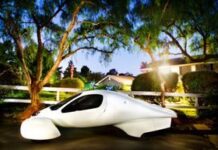
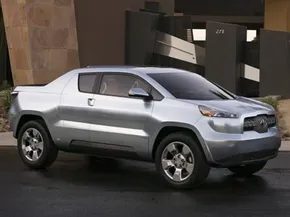
Short for Advanced Breakthrough Aero Truck, this isn’t just a concept piece gathering dust in a lab. It’s a serious statement from Calty Research, Toyota’s design studio in Newport Beach, California. The styling cues? They’re unmistakably Prius-adjacent. You see the same aerodynamic flow, the same tech-forward DNA under the hood.
But here’s the twist. The Prius moves people. The A-BAT moves stuff.
This vehicle targets a specific niche: homeowners who need to haul heavy loads for projects but refuse to compromise on emissions. It’s the anti-GM approach. Instead of forcing hybrid tech into a box that fights it, Toyota designed a utility vehicle where efficiency and payload capacity don’t have to be mutually exclusive.
It flips the script on the typical image of large, polluting work trucks. But what exactly powers this thing? And can it actually handle a job site?
Toyota A-BAT Design
The design isn’t just about looks. It’s about function meeting form in a way that challenges the status quo of pickup trucks. The A-BAT takes the sleek, efficient aesthetic of the Prius and stretches it into a utility-focused package. The goal was to prove that you don’t need a gas-guzzling V8 to get real work done.
The team at Calty didn’t just slap an electric motor into a frame and call it a day. They integrated the hybrid system into the core architecture. This means the truck can carry heavy loads while maintaining the fuel economy that defines Toyota’s hybrid lineup. It’s a stark contrast to those early, awkward attempts at hybrid pickups that prioritized novelty over practicality.
Who is this for? The eco-minded contractor. The environmentally conscious DIYer. Anyone who needs space and power but hates the idea of unnecessary pollution. The A-BAT offers a tangible alternative to the loud, inefficient trucks that dominate roadways today.
It’s not just a concept anymore. It’s a blueprint for what a hybrid utility vehicle could be.
The A-BAT proves that hybrid technology isn’t limited to commuting sedans. It can handle heavy loads without sacrificing fuel efficiency or lowering emissions.
But the design is only half the story. The real question is how this technology performs under load. Can a hybrid system handle the torque and power demands of a pickup truck? And what happens to that fuel economy when the bed is full?
We’re getting into the specs next.

The Aerodynamic Pitch
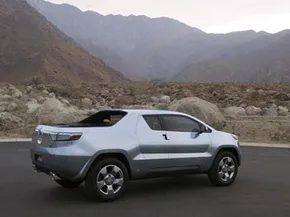
A-BAT is short for Advanced Breakthrough Aero Truck. That “Aero” tag isn’t just marketing fluff. Look at older pickups. Triangular cabs. Flat, horizontal beds. Air creates drag against those vertical drops. The A-BAT solves this by extending the body panels forward. They don’t drop straight down. Instead, a narrow line continues down the bed. This smooths airflow. It matches trends seen on the Honda Ridgeline and Chevy Avalanche.
Calty designers used Toyota’s “Vibrant Clarity” ethos here. You see it often. Put a Prius next to the A-BAT. The side profile reveals a similar trapezoidal shape. The philosophy is the same.
Adaptive Cargo Space
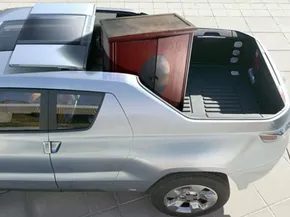
The long body looks like it has no room. But the interior is customizable. You can choose more passengers or more bed space. The base setup is a four-person cab with a 4-foot (1.2-meter) bed. Slide out some platforms. Open the tailgate. Suddenly you have a two-person cab and an 8-foot (2.4-meter) bed.
Hauling 4-by-8 plywood sheets becomes viable. So does a family camping trip. A sliding roof panel moves toward the front. This accommodates taller objects. There’s also a sliding drawer under the bed for extra storage.
Toyota A-BAT Specs
The Practicality of the A-BAT Interior
Forget the sci-fi gimmicks for a moment. The Toyota A-BAT interior is actually useful. You’ve got a portable power pack with AC and DC outputs. That’s for running tools. It also has a retractable navigation screen with WiFi.
And then there’s the dash. It’s covered in solar panels. They feed the battery pack and the nav unit. Direct sunlight equals free juice. It’s a neat trick for an off-grid setup.
Under the Hood: Hybrid Synergy Drive
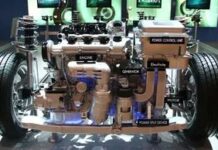
The Toyota A-BAT hybrid truck shares its heart with the Prius. Same Hybrid Synergy Drive system. That power-split device makes it a series-parallel hybrid.
This matters because it offers two modes.
1. Parallel hybrid. Electric motor and gas engine work together or separately to turn the wheels.
2. Series hybrid. Gas engine only charges the battery. It doesn’t touch the drivetrain.
Most trucks are heavy. They burn diesel or high-octane gas like water. The A-BAT is compact. Less mass means better efficiency. It doesn’t suck fuel like a midrange or heavy-duty truck.
From Concept to Reality
Toyota showed the A-BAT at the North American International Auto Show in Detroit. December 2007. Concepts usually die there. They sit in a warehouse and rust.
Not this one.
September 2008. Toyota announced mass production plans. No price tags yet. No dealership dates. But it was happening.
The compact pickup segment is empty. There aren’t many options. Add hybrid tech to that void. And gas prices stay volatile. It’s a winning formula. If truck buyers can’t afford high fuel costs, the A-BAT becomes a necessity. It puts Toyota ahead of the curve.
Where to Find More
Looking for deep dives into hybrid mechanics? Check out how the Ford Fusion hybrid works. Or break down the Toyota Prius system. There’s also info on alternative fuel stations. The smart tax credits for hybrids are worth reading too. And the SmartWay program details.
Sources:
– Automobile.com. “Toyota A-BAT Moving Toward Production; Diesel Tundra Cancelled For Now.” Sept. 22, 2008.
– Stewart, Ben. “Inside Toyota’s A-BAT Concept: Detroit Auto Show Preview.” Popular Mechanics. Feb. 2008.
– Vella, Matt. “Inside Toyota’s Hybrid Truck.” BusinessWeek.com. Dec. 28, 2007.
– Wert, Ray. “Detroit Auto Show: Toyota Reveals New Honda Ridgeline, Calls it the A-BAT Concept Hybrid Truck.” Jalopnik.com. Dec. 27, 2007.
– Wojdyla, Ben. “Toyota A-BAT Gets Green Light, Tundra Diesel Gets Black Flag.” Jalopnik.com. Sept. 22, 2008.