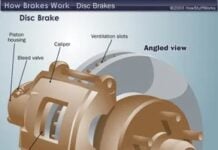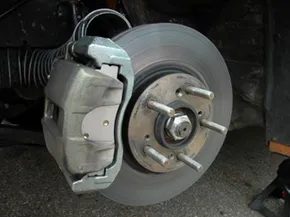
Most modern vehicles rely on disc brakes to bring metal monsters to a halt. You either have them on the front wheels, or all four. The system is deceptively simple. Steel rotors spin with your wheels. The brake caliper sits over them. Its job is pure friction. It clamps down to kill momentum.
These components are non-negotiable for safety. If your calipers fail, you aren’t stopping. Let’s look at how the magic happens. And why your car uses specific designs to stay on the road.
How Calipers Contribute to Braking Force
Think of the caliper as a clamp. It straddles the rotor. Inside, you’ll find brake pads. These are metal plates bonded with high-friction material. Outboard pads face the curb. Inboard pads face the engine bay. Both press against the rotor.
Step on the pedal. Master cylinder fluid moves. It creates hydraulic pressure. Pistons inside the caliper react. They push the pads into the spinning rotor. The friction generates heat. It slows the rotor. The wheel stops. The car stops.
It’s direct hydraulic force converted into stopping power. No complex electronics needed for the basic function. Just physics and fluid dynamics.
Caliper Pistons: Superior to Drum Brakes
Older trucks used drum brakes. Shoes inside a rotating drum created friction. The problem? Trapped heat. Gases built up inside the drum. This caused brake fade. You’d press the pedal and feel nothing.
Disc brakes solve this. Pads are external. Airflow cools them. Heat dissipates faster. Performance stays consistent under stress. That’s why disc brakes replaced drums almost everywhere. Cheap economy cars still use rear drums. Less stopping power is needed there. Weight and cost savings win out.
But for the front wheels? Discs are king. They handle the braking load. They shed heat. They keep you safe.
Floating and Fixed Calipers
Not all calipers are created equal. Two main types exist today. Floating calipers slide. They have one or two pistons on the inboard side only. When you brake, the piston pushes the inboard pad. The caliper body slides back, pulling the outboard pad against the rotor. Simple. Cheap. Effective for daily driving.
Fixed calipers don’t move. Pistons are on both sides of the rotor. They clamp down symmetrically. Performance is superior. Response is faster. But they cost more. High-performance models feature multiple piston pairs. Some have six pots total. More pistons mean even pressure distribution. Less pedal fade.
Which is better? For a commuter? Floating. For a track day? Fixed. The choice depends on your wallet and your driving style.
Brake Caliper Tool
Changing pads isn’t just pulling them out. Sometimes you need to reset the piston. Floating calipers might need a special tool to compress the piston back into its bore. Fixed calipers might require a wind-back tool if they have integrated parking brakes. Using the wrong tool can damage the threads. Or crack the caliper housing.
Specialized wrenches and compressors save time. And money. Don’t guess. Use the right gear.
We’ll dig deeper into maintenance in the next section. Different vehicles demand different approaches. Some calipers are sealed. Some are serviceable. Knowing the difference matters. Because when you stop, you want to trust the metal biting into the steel.
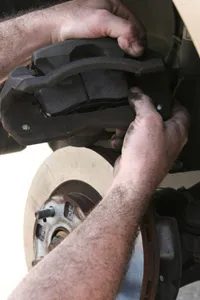
Brake pads wear. It’s physics. Every time you stomp the pedal, friction shaves off a microscopic layer of material from the pad as it clamps onto the spinning rotor. Over time, that layer vanishes. The pads get thinner.
Here is the mechanical compensation: the caliper piston. Inside the hollow cylinder of the caliper, the piston extends outward to push the thinner pads against the rotor. It’s a self-correcting loop. Until it isn’t.
Eventually, the pads are gone. Or close enough to it. Now you need to install fresh ones. But there’s a problem. The piston is fully extended. It’s hanging out like a stubborn thumb. You can’t just slap new, thick pads into the gap because there’s no room. The piston needs to go back in.
Retracting Fixed Caliper Pistons
You can’t just shove the piston back in. It’s not a simple linear actuator. The piston is threaded internally, acting like a screw. To retract it, you have to unwind it. Spin it backward.
Sure, you could try using pliers. You could twist the piston by hand or with a wrench. Don’t. You risk scoring the piston surface. You risk stripping the threads. You risk bending the caliper body. And you’ll likely shear a fingernail in the process.
Enter the brake caliper tool. Specifically, the kind designed for fixed calipers. It’s a specialized implement that fits over the piston face. One end grips the piston; the other end is a handle. You turn the handle. The tool rotates the piston, winding it back into the caliper housing. Clean. Mechanical. Safe.
The piston is threaded like a screw. Forcing it without rotation damages the caliper.
Handling Floating Caliper Maintenance
Floating calipers introduce a different set of failures. It’s not just about the piston. It’s about the slide pins.
These pins allow the caliper to move laterally, ensuring the pads press evenly against the rotor. Dirt and rust love these pins. They seep in. They dry out. They cause the pins to stick.
When the pins stick, the caliper can’t retract properly. The brake pad stays in constant contact with the rotor. Even when you lift your foot off the pedal.
This isn’t just a annoyance. It’s a performance killer. Constant friction means excessive pad wear. It burns fuel inefficiently as the engine fights the drag. And if enough heat builds up? The rotor warps.
So, servicing floating calipers requires more than just pushing back a piston. It requires cleaning and lubricating the slides so the caliper can float freely again.
Beyond the Standard: Specialized Calipers
The fixed and floating designs described above cover most passenger cars. But the automotive world is wider.
Different vehicles demand different braking solutions. High-performance sports cars. Heavy-duty trucks. Motorcycles.
Each introduces variations in caliper architecture. Some use multi-piston fixed calipers for maximum clamping force. Others use single-piston designs with unique mounting points. The principles remain similar, but the execution changes.
Motorcycle Brake Calipers
Motorcycles don’t have the luxury of weight. Or space. The brake calipers here are compact. Often mounted directly to the fork or swingarm. They operate under higher stress per square inch. And they’re exposed to the elements more
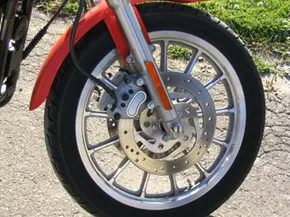
Why Motorcycle Calipers Prioritize Weight Over Mass
It is tempting to assume that because a motorcycle weighs less than a car, its braking system can be simpler. That logic holds up only until you are hurtling down a highway with nothing but leather and luck between you and the asphalt. The physics of stopping are different when you lack a steel cage. You don’t just need to slow down; you need to stop quickly, predictably, and without shaking the bike apart in your hands.
The solution is deceptively straightforward: keep the calipers small and light.
Big cars need big clamps. A truck needs to haul tons of dead weight, so its brake calipers are massive, heavy, and often made of cast iron or heavy-duty aluminum alloys designed to withstand thermal overload. But on a bike, mass is the enemy. Every ounce added to the unsprung weight—the parts not supported by the suspension—hurts handling. You want the wheels to react instantly to the road, not drag the bike down with heavy hardware.
Most motorcycle calipers are machined from aluminum. It’s lightweight, it resists rust, and it sheds heat well. But power varies wildly across the spectrum. A 50cc commuter scooter doesn’t need the same stopping power as a 1000cc superbike. So, manufacturers adapt.
Piston Count and Stopping Power
Small bikes often still rely on drum brakes. They are cheap, sealed from dirt, and require minimal maintenance. But as horsepower climbs, drum brakes fall behind. Modern performance bikes almost exclusively use disc brakes, particularly on the front wheel where 70-90% of stopping force is generated.
The key to increased pressure lies in the number of pistons inside the caliper.
- Single piston: Common on entry-level bikes. Cheap to make, but can cause uneven pad wear.
- Two to four pistons: The sweet spot for mid-range motorcycles. Better balance, more even pressure across the brake pad.
- Six to twelve pistons: Reserved for high-performance sportbikes and heavy cruisers. More pistons mean more surface area pushing against the rotor. More force. Faster stops.
But here’s the catch: more pistons mean more complexity. And complexity means more weight. So engineers have to find a balance. You don’t want a twelve-piston caliper on a naked bike that will never hit 180 mph. You want the right tool for the job.
Radial vs. Axial Mounting: A Geometry Shift
How the caliper attaches to the bike matters just as much as how many pistons it has. Traditionally, calipers were mounted axially. This means the mounting bolts ran perpendicular to the brake rotor. Simple. Effective. But not ideal.
When you brake hard, the hydraulic pressure inside the caliper pushes the pistons outward. This creates a slight twisting force on the caliper body. On an axially mounted caliper, that twisting force transfers directly into the fork tubes. The result? Fork dive and vibration. The fork flexes. The feel becomes vague. You lose connection with the road.
Enter radial mounting.
Born in racing, radial calipers are bolted to the fork via bolts that run parallel to the rotor’s surface. This changes the geometry of the force transfer. Instead of twisting the fork, the force
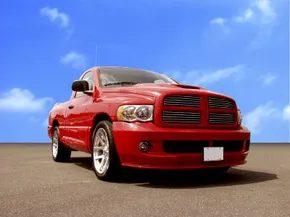
There is no denying the physical reality of modern trucks and SUVs. They are massive. That mass generates significant momentum, which translates directly to a harder job for the braking system. A compact sedan doesn’t need the same stopping power as a full-size pickup. The difference isn’t just preference; it’s physics.
So, where does that necessary stopping power come from? It starts at the wheel. Specifically, with truck brake calipers.
The Mechanics of Clamping Force
Brake performance isn’t magic. It’s mechanical leverage. The primary metric that determines a caliper’s effectiveness is its clamping force. This is simply the amount of pressure the caliper can apply to the surface of the brake rotor.
Two main factors drive this force: the number of pistons housed within the caliper and the surface area of the brake pad contacting the rotor. More pistons mean more hydraulic pressure applied simultaneously. Larger pads mean more friction material to grab onto the disc.
Obviously, a caliper with high clamping force slows or stops a vehicle faster and more consistently than one with lower force. For a two-ton SUV, that difference between stopping in 120 feet versus 140 feet isn’t just a statistic. It’s the gap between avoiding a collision and taking one.
Heat Management and Brake Fade
Truck brake calipers deal with thermal stress that most passenger car components never encounter. Heat is the enemy of braking efficiency. When brakes get too hot, they suffer from brake fade. This is when the friction material loses its grip, leading to reduced stopping distances and a spongy pedal feel.
Ventilation is essential. A well-designed caliper allows air to flow through it, dissipating heat continuously. Without proper airflow, temperatures spike, and performance plummets.
A larger brake rotor helps too. By increasing the surface area of the disc, you spread the heat over a wider zone. This prevents localized hot spots that can warp the rotor or degrade the brake fluid. It’s about managing thermal load, not just generating friction.
High-Performance Demands
Heavy vehicles have difficult jobs. They haul loads. They tow trailers. They sit heavier on their axles. The calipers in these vehicles aren’t just standard equipment. They are essentially high-performance brake calipers by virtue of their duty cycle.
While high-performance calipers are often associated with sports cars, the demands placed on them in trucks and SUVs are equally intense. Just because a caliper is on a work truck doesn’t mean it isn’t operating at the edge of its thermal and mechanical limits.
Features of Upgraded Caliper Systems
When manufacturers talk about high-performance brake calipers, they usually highlight specific engineering features designed to handle extreme conditions. These features aren’t exclusive to track-focused vehicles. They are increasingly standard in heavy-duty applications.
- Multi-piston designs: Moving from single-piston to four-piston or six-piston setups increases clamping force and improves pad wear uniformity.
- Floating vs. Fixed: Fixed calipers, often found in performance applications, use pistons on both sides of the rotor for equal pressure. Floating calipers use a piston on one side and a slide mechanism on the other. Fixed systems generally offer better modulation and heat dissipation.
- Material composition: Cal
Disc brakes didn’t start on your grandma’s Civic. They were born in the heat of the track. Race cars needed to shed speed fast. Drum brakes were the standard back then. They overheated. They faded. Drivers lost control. Disc systems offered ventilation. They handled the thermal stress better. Brake fade dropped. It didn’t vanish, but it was manageable.
Eventually, these racing innovations trickled down. Now, even economy sedans use discs. But the high-performance segment remains the proving ground. Engineers push caliper design further here. They optimize for raw stopping power.
There is a hard limit, though. No matter how beefy the caliper, the tires dictate the final grip. Better parts help only so much. Physics is unforgiving. But within those limits, you can tweak the hardware significantly.
How Performance Caliper Designs Increase Clamping Force
You want to stop? You need clamping force. Standard floating calipers often have just one piston. It sits on the inboard side. Cheap fixed calipers might have two, one on each side. That’s it.
High-end setups look different. They use multiple pistons. Six-piston calipers are common now. Twelve-piston models exist for extreme applications. More pistons mean more surface area pushing on the pads. More pressure. Better stop.
Some designs use differential bores. This solves a specific thermal problem. When you brake hard, friction heats the rotor. The leading edge of the caliper hits the hot rotor first. By the time the rotor rotates back to the trailing edge pistons, that section is cooler. Wait, no—the leading edge hits the pad first, heating the rotor at that spot. As the disc spins, that hot spot moves away from the leading pistons and toward the trailing ones. The trailing pistons meet a hotter rotor surface. Heat causes fade. To counter this, engineers make the trailing pistons larger. They apply more force where the heat is highest. This keeps the clamp firm across the entire rotor face.
Heat Management Is Everything
Brakes are energy converters. They turn kinetic energy into heat. Lots of it. If that heat stays in the system, performance dies.
Ventilation matters. Big calipers with open designs let air flow. Heat dissipates. Larger rotors spread the thermal load. More surface area = cooler operation. Simple thermodynamics. But the caliper’s shape also plays a role. Some castings have fins or channels to move air. It’s not just about brute force; it’s about managing the byproduct of that force.
The Cost of High-Performance Brakes
Good engineering costs money. Replacing brake calipers is an investment. On average, expect to pay between $525 and $760 for the job. The parts alone run $390 to $590. Labor varies by region. It adds up.
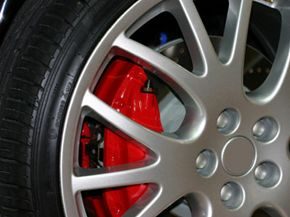
Painting them? That’s another layer. Professional painting runs $250 to $450. Specialty high-heat paint adds another $200 per caliper. You’re paying for aesthetics and corrosion resistance. Red calipers are a status symbol. They appear on Ferraris, Porsches, Koenigseggs, Mustangs, and Bugattis. They signal that the braking system underneath is worth looking at.
Signs Your Calipers Are Failing
How do you know if your calipers are going bad? Uneven brake pad wear is a big tell. If one side of the pad is thinner than the other, a piston might be stuck. Reduced braking power when you press the pedal is another red flag. The caliper isn’t squeezing properly. The pads don’t make full contact. Stopping distance increases. That’s dangerous.
FAQ: Brake Caliper Basics
What is the function of brake calipers?
They squeeze the brake pads against the rotor. This friction slows the wheel’s rotation. It halts the vehicle. The caliper is the muscle of the disc brake system.
What happens when a brake caliper goes bad?
Uneven pad wear. Thin spots on one side. Reduced braking efficiency. The car may pull to one side during heavy braking. Fluid leaks can also occur if seals fail.
Why are some brake calipers red?
Marketing and tradition. High-end brands like Ferrari and Porsche use red to denote performance. It’s a visual cue. “Sports brakes.” It looks aggressive. It matches the interior stitching sometimes.
How much does it cost to replace calipers?
$525 to $760 on average. Parts: $390–$590. Labor extra. Price varies by vehicle make and model. Luxury cars cost more.
How much does it cost to paint calipers?
$250–$450 for professional work. Add $200 per caliper for top-tier specialty paint. DIY kits are cheaper but less durable.
The Bottom Line
Brake calipers have evolved from simple clamps to sophisticated thermal management systems. They use multiple pistons, differential bores, and optimized cooling to keep up with modern performance. The tires still hold the final say, but without the caliper doing its job, the tires have nothing to grip. It’s a system. Fail one part, and the whole thing suffers. You don’t notice the caliper until it fails. Then you wish you’d paid attention sooner.