Superstition is sticky. You find a penny, heads up, and suddenly the universe feels slightly more aligned. We build rituals around anxiety. Walk under a ladder on Friday the 13th? Most people would rather walk around the block than risk it.
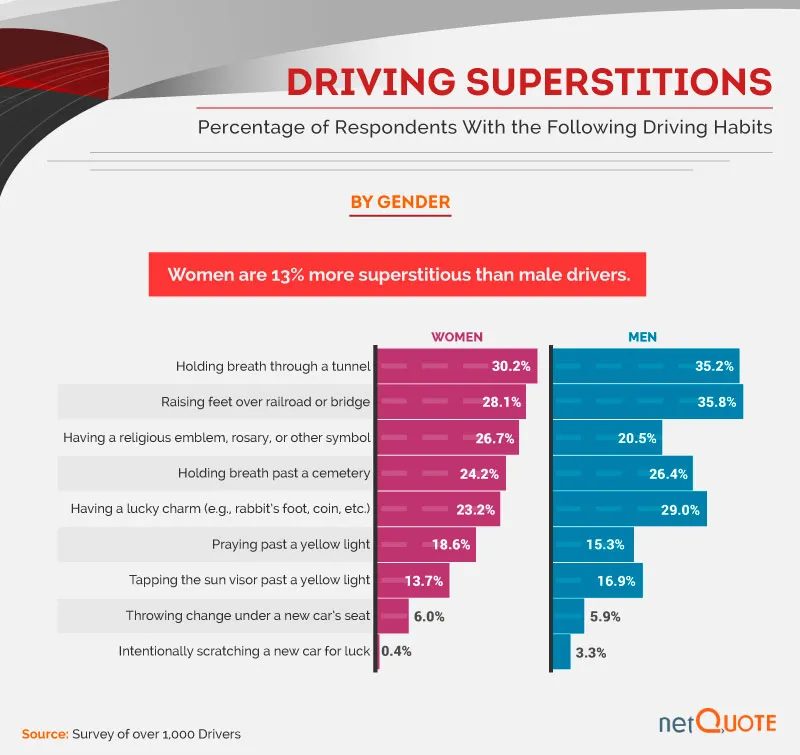
Driving is no different. The road is full of invisible rules. A recent survey from Netquote, a car insurance marketplace, dug into American driving habits and found a weird commonality. People hold their breath in tunnels. It is the most cited driving superstition in the country.
That raises the obvious question. Why do people hold their breath in a tunnel?
The origins of the tunnel breathing ritual
The numbers are specific. About 35% of men and 30% of women admit to it. They see a tunnel entrance and clamp down on their lungs until the light returns. But where did this start? There is no single source. It is a mix of folklore, fear, and bad advice.
Some treat it like a ward against bad luck. Others believe a wish comes true if you make it all the way through without exhaling. It is a game. Or a prayer. Or both.
There are older, stranger theories too.
Some believe the air inside tunnels could cure children with whooping cough, forcing passengers to hold their breath to avoid inhaling the “cure” prematurely.
That sounds medical. It isn’t. It is superstition dressed up as health advice. Others think it balances air pressure. Your ears pop. You hold your breath to keep equal pressure. That is physics, not magic. But the ritual persists.
For many, it is just a road trip game. Kids play it. Adults keep it. It passes down through generations like a broken OBDII code that never gets fixed.
Is it rational? No. Does it matter? Probably not. But try telling that to the guy next to you who is staring at the tunnel exit while his lungs burn.
Why Drivers Still Tap Their Roofs and Hold Their Breath
It isn’t just the tunnel breath-holding that keeps people on edge. The road is littered with rituals. Lifting your feet off the pedals when crossing a bridge or railroad tracks takes the second spot in popularity. Almost a quarter of drivers swallow their breath when passing a cemetery. That same chunk of the population clings to lucky charms—rosaries, rabbit’s feet, whatever feels right. Then there’s the yellow light. People pray while speeding through them. Others tap the roof of their car after they clear the intersection safely.
Jason Hargraves, managing editor at NetQuote, didn’t expect this.
“We were expecting superstitious practices on the road to be pretty uncommon, so it was surprising to discover that over one in five men and women drive with some sort of lucky charm in their vehicle.”
It’s not weird. It’s just driving. You’ll see it in your friends’ cars. In your family’s minivan. These habits are baked into the process for millions of people.
Fake Cops and Backseat Fears
NetQuote dug into driving fears too. Not superstitions this time. Real anxiety. The big one? Fake cops. Nearly half of women and more than a third of men worry about getting pulled over by impostors. It’s rare. But it happens. Don’t hesitate to ask for ID if the badge looks off. Trust your gut.
Women generally carry more driving-related fears than men. Take the backseat stowaway myth. More than twice as many female drivers (22.5%) fear someone is hiding in their trunk or back seat compared to men (11%). Men, however, are slightly more likely to believe the coin-in-the-door-handle trick. You know the story. A thief jams a coin in the lock so the door pops open when you lock it. Those childhood scares stick. They linger in the driver’s seat long after you’ve grown up.
One Ritual That Actually Works
Some habits are harmless. One might save your life.
KiwiRail and TrackSAFE NZ in New Zealand pushed a specific ritual. When approaching train tracks, blow left and right across your shoulders. It sounds like a joke. It’s actually a cognitive trigger. It forces you to look both ways. The physical act breaks autopilot. You check the rails. You see the train. You don’t end up as a statistic.
Not all superstitions are born from fear. Some are just reminders to stay alert.