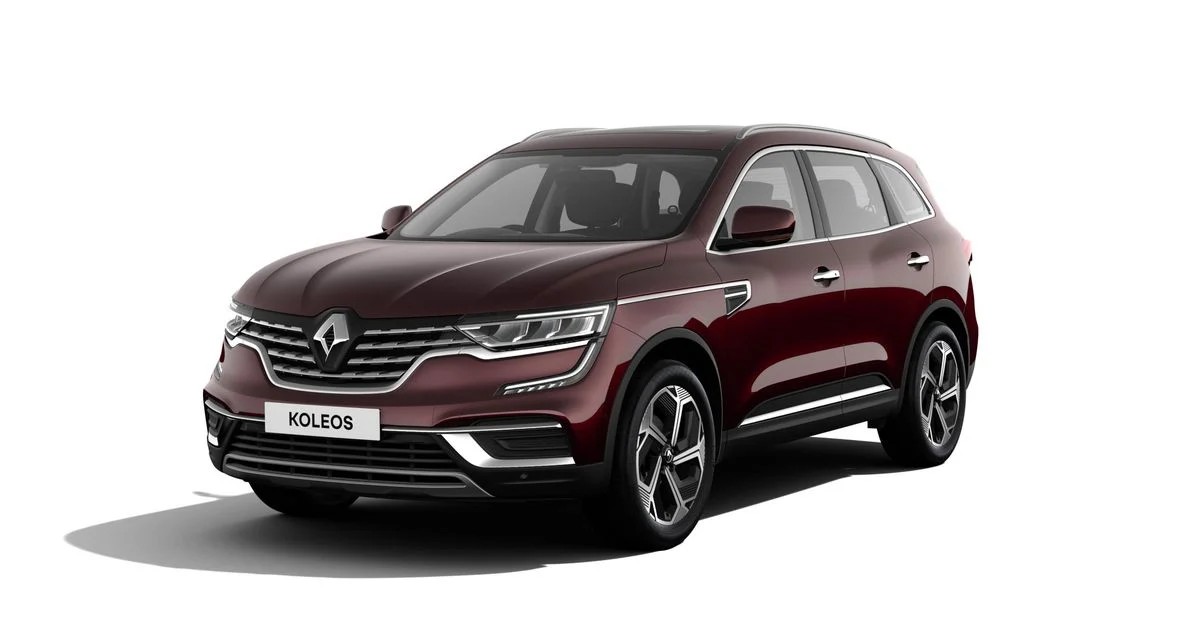
The Renault Koleos is done in Australia.
Officially in runout mode. No, a direct replacement hasn’t been announced yet for the local market. But don’t write off the French brand’s future in the mid-size SUV segment just yet.
“The current generation Renault Koleos is in run out after a stellar run as one of Renault’s most popular models, with more than twenty-one thousand examples sold.”
That’s the official word from Renault Australia. They aren’t hiding the exit strategy. Inventory is priced from $36,990 drive-away. There’s a $2,000 cashback offer attached to that. The plan is simple: sell what’s left before the end of the year. Or until the stock hits zero. Whichever comes first.
But here’s the real story. Renault is pivoting. They are revitalizing their model line. And a Koleos successor is almost certainly coming. It’s just a matter of which car gets the badge down here.
Why The Koleos Was Shelved
It wasn’t a decision made on sales numbers alone. It was regulatory.
Production of the current Koleos ended in South Korea back in 2025. But the death knell for its Australian life came on March 13, 2024.
Why then? Because Renault Australia had enough stock in the bank to last roughly two years prior to that date. That buffer bought them time. But it also highlighted a hard limit.
On March 13, road vehicle type approval was revoked for the outgoing model. The reason? Autonomous Emergency Braking (AEB).
The system was present. It was functional. But it didn’t meet the specific technical requirements laid out in Australian Design Rule 98/02. That’s the rule for pedestrian safety systems.
“Despite having AEB, the system didn’t meet the specific requirements outlined in Australian Design Rule 02.”
This regulation took full effect for all new vehicles manufactured after March 1, 2204. So even if Renault wanted to keep building the old Koleos today, they legally can’t. The stockpile was a finite resource. It’s nearly gone.
The Global Renault SUV Alphabet Soup
Renault has a dizzying array of mediums-to-large SUVs. The global portfolio is cluttered.
If you strip away the electric Scenic E-Tech we actually see on Australian roads, there are six Renault SUVs measuring over 4.5 meters in length.
From shortest to longest, the lineup looks like this:
* Austral
* Boreal
* Rafale
* Espace
* Grand Koleos
* Filante
Which one takes the Koleos’s spot? That’s the million-dollar question.
Some have the right wheels. The Austral and Rafale are currently built in right-hand drive configurations. The Boreal is a sibling to the Dacia Bigster, which also rolls out in right-hand drive from its production hubs.
The others? Less certain. The stretched Espace version of the Austral isn’t offered in right-hand drive markets, despite being sold in Europe. The Filante and Grand Koleos share DNA with Chinese giant Geely. That connection might help them enter the right-hand drive market, but it’s not guaranteed.
The Leading Contenders
Let’s look at the odds.
1. Renault Austral
Launched in 2022, the Austral is the natural successor to the Kadjar, which saw a brief, awkward stint here. It shares its CMF-CD underpinnings with the Nissan Qashqai. That’s a proven platform.
- Length: 4,533mm
- Wheelbase: 2,667mm
- Powertrain: Turbocharged 1.2-liter three-cylinder hybrid
It’s compact. It’s efficient. It’s already in RHD production. It fits the bill for a mid-size crossover.
2. Renault Boreal
Revealed in 2025, this is the Dacia Bigster dressed up as a Renault. But it’s not just a badge swap. Unique exterior panels. An overhauled interior. A different dashboard. It’s distinct.
- Length: 4,556mm
- Wheelbase: 2,702mm
- Powertrain: Turbocharged 1.3-liter petrol (with a 1.8-liter hybrid option following shortly)
It’s slightly longer than the Austral. It shares the RHD manufacturing capability. It undercuts the premium image of the Koleos, but Renault may be looking for a different price point.
3. Grand Koleos
The immediate spiritual successor. Built in Korea. Based on the Geely Monjaro.
It sits on the Compact Modular Architecture (CMA). The same platform found in the Polestar 2 and Volvo XC40. It’s tech-heavy. It’s advanced.
- Length: 4,780mm
- Wheelbase: 2,820mm
- Powertrain: 1.5-liter hybrid or 2.0-liter turbo petrol
It’s bigger than the old Koleos. Significantly. But does the Australian market want a 4.7-meter SUV labeled as a mid-size contender? Maybe. Especially if the Filante (the larger Geely-built flagship) proves too expensive.
The Sales Reality Check
Let’s talk numbers.
The current Koleos arrived in Australia in 2016. It was a close cousin to the Nissan X-Trail. For a long time, that partnership worked.
- 2017–2020: Best-seller status for Renault in Australia.
- 2022–2023: Best-seller status regained.
Its peak year was 2017, with 3,120 examples delivered.
Then the slide started. Sales declined every year. Until 2022. Then 2023 brought a rally. But it was too little, too late. By the end of 2024, its cousin, the Nissan X-Trail, had already moved on to its next generation. The Koleos was left behind. It was one of the oldest vehicles in its entire segment.
It got overtaken by the Renault Master van. Yes. A commercial van outsold the flagship SUV. The irony is palpable.
What Happens Next?
Renault Australia boss Glen Sealey dropped hints at the local launch of the new Master van earlier this month.
“We have plenty to get through… another six new or refreshed models are now due over the next two years.”
He didn’t say “Koleos.” He didn’t have to. The language is clear. They are assessing what fits the Australian price range and customer needs. They have a vast catalogue.
The question isn’t if they return. The question is timing.
And which nameplate?
If they choose the Austral, they get a proven RHD hybrid that slots into a crowded segment. If they pick the Grand Koleos, they leapfrog in size and tech, potentially cannibalizing higher-end rivals. The Boreal offers a budget-friendly entry point using existing Dacia supply chains.
Or, perhaps, they skip the name entirely. Launch a new global model specifically for right-hand drive markets. Renault is known for shuffling badges.
One thing is certain. The 18-year run of the Koleos in Australia is over. The stock is vanishing. The type approval is gone.
We’re waiting for the next move. It might be the Rafale. It might be a rebadged Geely. It might be nothing at all.
But Renault has promised a revitalization. In a competitive market like Australia’s mid-size SUV segment, sitting out is not an option. The blank space where the Koleos used to be is already being eyed by rivals.
What will Renault put there? The clock is ticking.